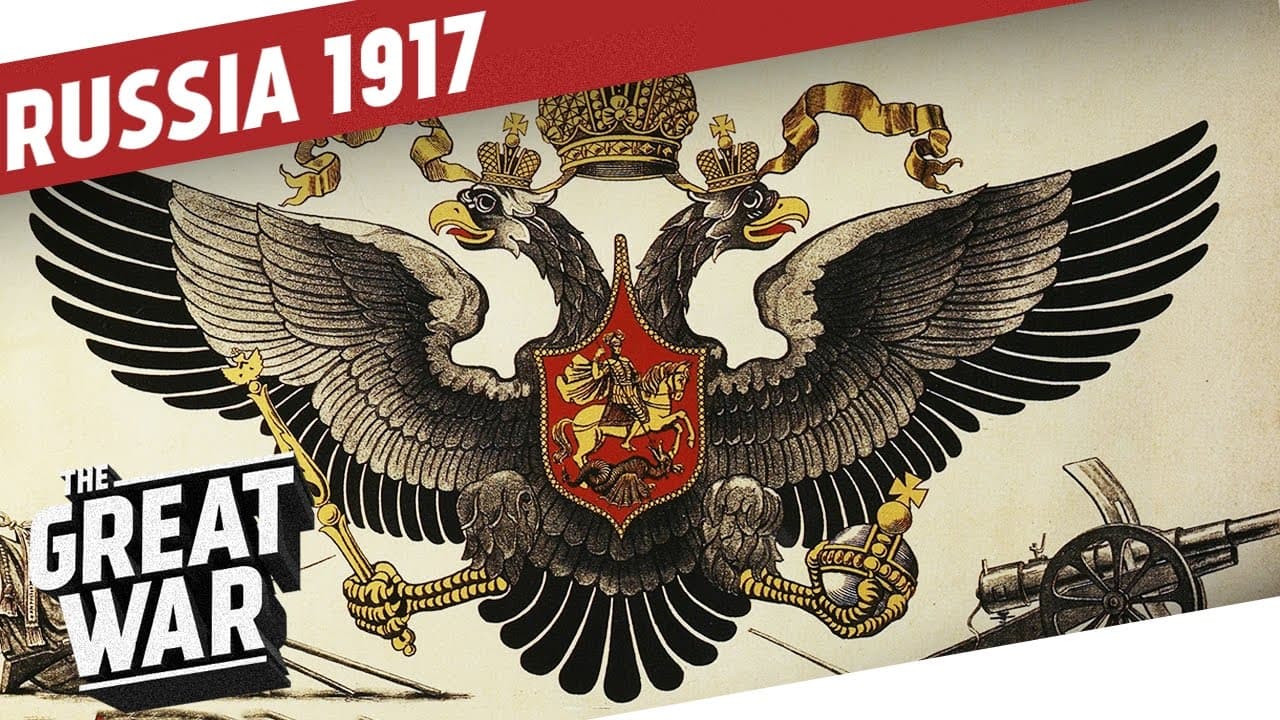
Russia Before the 1917 Revolution I THE GREAT WAR Special
TL;DR
Russia faced economic growth and political unrest before the 1917 revolution.
Transcript
In 1914, when the war began, it was the world’s fourth largest economy, and it covered 15% of the world’s landmass. It had what seemed like an endless supply of men and they patriotically went to war in support of their leader. And yet three years later, that empire was in tatters and wracked by revolution. I’m talking, of course, about Russia. I’m... Read More
Key Insights
- Russia was the world's fourth-largest economy in 1914, covering 15% of the world's landmass, but faced revolution just three years later.
- Tsar Nicholas II ascended to the throne in 1894 and rejected proposals for a constitutional monarchy, maintaining autocratic rule.
- Alexander II's reforms, including the Emancipation Reform of 1861, aimed to modernize Russia's military and abolish serfdom.
- The 1905 Russian Revolution followed a humiliating defeat in the Russo-Japanese War, leading to the October Manifesto and the creation of the Duma.
- Despite economic recovery before World War I, Nicholas II undermined the Duma, leading to continued unrest and assassinations of officials.
- Nicholas II's decision to personally command the army in 1915 made him responsible for military failures, exacerbating public dissatisfaction.
- Russia's economy struggled during the war, and the unpopular influence of the Tsarina and Rasputin fueled public discontent.
- The February Revolution of 1917 ended Romanov rule, as public unrest and military abandonment forced Nicholas II's abdication.
Install to Summarize YouTube Videos and Get Transcripts
Explore YouTube Video Summarizer or Get YouTube Transcript Extractor
Questions & Answers
Q: What were the major reforms implemented by Alexander II?
Alexander II implemented significant reforms, including modernizing Russia's military and abolishing serfdom through the Emancipation Reform of 1861. He expanded railways and communications and planned constitutional reforms with the Loris-Melikov Constitution. However, his assassination in 1881 halted further progress and led to a return to autocratic rule under Alexander III.
Q: How did the 1905 Russian Revolution impact Tsar Nicholas II's rule?
The 1905 Russian Revolution, sparked by defeat in the Russo-Japanese War, forced Tsar Nicholas II to sign the October Manifesto, promising civil rights and creating the Duma. Despite this, Nicholas undermined the Duma's power, maintaining autocratic control and fostering continued political unrest and dissatisfaction among the populace.
Q: What role did economic growth play in Russia's pre-World War I era?
Economic growth played a significant role in Russia's pre-World War I era, with the country becoming one of Europe's fastest-growing economies, expanding at 4% annually. This growth was largely attributed to Finance Minister Sergei Witte and Prime Minister Pyotr Stolypin. However, political inflexibility and autocratic rule hindered progress, contributing to eventual unrest.
Q: Why did Nicholas II's decision to command the army in 1915 prove problematic?
Nicholas II's decision to personally command the army in 1915 proved problematic because it made him directly responsible for military failures. As the war dragged on, Russia's economy struggled, and public dissatisfaction grew. The decision also removed him from the political center, allowing the unpopular Tsarina and Rasputin to wield influence, further alienating the public.
Q: What factors led to the February Revolution of 1917?
The February Revolution of 1917 was fueled by a combination of factors, including economic strain from World War I, military failures under Nicholas II's command, food shortages, and the unpopular influence of the Tsarina and Rasputin. Public dissatisfaction and strikes culminated in widespread unrest, leading to Nicholas II's abdication and the end of Romanov rule.
Q: How did the October Manifesto affect Russia's political landscape?
The October Manifesto, issued in response to the 1905 Russian Revolution, promised civil rights and created a parliamentary body, the Duma. However, Tsar Nicholas II's reluctance to cede power led to the Duma's repeated dissolution and undermined its effectiveness, maintaining autocratic rule and fostering continued political unrest and dissatisfaction.
Q: What was the impact of the Russo-Japanese War on Russia?
The Russo-Japanese War had a significant impact on Russia, resulting in a surprising and humiliating defeat that damaged national morale and led to economic stagnation. It triggered the 1905 Russian Revolution, which forced Tsar Nicholas II to issue the October Manifesto, promising reforms but ultimately maintaining autocratic control and political unrest.
Q: How did public perception of Nicholas II change during World War I?
Public perception of Nicholas II initially improved during World War I, as he called for unity against the Central Powers, and citizens responded with patriotism. However, as the war continued and military failures mounted, his decision to personally command the army and the influence of the Tsarina and Rasputin led to growing dissatisfaction, culminating in the February Revolution of 1917.
Summary & Key Takeaways
-
Russia entered the 20th century as a major global power but faced significant internal challenges. Tsar Nicholas II's autocratic rule and rejection of constitutional reforms stifled political progress, despite economic growth under leaders like Sergei Witte and Pyotr Stolypin.
-
The 1905 Russian Revolution, triggered by defeat in the Russo-Japanese War, led to the October Manifesto and the creation of the Duma. However, Nicholas II's reluctance to share power resulted in ongoing political unrest and assassinations of government officials.
-
World War I further strained Russia's economy and society. Nicholas II's personal command of the army and the influence of the Tsarina and Rasputin exacerbated public dissatisfaction, culminating in the February Revolution of 1917 and the end of Romanov rule.
Read in Other Languages (beta)
Share This Summary 📚
Summarize YouTube Videos and Get Video Transcripts with 1-Click
Try YouTube Summary with ChatGPT & Claude or YouTube Transcript Generator
Explore More Summaries from The Great War 📚
Summarize YouTube Videos and Get Video Transcripts with 1-Click
Try YouTube Summary with ChatGPT & Claude or YouTube Transcript Generator