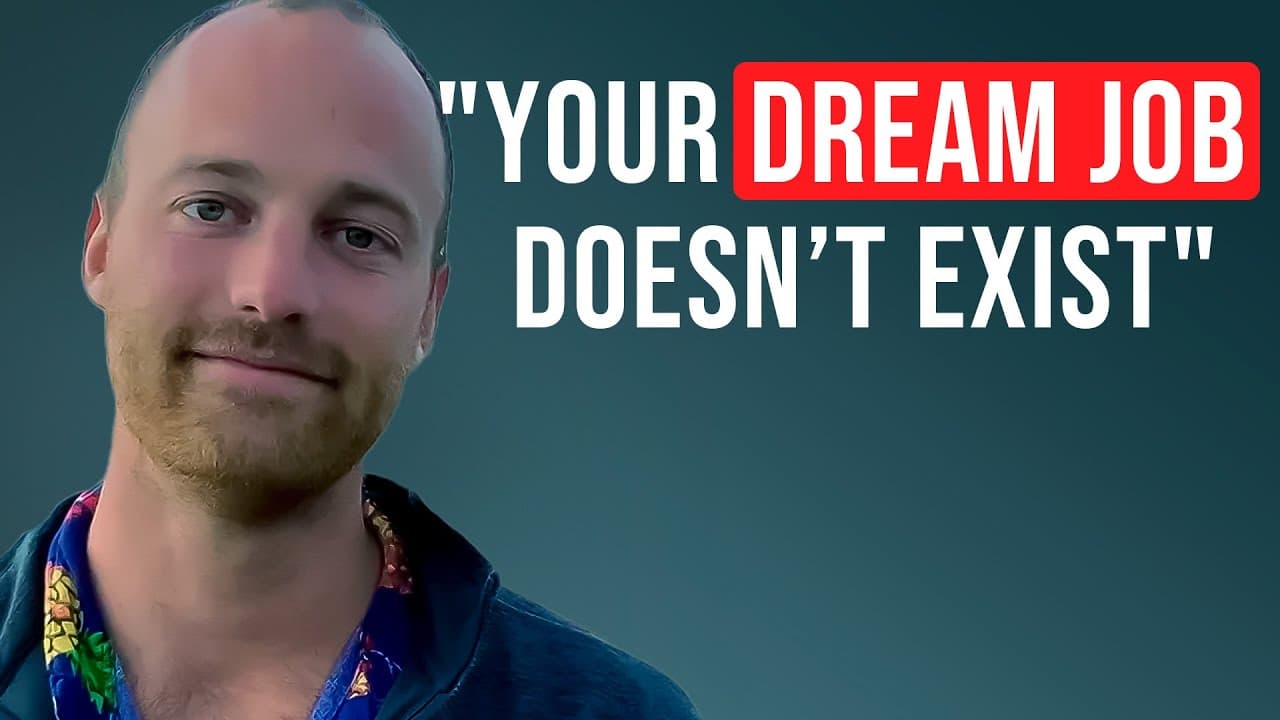
He left Wall Street to “follow his passion.” Did it work?
TL;DR
Jack left Wall Street for crypto, but is it truly his dream job?
Transcript
you can still like be in that dream job but that doesn't mean every day every task is going to be something that lights you up Jack P was a Wall Street investment banker on the fast track to riches and status but when he looked at his colleagues who were 10 years older yes they had big homes in the suburbs and drove fancy cars but it wasn't for him... Read More
Key Insights
- Jack Purdy left a promising Wall Street career to pursue a passion for crypto, highlighting the importance of personal fulfillment over financial gain.
- Authenticity and the ability to express oneself were crucial for Jack, leading to his transition from a structured banking environment to a more flexible startup culture.
- Jack's journey underscores the significance of aligning one's career with personal values and interests, particularly in emerging industries like crypto.
- The concept of a 'dream job' is nuanced; even in a passion-driven career, not every task or day will be fulfilling.
- Side projects can be pivotal in career transitions, offering a space to explore interests and develop new skills that may lead to unexpected opportunities.
- Work should not be expected to fulfill all personal needs; maintaining side projects and external interests is essential for a balanced life.
- Creativity is a broad concept, not limited to traditional arts, and can manifest in various professional roles, enhancing both personal and professional growth.
- Jack's experience reflects the value of taking calculated risks for long-term satisfaction, even if it means stepping off a conventional career path.
Install to Summarize YouTube Videos and Get Transcripts
Explore YouTube Video Summarizer or Get YouTube Transcript Extractor
Questions & Answers
Q: What motivated Jack to leave Wall Street for crypto?
Jack was motivated to leave Wall Street due to a lack of personal fulfillment and a desire for creative expression. He sought a career that aligned more closely with his interests and values, which he found in the emerging field of crypto research.
Q: How did Jack manage his transition from banking to crypto?
Jack managed his transition by engaging in side projects related to crypto, which allowed him to explore his interests and develop relevant skills. He eventually secured a position at Messari after proving his value through part-time work and demonstrating his passion for the industry.
Q: What role did authenticity play in Jack's career change?
Authenticity was a significant factor in Jack's career change. He felt constrained by the need to wear a 'mask' in the banking environment and sought a role where he could be true to himself. This desire for authenticity drove him to pursue a career in crypto, where he could express his true interests and values.
Q: What does Jack's story suggest about the concept of a 'dream job'?
Jack's story suggests that the concept of a 'dream job' is complex and multifaceted. While finding work that aligns with one's passions and values is important, it is unrealistic to expect every aspect of a job to be fulfilling. A 'dream job' may still involve mundane tasks and challenges.
Q: How important are side projects in career development according to Jack?
Side projects are crucial in career development, as they provide opportunities to explore interests and develop new skills. For Jack, his involvement in crypto-related side projects was instrumental in his career transition, ultimately leading to a full-time role in the industry.
Q: What limits does Jack believe work should have in fulfilling personal needs?
Jack believes that work should not be expected to fulfill all personal needs. While it can provide intellectual stimulation and align with personal values, it is important to maintain other interests and relationships outside of work to achieve a balanced and fulfilling life.
Q: How did Jack view the role of creativity in his career?
Jack viewed creativity as a vital component of his career, not limited to traditional artistic expressions. He recognized that creativity could enhance his professional work, such as in business development and strategy, and saw it as a practice that could be developed over time.
Q: What advice does Jack offer to those seeking their dream job?
Jack advises individuals to first identify their Northstar or overarching goal, which should align with their passions and values. From there, they can work backward to determine the appropriate job and company that will allow them to contribute towards that goal, ensuring long-term fulfillment.
Summary & Key Takeaways
-
Jack Purdy transitioned from a Wall Street investment banker to a career in crypto research, driven by a desire for creativity and personal growth. Despite financial sacrifices, he prioritized work that aligned with his passions and values.
-
The journey from banking to crypto involved embracing authenticity and side projects, which played a crucial role in Jack's career shift. He found fulfillment in a startup environment where he could express himself freely.
-
Jack's story highlights the complexities of pursuing a 'dream job.' While passion and alignment with personal values are essential, he acknowledges that not all aspects of work will be inherently satisfying.
Read in Other Languages (beta)
Share This Summary 📚
Summarize YouTube Videos and Get Video Transcripts with 1-Click
Try YouTube Summary with ChatGPT & Claude or YouTube Transcript Generator
Explore More Summaries from Khe Hy - RadReads 📚




Summarize YouTube Videos and Get Video Transcripts with 1-Click
Try YouTube Summary with ChatGPT & Claude or YouTube Transcript Generator