When Should You Sell Long-Held Stocks?

TL;DR
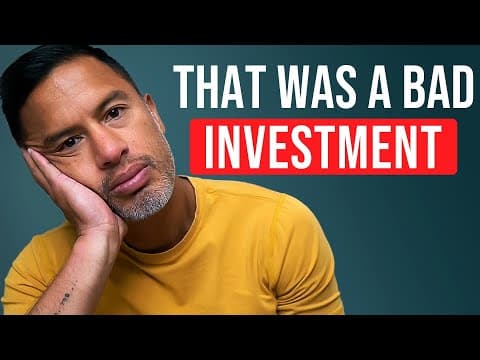
Long-term stock investment requires a strategy, especially during market sell-offs. Despite owning stocks for 25 years, the speaker remains committed to holding, using margin rather than selling assets. The key is balancing high spending with low income, while leveraging unrealized capital gains. Maintaining investment positions is crucial, even when faced with financial pressures and economic downturns.
Transcript
babe we got a problem I turned to my wife and laid out a family declaration less Whole Foods and more Costco no more of that mediocre Sushi or those overpriced chicken tenders it was time to tighten our belt you see we're in a strange situation I've been long stock since I had long hair in a middle part yep 1999 I then had a 15-year career on Wall ... Read More
Key Insights
- Investing in stocks since 1999 has resulted in an 8% annualized return, including downturns like 2008.
- Using margin loans allows for maintaining investment positions without triggering capital gains taxes.
- Living in a high-cost area with low income requires strategic financial management and spending adjustments.
- The wealth effect influences spending habits, often leading to reduced expenses during economic uncertainty.
- Housing market dynamics can significantly impact financial decisions, especially in high-demand areas.
- Maintaining a long-term investment perspective is crucial, even when market conditions appear volatile.
- Diversifying into income-generating assets can help balance high expenses with low income.
- Keeping a 'bear market journal' helps resist the urge to sell during market downturns by tracking past predictions.
Install to Summarize YouTube Videos and Get Transcripts
Explore YouTube Video Summarizer or Get YouTube Transcript Extractor
Questions & Answers
Q: How to manage investments during a market sell-off?
Managing investments during a market sell-off involves maintaining a long-term perspective and avoiding panic selling. The speaker uses margin loans to cover expenses without selling stocks, thus avoiding capital gains taxes. This strategy allows them to keep their investment positions intact, even when market conditions are unfavorable.
Q: Why use margin loans instead of selling stocks?
Margin loans are used to avoid triggering capital gains taxes that would result from selling stocks. By borrowing against their investment portfolio, the speaker can maintain their stock positions and benefit from potential future market gains. The interest on these loans is tax-deductible, making them a viable option for managing cash flow.
Q: What is the wealth effect and how does it impact spending?
The wealth effect refers to the tendency for people to spend more when they perceive themselves to be wealthier, often due to rising asset values. In the video, the speaker describes how this effect influences their spending habits, prompting them to reduce expenses during economic uncertainty to maintain financial stability.
Q: How does the housing market affect financial decisions?
The housing market can significantly impact financial decisions, especially in high-demand areas with limited supply. In the video, the speaker discusses how rising rental prices due to housing shortages have forced them to reconsider their living arrangements, highlighting the need for strategic financial planning in response to market dynamics.
Q: What is a 'bear market journal' and its purpose?
A 'bear market journal' is a tool used to track predictions and sentiments during market downturns. By documenting articles and opinions that claim 'this time it's different,' the speaker can resist the urge to sell during downturns, reinforcing their commitment to a long-term investment strategy and maintaining confidence in their financial decisions.
Q: Why is maintaining a long-term investment perspective important?
Maintaining a long-term investment perspective is crucial for weathering market volatility and achieving financial goals. The speaker emphasizes the importance of not selling during downturns, as historical data shows that markets eventually recover. This approach helps investors avoid emotional decisions that could negatively impact their portfolios.
Q: How to balance high expenses with low income?
Balancing high expenses with low income involves strategic financial management, such as using margin loans to avoid selling investments and making lifestyle adjustments to reduce spending. The speaker discusses the importance of diversifying into income-generating assets and potentially increasing work hours to cover expenses without compromising long-term investment goals.
Q: When should you consider diversifying into income-generating assets?
Diversifying into income-generating assets should be considered when there's a need to balance high expenses with low income, as it provides a steady cash flow without liquidating investments. The speaker suggests gradually shifting some assets into income-producing investments to alleviate financial pressure while maintaining overall investment strategy.
Summary & Key Takeaways
-
The speaker has been invested in stocks since 1999, achieving an 8% annualized return despite market downturns. Using margin loans, they avoid selling stocks to cover expenses, maintaining their investment positions. Living in a high-cost area with low income necessitates strategic financial management, including spending reductions during economic uncertainty.
-
The wealth effect plays a significant role in financial decisions, prompting the speaker to adjust spending habits when faced with economic challenges. Housing market dynamics further complicate these decisions, particularly in areas with high demand and limited supply. Despite these pressures, the speaker remains committed to a long-term investment strategy.
-
Diversifying into income-generating assets is considered to balance high expenses with low income, but the speaker prioritizes maintaining their investment positions. A 'bear market journal' helps resist the urge to sell during downturns by tracking past predictions, reinforcing the importance of a long-term perspective.
Read in Other Languages (beta)
Share This Summary 📚
Summarize YouTube Videos and Get Video Transcripts with 1-Click
Try YouTube Summary with ChatGPT & Claude or YouTube Transcript Generator
Explore More Summaries from Khe Hy - RadReads 📚




Summarize YouTube Videos and Get Video Transcripts with 1-Click
Try YouTube Summary with ChatGPT & Claude or YouTube Transcript Generator