Should You Buy or Rent a Home? Key Considerations
TL;DR
Buying a home involves considering factors like leverage, customization, and financial commitment. While leverage can amplify returns, renting offers flexibility and simplicity. Homeownership is often seen as a forced savings mechanism, but renting can free up capital for investments. Evaluate your preferences for stability versus mobility and consumption versus investment before deciding.
Transcript
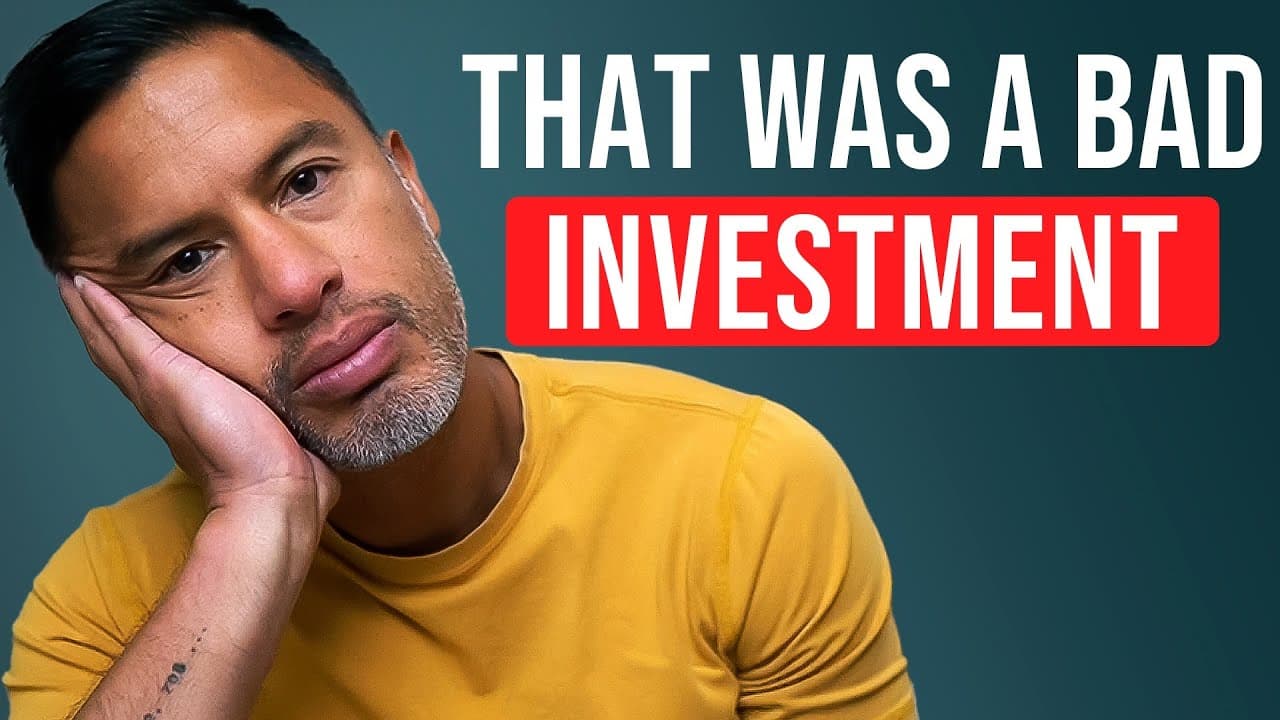
I bought a Swanky New York City apartment and I regret it I was single I wanted to step up my game and this apartment had a sexy swimming pool on the roof so as a 27-year-old I splurged and bought a 585 ft mini one bedroom for $700,000 7 years later I sold the apartment for the same amount $700,000 and swore off ever buying a home again and it turn... Read More
Key Insights
- Leverage is a financial tool that allows borrowing money to amplify returns on investments, such as real estate.
- Homeownership offers tax benefits, including interest deductions, but these vary by location and tax policy changes.
- Renting provides flexibility and mobility, allowing easy relocation without the burden of selling a property.
- Homeownership can be a forced savings mechanism, as mortgage payments build equity over time.
- Customization in homeownership can lead to increased costs and complexity, while renting limits personalization.
- Renting simplifies property management, with landlords responsible for maintenance and repairs.
- A key distinction in housing decisions is between consumption (personal use) and investment (financial gain).
- Real estate investments should be evaluated based on market potential, not just personal preferences for living conditions.
Install to Summarize YouTube Videos and Get Transcripts
Explore YouTube Video Summarizer or Get YouTube Transcript Extractor
Questions & Answers
Q: How does leverage affect homeownership?
Leverage in homeownership involves borrowing money, such as through a mortgage, to purchase property. This amplifies potential returns because any appreciation in the property's value is based on the total property value, not just the invested capital. However, leverage also increases risk, as losses are similarly magnified if property values decrease.
Q: What are the tax benefits of owning a home?
Owning a home provides tax benefits such as the ability to deduct mortgage interest from taxable income. This can significantly reduce the overall tax burden, making homeownership financially attractive. However, changes in tax policy and high property values can limit these benefits, especially in high-cost areas.
Q: Why might someone choose to rent instead of buy?
Renting offers flexibility and mobility, allowing individuals to relocate easily without the complexities of selling a home. It also simplifies property management, as landlords handle maintenance and repairs. Renters avoid the upfront costs of a down payment, freeing up capital for other investments. However, they miss out on potential equity building and tax benefits associated with homeownership.
Q: What is the difference between consumption and investment in real estate?
Consumption in real estate refers to purchasing property for personal use and enjoyment, such as living in a home. Investment, on the other hand, involves buying property with the expectation of financial gain through appreciation or rental income. Understanding this distinction helps guide decisions based on personal living needs versus financial goals.
Q: How does customization affect the decision to buy a home?
Customization allows homeowners to tailor their living space to personal preferences, enhancing comfort and satisfaction. However, it can lead to increased costs and complexity, as renovations and upgrades require time, money, and management. Renters typically lack this option, which can be a drawback for those seeking personalized living environments.
Q: What are the financial implications of renting a home?
Renting involves monthly payments without building equity, but it offers predictable living expenses and avoids the financial burdens of property maintenance. Rent increases and lease renewals can be unpredictable, posing financial challenges. However, renters can invest savings from not making a down payment into other financial opportunities, potentially yielding higher returns.
Q: How does homeownership promote good financial behavior?
Homeownership promotes good financial behavior through forced savings, as mortgage payments gradually build equity in the property. This structured payment plan encourages financial discipline and long-term wealth accumulation. However, similar savings can be achieved through disciplined investment strategies, such as regular contributions to a diversified portfolio.
Q: Why is understanding preferences important in the buy vs rent decision?
Understanding personal preferences is crucial in the buy versus rent decision, as it involves evaluating priorities like stability, customization, and financial flexibility. Preferences for mobility, lifestyle, and financial goals influence whether buying or renting aligns better with individual circumstances. This self-awareness ensures that housing choices support overall life satisfaction and financial well-being.
Summary & Key Takeaways
-
Buying a home involves leveraging borrowed money to potentially increase returns, but it requires careful consideration of financial commitments and market conditions. Homeownership offers tax benefits and acts as a forced savings mechanism, but it also involves customization costs and potential complexity.
-
Renting provides flexibility and simplicity, allowing for easy relocation and less responsibility for property maintenance. However, it lacks the forced savings aspect and potential tax benefits of homeownership. Renters must also consider the unpredictability of rent increases and lease renewals.
-
The decision to buy or rent should consider personal preferences for stability versus mobility and consumption versus investment. Real estate is often seen as an investment, but personal living conditions are a form of consumption, and the market potential should guide investment decisions.
Read in Other Languages (beta)
Share This Summary 📚
Summarize YouTube Videos and Get Video Transcripts with 1-Click
Try YouTube Summary with ChatGPT & Claude or YouTube Transcript Generator
Explore More Summaries from Khe Hy - RadReads 📚





Summarize YouTube Videos and Get Video Transcripts with 1-Click
Try YouTube Summary with ChatGPT & Claude or YouTube Transcript Generator