How to Balance Frugality and Financial Freedom
TL;DR
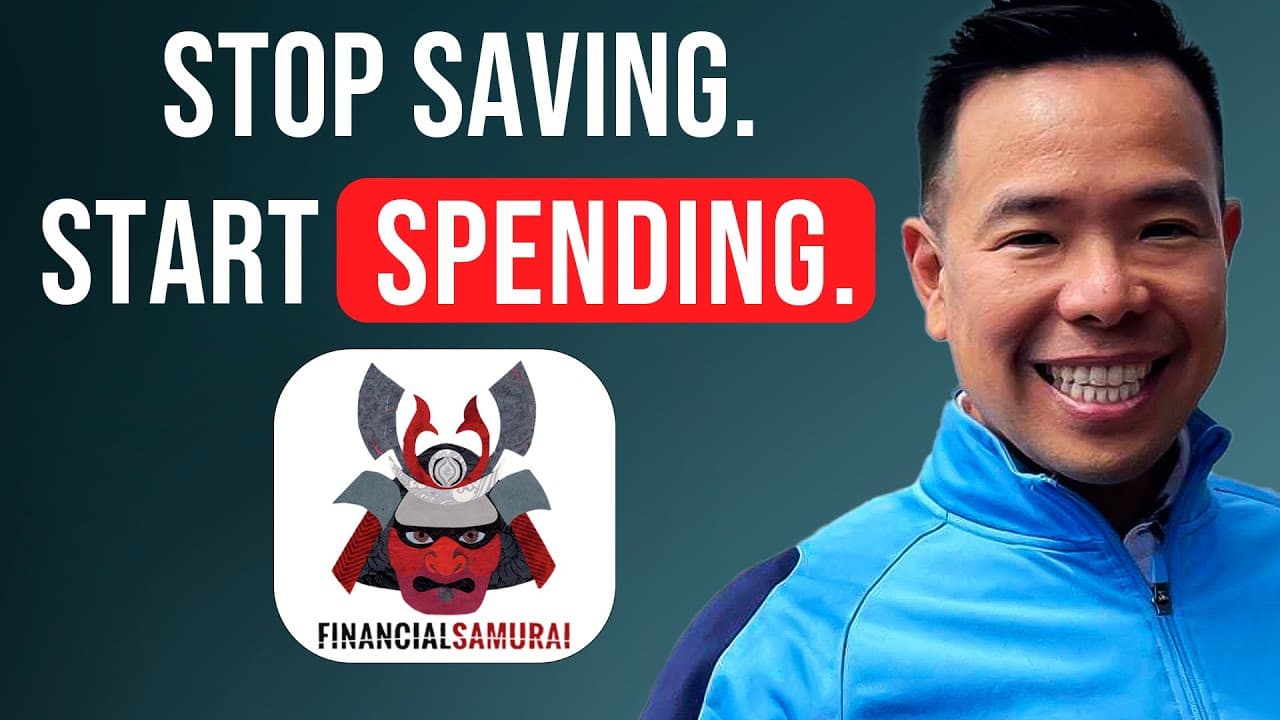
Sam Dogen, a prominent figure in the FIRE movement, suggests starting the decumulation phase at age 45, emphasizing the importance of saving aggressively until it feels painful. He discusses the benefits of real estate, leveraging investments, and the role of generational wealth, while also exploring the philosophy of dying with zero to maximize life enjoyment.
Transcript
So, I believe the best decimulation age is starting around 45 because at 45 you're half dead. Wait a minute. That's one of the biggest voices in the FIRE movement. And he's saying that it's time to start spending more money. You know, Sam Dogen aka the financial samurai and the author of Millionaire Milestones. He says that me at 45 years old needs... Read More
Key Insights
- Sam Dogen recommends starting the decumulation phase around age 45 to enjoy financial freedom while still healthy.
- Saving aggressively, to the point it feels painful, is crucial for building significant wealth and achieving early retirement.
- Homeownership is seen as a key wealth-building strategy due to its leverage and forced savings benefits.
- Leveraging investments can be a strategy for financial growth but requires careful risk management.
- High-income opportunities in major cities justify high real estate prices, supported by both domestic and international demand.
- Parental wealth plays a significant role in the ability of younger generations to afford real estate in expensive markets.
- The philosophy of dying with zero suggests spending more earlier to maximize life enjoyment rather than leaving a large inheritance.
- Long-term care costs are significant but can be managed through insurance or accumulated wealth.
Install to Summarize YouTube Videos and Get Transcripts
Explore YouTube Video Summarizer or Get YouTube Transcript Extractor
Questions & Answers
Q: How to start the decumulation phase effectively?
To start the decumulation phase effectively, begin around age 45 by gradually adjusting your saving and spending habits. Focus on spending more than you earn to decrease net worth intentionally, while ensuring you have a robust investment portfolio to support this phase. This approach allows you to enjoy financial freedom while still maintaining a safety net.
Q: Why is saving until it hurts important?
Saving until it hurts is important because it forces you to prioritize savings over discretionary spending, thereby accelerating wealth accumulation. By saving aggressively, often beyond the national average, individuals can significantly shorten the time needed to achieve financial independence and enjoy a longer period of financial freedom.
Q: What are the benefits of homeownership in wealth building?
Homeownership offers several benefits for wealth building, including leverage, forced savings, and potential appreciation. Owning a home allows you to lock in housing costs and build equity over time, providing a stable financial foundation. Additionally, real estate is often seen as a tangible asset that can diversify an investment portfolio.
Q: How can leveraging investments aid financial growth?
Leveraging investments can aid financial growth by allowing you to invest more capital than you currently have, potentially increasing returns. However, it requires careful risk management to avoid significant losses. Leveraging is most effective when used strategically, considering market conditions and personal risk tolerance.
Q: What role does parental wealth play in real estate affordability?
Parental wealth plays a significant role in real estate affordability, especially in high-cost markets. Many young adults benefit from financial assistance from their parents, such as down payment support, which enables them to enter the housing market. This generational wealth transfer can significantly impact the ability to afford property in expensive cities.
Q: What is the philosophy of dying with zero?
The philosophy of dying with zero advocates for spending money earlier in life to maximize happiness and life experiences, rather than hoarding wealth for later years or inheritance. It suggests that financial support should be provided when it can have the greatest impact, such as during a child's early adulthood, rather than after one's death.
Q: How do interest rates impact real estate and investments?
Interest rates significantly impact real estate and investments by influencing borrowing costs and asset prices. Lower rates reduce mortgage payments, making real estate more affordable, while higher rates increase costs, potentially dampening demand. In investments, interest rates affect the cost of leverage and the attractiveness of different asset classes.
Q: What are the considerations for long-term care costs?
Long-term care costs are a significant concern for aging individuals, typically ranging from $250,000 to $500,000 for several years of care. Planning for these expenses involves considering long-term care insurance, saving sufficiently, and understanding the average duration of care needs. It's crucial to incorporate these potential costs into retirement planning to ensure financial security.
Summary & Key Takeaways
-
Sam Dogen advocates for starting the decumulation phase at age 45, emphasizing that saving aggressively until it hurts is essential for building a substantial nest egg. He highlights the importance of intentional wealth-building, including real estate investment and leveraging financial assets, while considering the impact of parental wealth and the philosophy of dying with zero.
-
Homeownership is a key strategy for financial stability and growth, offering benefits like leverage and forced savings. Dogen discusses how high-income opportunities in major cities justify high real estate prices and the role of international demand. He also explores the challenges and strategies of leveraging investments for financial growth.
-
The video explores the philosophy of dying with zero, which encourages spending earlier in life to maximize happiness and fulfillment. It also addresses long-term care costs and the need for intentional planning in wealth accumulation and decumulation, balancing the desire for financial independence with the practicalities of life enjoyment.
Read in Other Languages (beta)
Share This Summary 📚
Summarize YouTube Videos and Get Video Transcripts with 1-Click
Try YouTube Summary with ChatGPT & Claude or YouTube Transcript Generator
Explore More Summaries from Khe Hy - RadReads 📚



Summarize YouTube Videos and Get Video Transcripts with 1-Click
Try YouTube Summary with ChatGPT & Claude or YouTube Transcript Generator