Wharton's Siegel on Trump, Volatility, and Markets
TL;DR
Market volatility hinges on Trump's policy direction.
Transcript
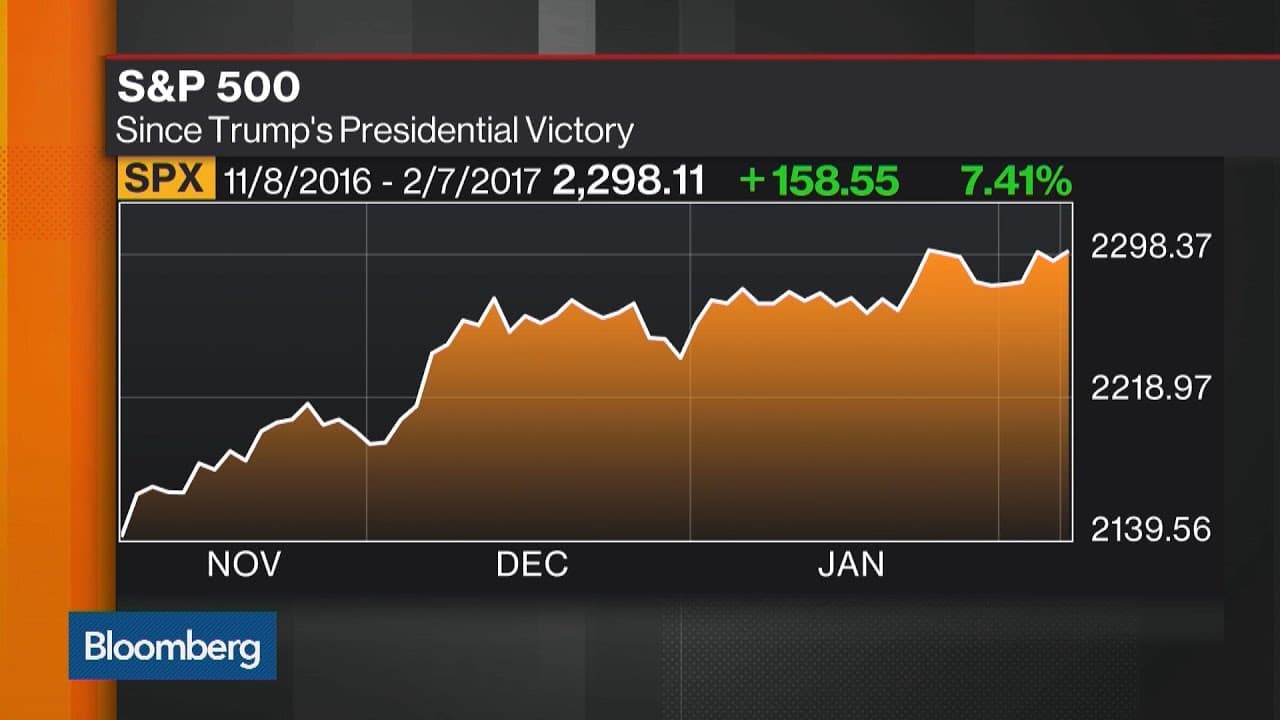
Professor seagull you had been calling for Dow 20,000 since at least March of 2015 saying that it would be fairly valued at that point now that we're here are we undervalued well let me say the following if if Trump follows the Republican agenda of lower taxes and lower regulations we could easily go 10% higher from here um if he veers into protect... Read More
Key Insights
- Professor Siegel predicted Dow 20,000 as fairly valued since March 2015, but current valuation depends on Trump's policy direction.
- If Trump follows lower taxes and regulations, markets could rise 10%; protectionist policies could lead to a 10% drop.
- Market volatility is low despite high economic policy uncertainty due to confidence in current market highs.
- The VIX index, a measure of market volatility, reflects current market confidence and low fear of a significant drop.
- Inflation expectations have risen since Trump's election, but long-term bond markets remain stable, indicating limited immediate concern.
- Despite rising inflation expectations, there's no significant pressure from wages or labor, keeping inflation modest.
- For long-term investors, stocks remain attractive due to their income-producing potential, despite moderate interest rate increases.
- Investors should prepare for potential market gains or losses based on Trump's policy direction, balancing portfolios accordingly.
Install to Summarize YouTube Videos and Get Transcripts
Explore YouTube Video Summarizer or Get YouTube Transcript Extractor
Questions & Answers
Q: What is Professor Siegel's outlook on the Dow and market valuation?
Professor Siegel predicted that the Dow would reach 20,000 as a fair valuation since March 2015. He believes current market valuations are contingent on President Trump's policies. If Trump implements lower taxes and regulations, the market could rise 10%. Conversely, protectionist measures could result in a 10% decline, reflecting the market's sensitivity to policy changes.
Q: Why is market volatility low despite high economic policy uncertainty?
Market volatility, as measured by the VIX index, is low because of current market confidence and the lack of fear of a significant market drop. This low volatility persists despite high economic policy uncertainty due to the market's current highs. The VIX tends to move inversely with the market level, so when markets are high, volatility is low.
Q: How have inflation expectations changed since Trump's election?
Since Trump's election, inflation expectations have risen, as indicated by the difference between standard treasury bonds and inflation-protected TIPS bonds. This increase suggests that investors anticipate higher inflation in the future. However, the long-term bond market has remained stable, indicating that investors are not overly concerned about immediate inflationary pressures.
Q: What is the significance of the VIX index in relation to market confidence?
The VIX index, which measures market volatility, is currently low, reflecting high market confidence and low fear of a significant market drop. This low volatility is due to the market being at or near all-time highs. When the market is stable, investors are less inclined to buy puts, keeping the VIX low. However, any adverse policy moves by Trump could cause the VIX to spike.
Q: What factors are influencing long-term bond market stability?
Long-term bond market stability is influenced by modest inflation data and limited wage pressure, which keep inflation expectations in check. Despite rising inflation expectations post-Trump's election, investors continue to favor bonds for their safety and diversification benefits. The demand for treasury bonds remains strong, indicating confidence in their stability amidst potential financial risks.
Q: How should long-term investors approach stock investments given current market conditions?
Long-term investors should consider maintaining stock investments due to their income-producing potential, even in a moderately rising interest rate environment. Professor Siegel suggests that stocks remain a compelling value in the long run, as interest rates are not expected to rise significantly. However, investors should be prepared for potential market gains or losses based on Trump's policy direction.
Q: What are the potential market outcomes based on Trump's policy direction?
The market could experience a 10-12% rise if Trump follows the Republican agenda of lower taxes and regulations. Conversely, a shift towards protectionist policies could lead to a 10-15% market decline. Investors should be aware of these potential outcomes and adjust their portfolios accordingly to manage risk and capitalize on opportunities.
Q: What role does inflation data play in market predictions?
Inflation data plays a crucial role in market predictions as it influences interest rates and investor behavior. Despite a rise in inflation expectations, actual inflation remains modest, with limited wage pressure. This stability in inflation data helps maintain confidence in the bond market and supports the case for continued investment in stocks, given their income potential in a low-interest-rate environment.
Summary & Key Takeaways
-
Professor Jeremy Siegel discusses the potential impact of President Trump's policies on market valuations, highlighting the possibility of a 10% rise with favorable policies or a 10% drop with protectionist measures. Despite high economic policy uncertainty, market volatility remains low due to current market confidence.
-
Siegel notes the rise in inflation expectations post-Trump's election, though long-term bond markets have not reacted significantly. He emphasizes the importance of monitoring inflation data and interest rates, which remain modest, influencing investor decisions regarding stocks and bonds.
-
For long-term investors, Siegel advocates maintaining stock investments due to their income potential, despite moderate interest rate increases. He advises caution, suggesting that portfolio adjustments may be necessary based on the direction of Trump's policies, which could lead to significant market fluctuations.
Read in Other Languages (beta)
Share This Summary 📚
Summarize YouTube Videos and Get Video Transcripts with 1-Click
Try YouTube Summary with ChatGPT & Claude or YouTube Transcript Generator
Explore More Summaries from Bloomberg Originals 📚





Summarize YouTube Videos and Get Video Transcripts with 1-Click
Try YouTube Summary with ChatGPT & Claude or YouTube Transcript Generator