How Do Clouds Influence Earth's Climate and Temperature?
TL;DR
Clouds significantly impact Earth's climate by regulating temperature, yet their precise effects on climate change remain uncertain. A new CERN experiment called 'Cloud' is investigating how aerosols contribute to cloud formation and their overall influence, aiming to clarify these uncertainties for better climate predictions.
Transcript
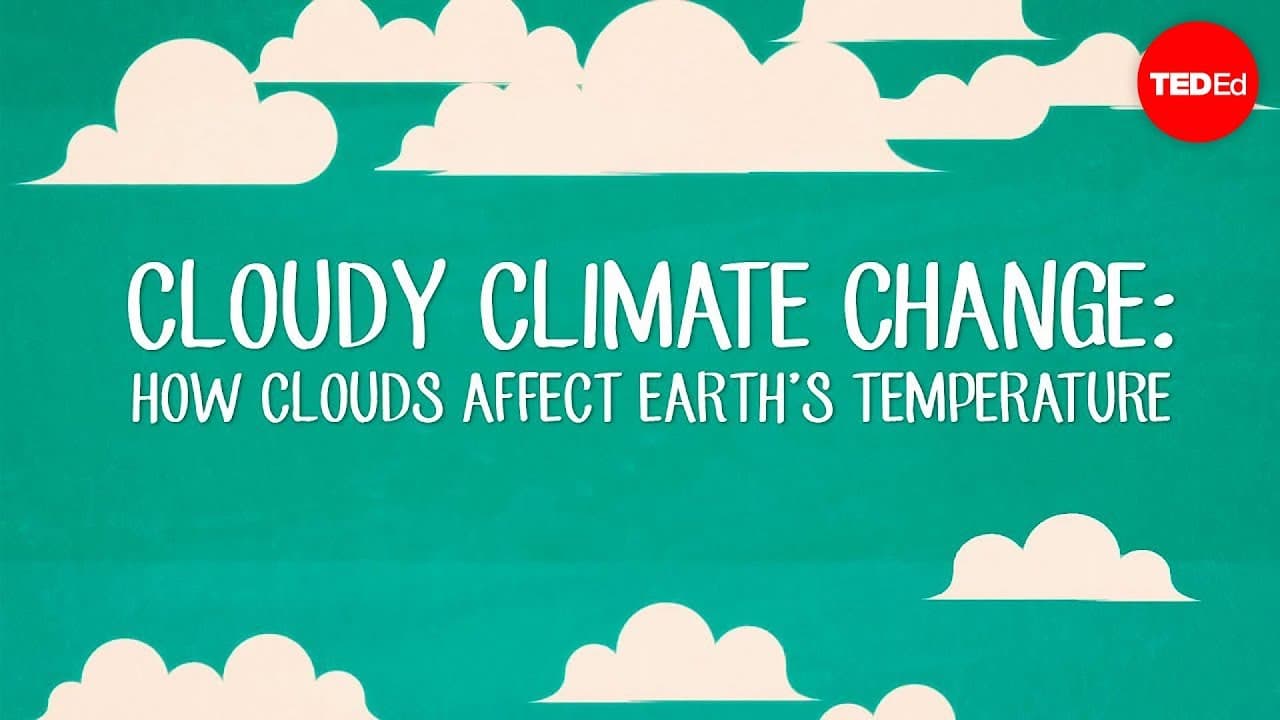
Cloudy climate change: How clouds affect Earth's temperature. Earth's average surface temperature has warmed by .8 Celsius since 1750. When carbon dioxide concentrations in the atmosphere have doubled, which is expected before the end of the 21st century, researchers project global temperatures will have risen by 1.5 to 4.5 degrees Celsius. If the... Read More
Key Insights
- ❓ Earth's average surface temperature has already increased significantly since 1750.
- 😮 The projected temperature rise depends on the doubling of carbon dioxide concentrations.
- 😶🌫️ Understanding the role of aerosols and clouds is essential for accurate climate predictions.
- 😶🌫️ The experiment "Cloud" at CERN is investigating aerosol formation in clouds and the impact of galactic cosmic rays on climate.
- 😑 Pre-industrial cloudiness and its change due to human activities are crucial for better climate projections.
- 😶🌫️ Aerosols play a crucial role in cloud formation and have a significant impact on Earth's climate.
- 🖤 The lack of understanding of aerosols and their formation contributes to the uncertainty in climate sensitivity.
Install to Summarize YouTube Videos and Get Transcripts
Explore YouTube Video Summarizer or Get YouTube Transcript Extractor
Questions & Answers
Q: How has Earth's average surface temperature changed since 1750?
The temperature has increased by 0.8 degrees Celsius since 1750.
Q: What is the projected temperature rise if carbon dioxide concentrations double?
Researchers project a temperature rise of 1.5 to 4.5 degrees Celsius if carbon dioxide concentrations double before the end of the 21st century.
Q: What are the potential consequences of a temperature increase near the low end of the projected range?
A temperature increase of 1.5 degrees Celsius would lead to some regions becoming drier and less productive, while others would become warmer, wetter, and more productive.
Q: Why is there uncertainty in predicting climate change?
The main source of uncertainty is the lack of understanding of aerosols and clouds, as their role in temperature regulation is not fully known.
Key Insights:
- Earth's average surface temperature has already increased significantly since 1750.
- The projected temperature rise depends on the doubling of carbon dioxide concentrations.
- Understanding the role of aerosols and clouds is essential for accurate climate predictions.
- The experiment "Cloud" at CERN is investigating aerosol formation in clouds and the impact of galactic cosmic rays on climate.
- Pre-industrial cloudiness and its change due to human activities are crucial for better climate projections.
- Aerosols play a crucial role in cloud formation and have a significant impact on Earth's climate.
- The lack of understanding of aerosols and their formation contributes to the uncertainty in climate sensitivity.
- Clouds have a direct impact on the availability of freshwater and the overall climate on Earth.
Summary & Key Takeaways
-
Earth's average surface temperature has warmed by 0.8 degrees Celsius since 1750, and it is projected to rise by 1.5 to 4.5 degrees Celsius if carbon dioxide concentrations double.
-
The uncertainty in predicting temperature change is due to the lack of understanding of aerosols and clouds.
-
An experiment called "Cloud" at CERN is investigating the formation of aerosols in clouds and their impact on climate, aiming to provide more accurate climate predictions.
Read in Other Languages (beta)
Share This Summary 📚
Summarize YouTube Videos and Get Video Transcripts with 1-Click
Try YouTube Summary with ChatGPT & Claude or YouTube Transcript Generator
Explore More Summaries from TED-Ed 📚





Summarize YouTube Videos and Get Video Transcripts with 1-Click
Try YouTube Summary with ChatGPT & Claude or YouTube Transcript Generator