What Are Shark Teeth Designs on Military Planes?
TL;DR
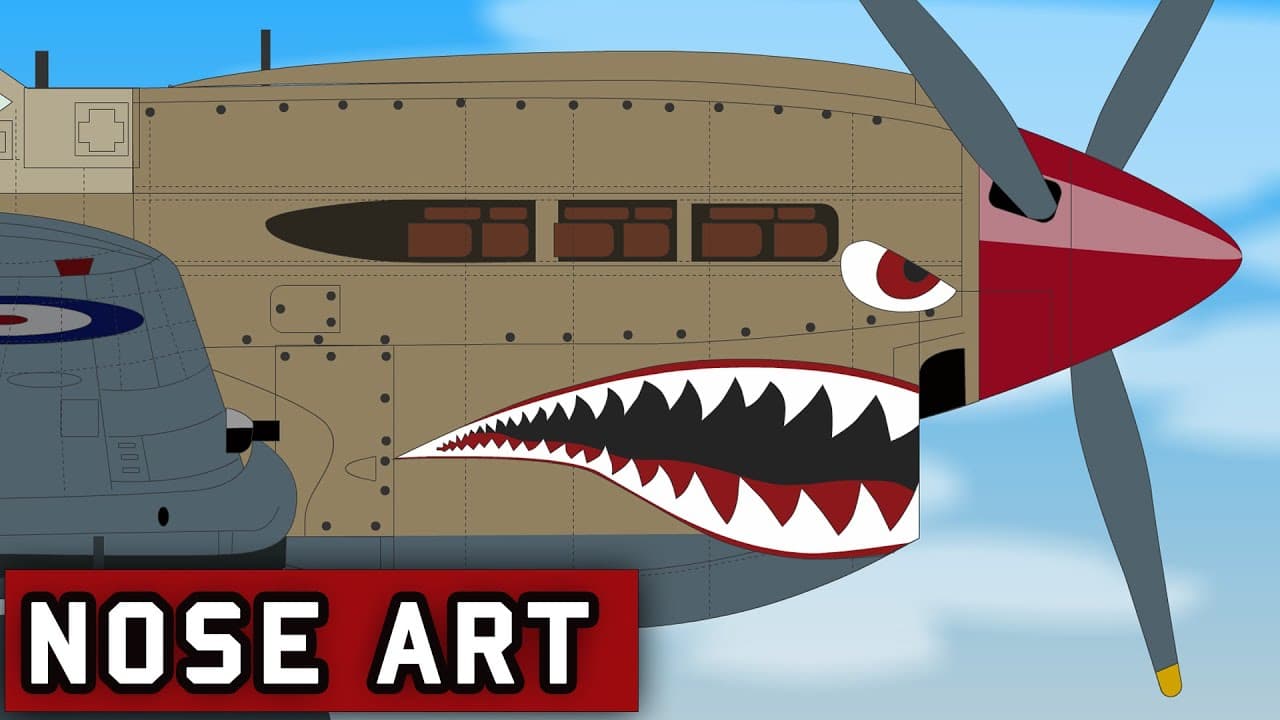
Shark teeth designs on military planes originated during World War I, initially used by German pilots for intimidation. This distinctive nose art gained popularity with the American Flying Tigers in World War II and continued to be utilised in various conflicts, including the Vietnam War, leveraging its psychological impact on enemies.
Transcript
represent your squadron with your very own nose art mask and support the channel 25 of all proceeds will be donated to the red cross dedicated to helping human suffering link in the description below shark face nose art on military planes 1916 to the present day during world war one the newly invented airplane became a most deadly and versatile kil... Read More
Key Insights
- 🛫 Nose art on military planes dates back to World War I, serving various purposes including camouflage and individual expression.
- 🤑 German pilots in World War I used shark mouth designs to intimidate their enemies.
- 🤑 The shark mouth design gained popularity during World War II, starting with the American Flying Tigers and later adopted by other air forces.
- 🤑 The shark mouth motif was also used during the Vietnam War to intimidate the North Vietnamese.
Install to Summarize YouTube Videos and Get Transcripts
Explore YouTube Video Summarizer or Get YouTube Transcript Extractor
Questions & Answers
Q: When did nose art on military planes first appear?
Nose art on military planes first appeared during World War I, with some aircraft featuring paintings for practical purposes, while others were meant to showcase pilot individuality.
Q: What was the significance of the shark mouth design?
The shark mouth design became popular during World War II, initially adopted by German fighter bombers and later by American Flying Tigers and British RAF squadrons. It symbolized aggression, bravery, and created a fearsome image.
Q: How did the shark mouth design influence enemy perception during the Vietnam War?
During the Vietnam War, the shark mouth design was extensively used on American military aircraft, boats, and helicopters. The intention was to intimidate the North Vietnamese who were believed to be superstitious and easily intimidated.
Q: Is the shark mouth design still used on military planes today?
The shark mouth design is rarely used on military planes today, with one notable exception being the Fairchild Republic A-10 Thunderbolt II ground attack aircraft. Its heavily armored design and powerful weaponry give it an intimidating presence.
Summary & Key Takeaways
-
Nose art on military planes has been present since World War I, serving both practical and individualistic purposes.
-
The tradition of shark mouth designs originated in World War I, with German pilots painting snarling shark mouths on their aircraft to intimidate enemies.
-
The shark mouth design gained popularity during World War II, notably with the American Flying Tigers and British RAF squadron.
Read in Other Languages (beta)
Share This Summary 📚
Summarize YouTube Videos and Get Video Transcripts with 1-Click
Try YouTube Summary with ChatGPT & Claude or YouTube Transcript Generator
Explore More Summaries from Simple History 📚


Summarize YouTube Videos and Get Video Transcripts with 1-Click
Try YouTube Summary with ChatGPT & Claude or YouTube Transcript Generator