Thumbscrews (Horrible Punishments in History)
TL;DR
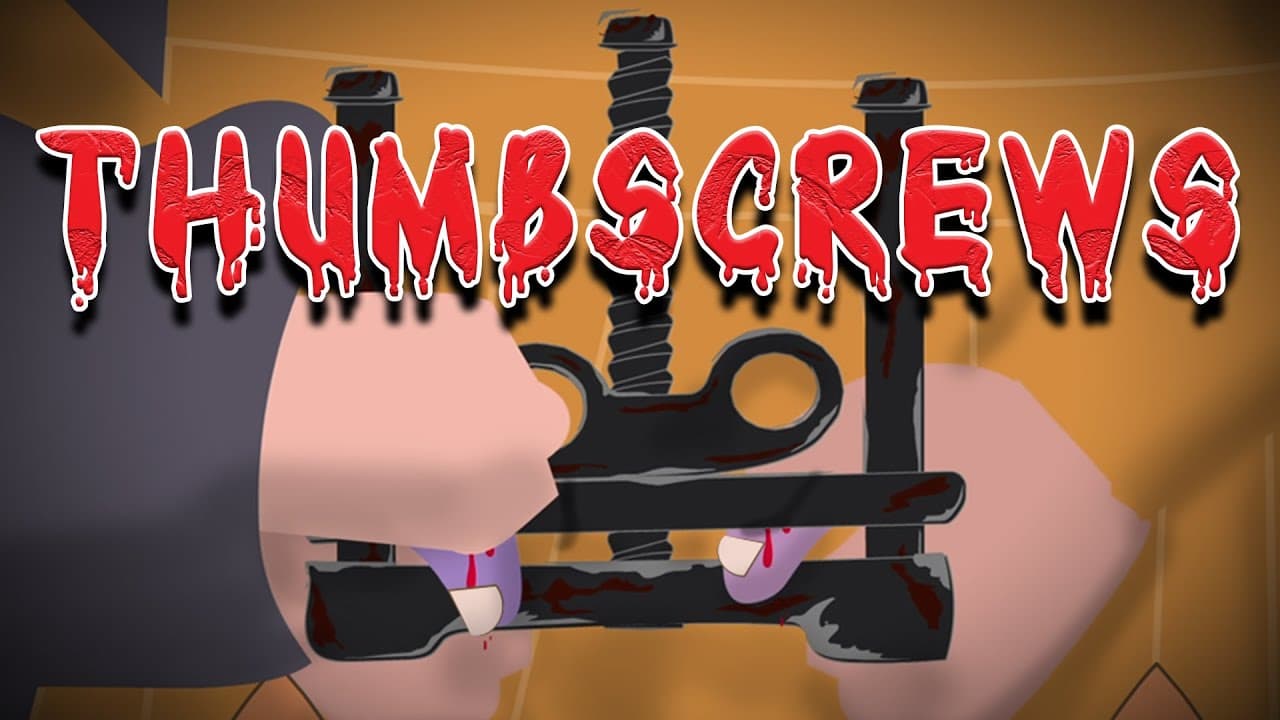
The thumb screws were a notorious medieval torture device used to extract confessions through excruciating pain.
Transcript
medieval torture device thumb screws torture during the middle ages was as creative as it was gruesome however the popular use of torture in medieval court trials did not grow into its own until the unprecedented legal reforms of the 12th and 13th centuries prior to these reforms in classical and early medieval societies it was the possession of ci... Read More
Key Insights
- 😒 Legal reforms in the 12th and 13th centuries allowed the use of torture, and its popularity grew in court trials.
- 😒 Roman law's demand for proof and eyewitness testimony led to an escalation in the use of torture.
- 🫰 Thumb screws were one of the most effective torture devices, causing extreme pain and damage to victims' fingers.
- 🫰 The thumb screws were particularly notorious during the Spanish Inquisition, where heretics were forced to confess their beliefs.
- 🇷🇴 Galileo Galilei, a victim of the Roman Inquisition, admitted his heresy under the threat of torture.
- 😒 Thumb screws were also used in witch trials, but doubts about the authenticity of confessions led to their decreased use in later years.
Install to Summarize YouTube Videos and Get Transcripts
Explore YouTube Video Summarizer or Get YouTube Transcript Extractor
Questions & Answers
Q: How did the legal reforms in the 12th and 13th centuries contribute to the growth of torture in court trials?
Prior to these reforms, citizenship afforded protection, but suspected high treason or serious crime could lead to torture. The reforms removed these limitations, enabling the use of torture in court trials.
Q: Why were thumb screws considered one of the most effective torture devices?
Thumb screws were effective because they caused excruciating pain and crushed the fingers of victims, without necessarily causing death. They were infamously used during the Spanish Inquisition to force confessions.
Q: Who were some of the notable victims of the inquisitors' thumb screw torture?
Galileo Galilei, a prominent astronomer, was interrogated during the Roman Inquisition and admitted his heresy due to the threat of torture. Many victims of both the Spanish and Roman inquisitions who confessed were burned at the stake.
Q: How did the use of thumb screws evolve during the witch trials?
Thumb screws were initially used extensively during witch trials to compel confessions. However, as doubts arose about the authenticity of confessions obtained under distress, their use became less common in later England and Germany.
Summary & Key Takeaways
-
Torture during the Middle Ages was creative and gruesome, but its popular use in court trials grew with legal reforms in the 12th and 13th centuries.
-
The use of torture escalated and became widespread in Italy after the adoption of Roman law, which demanded proof and eyewitness testimony for conviction.
-
Thumb screws were among the most effective torture devices, crushing the fingers of victims and causing severe pain.
Read in Other Languages (beta)
Share This Summary 📚
Summarize YouTube Videos and Get Video Transcripts with 1-Click
Try YouTube Summary with ChatGPT & Claude or YouTube Transcript Generator
Explore More Summaries from Simple History 📚




Summarize YouTube Videos and Get Video Transcripts with 1-Click
Try YouTube Summary with ChatGPT & Claude or YouTube Transcript Generator