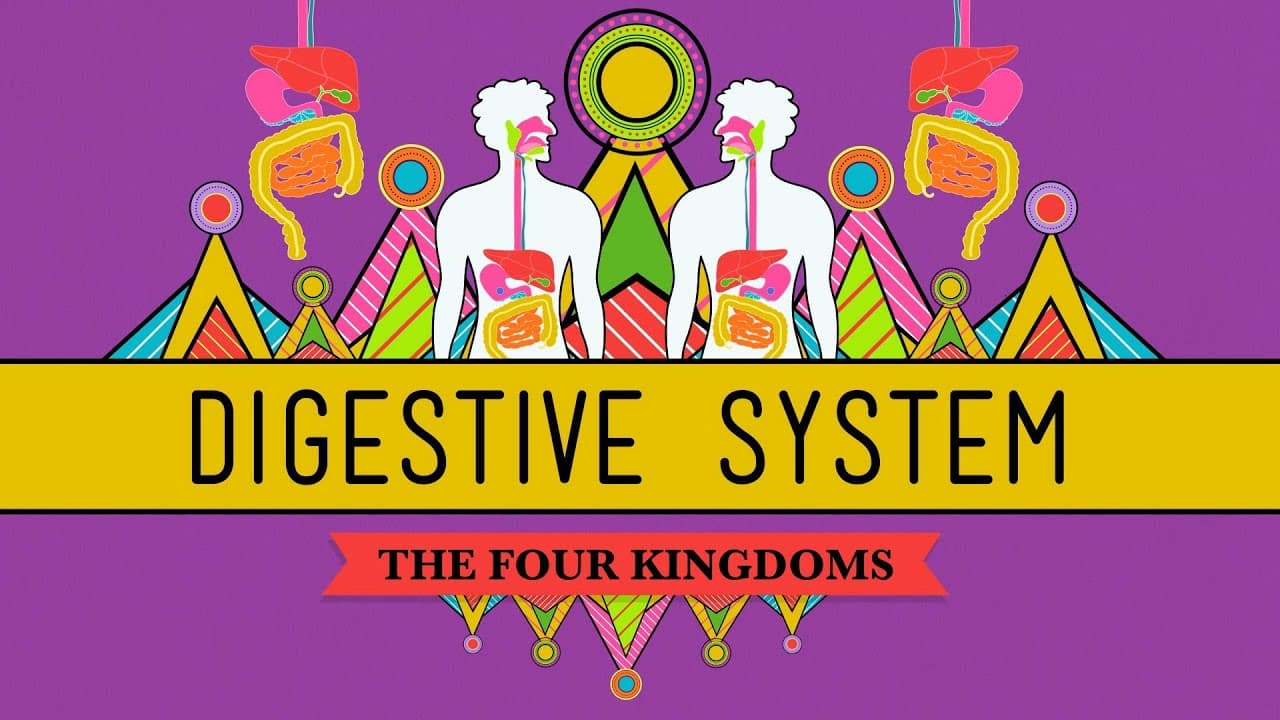
The Digestive System: CrashCourse Biology #28
TL;DR
The video explains the human digestive system focusing on surface area and digestion processes.
Transcript
Oh hi! I hope you don't mind that I'm eating. This is actually just my first course. For my birthday, the writers wrote me a script where I just get to eat! The whole time! And I can't think of a better way to demonstrate the workings of the digestive system, the series of hollow organs that we use to break down and process the nutrients and energy... Read More
Key Insights
- The digestive system is essential for breaking down food to absorb nutrients and expel waste, involving a series of hollow organs.
- Digestion begins in the mouth where enzymes in saliva start breaking down food, emphasizing the importance of chewing.
- Different animals have diverse digestive systems adapted to their diets, such as short tracts in carnivores and complex systems in herbivores.
- The stomach uses acids and enzymes to further break down food, with mucus protecting it from self-digestion.
- The small intestine is crucial for nutrient absorption, featuring extensive surface area due to folds and villi.
- Bile from the gallbladder emulsifies fats in the small intestine, aiding in their breakdown and absorption.
- The large intestine reabsorbs water and bile salts, preparing waste for excretion while the appendix helps maintain gut bacteria.
- The process of digestion can take up to three days, with the large intestine playing a significant role in water absorption and waste formation.
Install to Summarize YouTube Videos and Get Transcripts
Explore YouTube Video Summarizer or Get YouTube Transcript Extractor
Questions & Answers
Q: What role does surface area play in digestion?
Surface area is crucial in digestion as it allows enzymes and acids to efficiently break down food. Chewing increases the surface area of food, making it easier for digestive enzymes to act. Additionally, the small intestine's folds and villi maximize surface area for nutrient absorption.
Q: How does the stomach protect itself from its own acids?
The stomach protects itself from its own acids with a layer of mucus that lines its walls. This mucus prevents the hydrochloric acid and enzymes from digesting the stomach tissue itself, preventing conditions like peptic ulcers.
Q: Why do different animals have varying digestive systems?
Different animals have evolved digestive systems that are adapted to their specific diets and feeding behaviors. For example, carnivores like dogs have short digestive tracts to quickly process meat, while herbivores like cows have complex systems to break down cellulose in plants.
Q: What is the function of bile in digestion?
Bile, produced by the liver and stored in the gallbladder, emulsifies fats in the small intestine. It breaks down fat molecules into smaller fatty acids and monoglycerides, making them easier to absorb through the intestinal walls.
Q: How does the small intestine maximize nutrient absorption?
The small intestine maximizes nutrient absorption through its extensive surface area, created by its length and the presence of folds and villi. These structures increase the area available for nutrient exchange, allowing more efficient absorption into the bloodstream.
Q: What role does the large intestine play in digestion?
The large intestine's primary role is to absorb water and bile salts from the remaining chyme, transforming it into solid waste. It also houses beneficial bacteria that aid in the final stages of digestion and nutrient absorption.
Q: What is the purpose of the appendix in humans?
The appendix acts as a safe house for beneficial gut bacteria. In the event of a digestive upset, such as food poisoning, it helps repopulate the gut with healthy bacteria, aiding in recovery and maintaining digestive health.
Q: How does the body regulate the movement of food through the digestive system?
The body regulates food movement through the digestive system using muscular contractions called peristalsis. These wave-like contractions move food along the digestive tract, from the esophagus to the intestines, ensuring efficient processing and nutrient absorption.
Summary & Key Takeaways
-
The video provides a detailed overview of the human digestive system, highlighting the importance of surface area in nutrient absorption. It explains the roles of different organs in breaking down food and expelling waste.
-
Digestion begins in the mouth with enzymes in saliva, continues in the stomach with acids and enzymes, and finishes in the intestines where nutrients are absorbed and waste is formed.
-
Different animals have evolved digestive systems suited to their diets, and the video explains how humans, as omnivores, have a versatile system capable of handling a variety of foods.
Read in Other Languages (beta)
Share This Summary 📚
Summarize YouTube Videos and Get Video Transcripts with 1-Click
Try YouTube Summary with ChatGPT & Claude or YouTube Transcript Generator
Explore More Summaries from CrashCourse 📚



Summarize YouTube Videos and Get Video Transcripts with 1-Click
Try YouTube Summary with ChatGPT & Claude or YouTube Transcript Generator