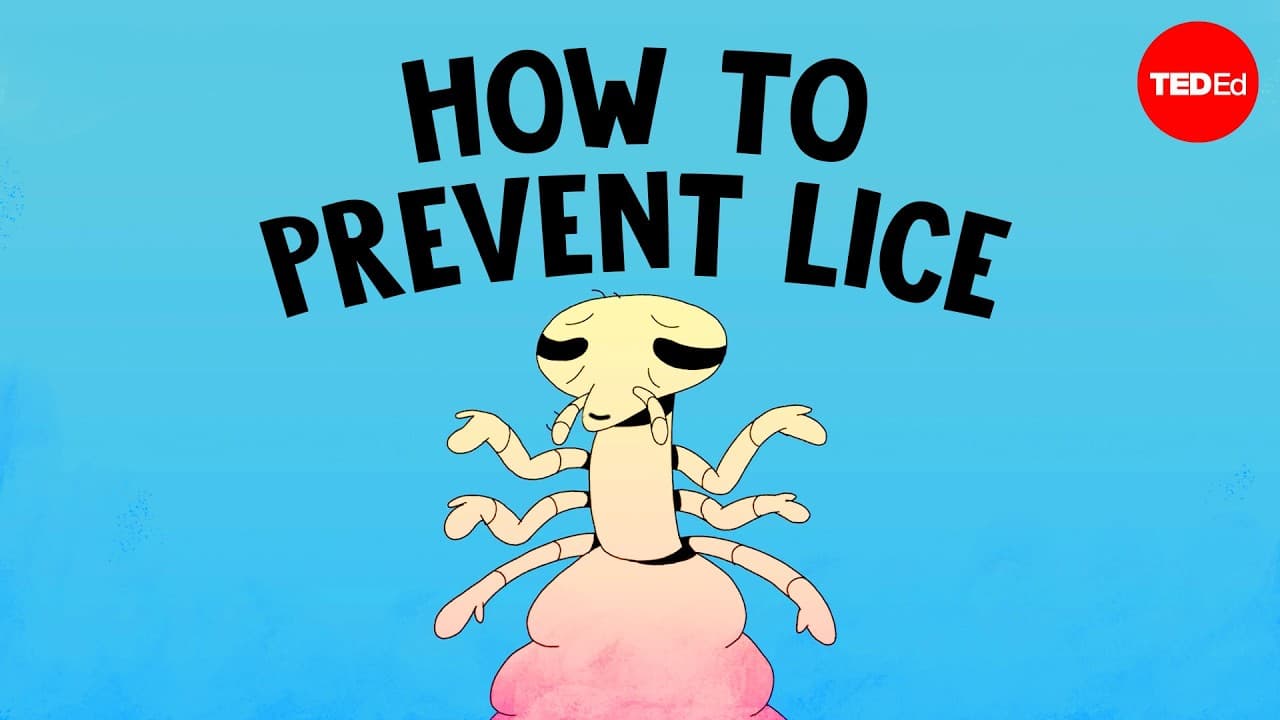
This is the most common way to get head lice - Nazzy Pakpour
TL;DR
Head lice have plagued humans for thousands of years, resisting eradication through various means.
Transcript
The six-legged creature creeps down the canopy, extends its slender trunk, and pierces the ground. Up comes blood. This is no regular forest. Living where the scalp meets the hair, these nightmarish figures are, in fact, sesame seed-sized insects, otherwise known as head lice. The earliest archaeological evidence of humans’ close-knit relationship ... Read More
Key Insights
- 👮 Archaeological finds reveal a long-standing relationship between humans and lice, showcasing the persistence of these parasites.
- ♻️ There are thousands of louse species, but only three types affect humans, each adapted to its niche environment.
- 👮 Effective lice removal is not solely about killing live lice; one must also address the stubborn nit issue to prevent reinfestation.
- 🤑 The history of lice infestation treatment is rich and includes ancient practices, indicating how long humanity has struggled with this problem.
- 👻 Lice can survive off a host for about 24 hours, emphasizing the importance of direct contact in their transmission.
- 👶 Scientific advancements are ongoing to discover new methods targeting the nit sheath to enhance treatment efficacy.
- 🤕 Head lice infestations are particularly common among children in the U.S., affecting millions annually and causing widespread concern.
Install to Summarize YouTube Videos and Get Transcripts
Explore YouTube Video Summarizer or Get YouTube Transcript Extractor
Questions & Answers
Q: What are the different types of lice that affect humans?
Humans are primarily affected by three kinds of lice: Pediculus humanus capitis (head lice), which live on the scalp; Pediculus humanus humanus (body lice), which prefer clothing and bedding; and Pthirus pubis (pubic lice), which inhabit the pubic area. Each type has adapted to its specific environment, making them resilient to various eradication methods.
Q: How do lice spread between individuals?
Contrary to common beliefs, lice usually spread through direct head-to-head contact rather than through sharing hats or hairbrushes. Since lice are wingless and cannot jump, they rely on crawling to move from one host to another. They are attracted by body heat and chemical signals from the scalp.
Q: Why are nit sheaths difficult to remove?
Nit sheaths, which protect lice eggs, are designed to be waterproof and resist chemical breakdown, making them challenging to eliminate with typical insecticides. These sheaths secure the eggs tightly to the hair, ensuring they receive the necessary hydration and nutrients until they hatch, usually in 8 to 9 days.
Q: What historical methods have been used to treat lice infestations?
Throughout history, various cultures have used nit combs—fine-toothed tools—to remove lice and their eggs. Archaeological evidence shows that these tools have been found among ancient remains, indicating that the battle against lice is not a modern issue but a longstanding human concern.
Q: Why are chemical treatments often ineffective against nits?
Most over-the-counter insecticide shampoos target actively feeding lice and are primarily effective against hatched lice. Unfortunately, these treatments do not penetrate or dissolve the protective nit sheaths, leaving the eggs intact and allowing reinfestation once they hatch.
Q: How do lice feed on humans?
Lice feed by piercing the scalp with a specialized mouth that resembles a tube. Once they penetrate, they inject saliva containing anticoagulants to prevent blood clotting, which can cause itching and irritation for the host. This feeding process is essential for their survival and reproductive success.
Summary & Key Takeaways
-
Head lice have a long history with humans, dating back to archaeological finds, and are notoriously difficult to eliminate due to their unique biology and reproduction.
-
There are three types of lice that affect humans: head lice, body lice, and pubic lice, each with distinct habitats and survival strategies that complicate eradication.
-
Effective lice control relies on removing nits with fine-toothed combs, as chemical treatments fail to eliminate eggs, underlining the need for new scientific advancements.
Read in Other Languages (beta)
Share This Summary 📚
Summarize YouTube Videos and Get Video Transcripts with 1-Click
Try YouTube Summary with ChatGPT & Claude or YouTube Transcript Generator
Explore More Summaries from TED-Ed 📚



Summarize YouTube Videos and Get Video Transcripts with 1-Click
Try YouTube Summary with ChatGPT & Claude or YouTube Transcript Generator