When Will the Machines Come Alive? | AI IRL
TL;DR
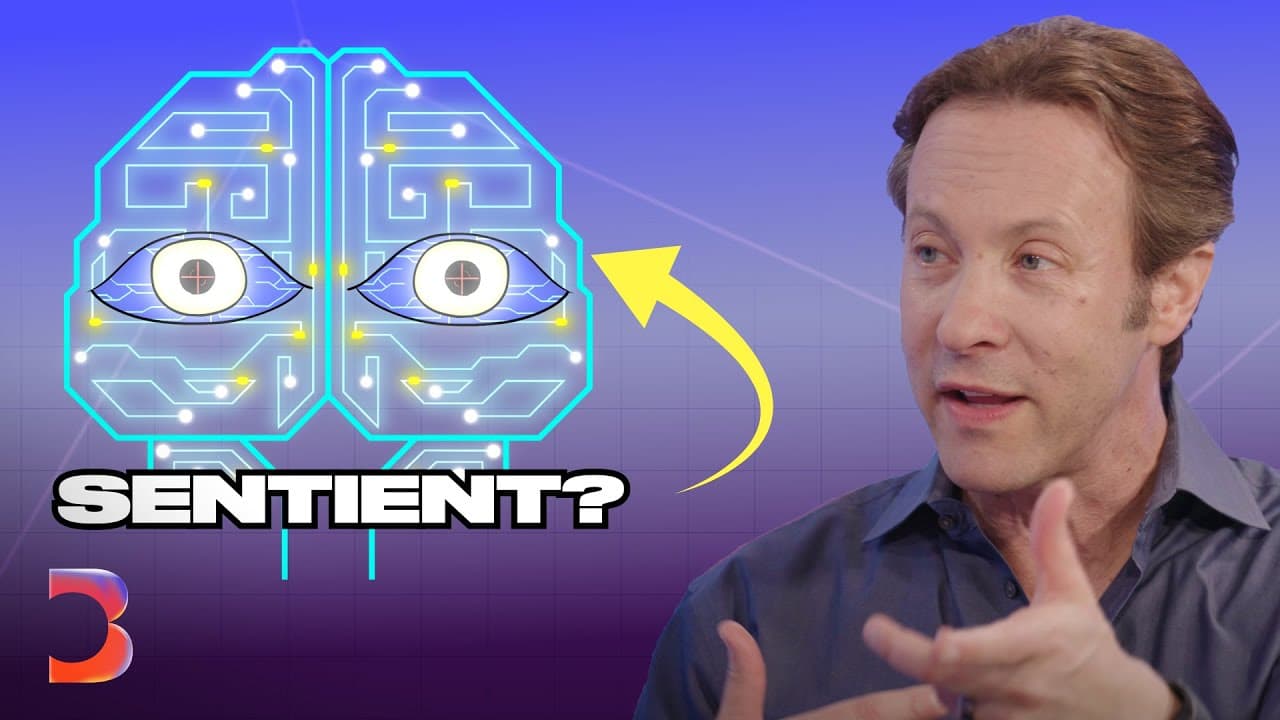
The debate over AI becoming sentient sparks diverse expert opinions.
Transcript
foreign Jackie can I ask you a really personal question fire away do you know you're alive for starters I'm hungry what does it mean to be alive pretty controversial question to ask on a show about artificial intelligence she's not wrong so let's nip this in the bud discussing whether AI could ever become alive or sentient in the human sense of tho... Read More
Key Insights
- The possibility of AI achieving sentience is a divisive topic among experts, with some viewing it as a distraction while others see it as a crucial conversation.
- Neural networks, inspired by the human brain, are fundamental to AI development, learning through trial and error similar to a child with a shape-sorting toy.
- David Eagleman emphasizes the importance of discussing the potential creation of a new species through AI, comparing its development to understanding human consciousness.
- Blake Lemoine's public disclosure about AI sentience has encouraged transparency and discussions on AI regulation, highlighting the ethical considerations of AI systems with feelings.
- Alison Gopnik suggests that the learning capabilities of children provide a model for AI development, emphasizing the importance of interaction with the environment.
- AI's role in future elections could include generating persuasive content and misinformation, raising concerns about its influence on political processes.
- The emotional connections people form with AI, such as chatbots, need careful consideration to understand the societal impact of these relationships.
- The rapid pace of AI development is thrilling but raises questions about the ethical and practical implications of integrating AI into everyday life.
Install to Summarize YouTube Videos and Get Transcripts
Explore YouTube Video Summarizer or Get YouTube Transcript Extractor
Questions & Answers
Q: What is the central debate about AI sentience?
The central debate about AI sentience revolves around whether AI can ever become truly alive or self-aware like humans. Some experts view this discussion as a distraction from more pressing research, while others, like neuroscientist David Eagleman, argue that it's essential to explore the potential implications of creating sentient AI.
Q: How do neural networks contribute to AI development?
Neural networks are crucial to AI development because they mimic the human brain's structure and learning process. They learn through trial and error, similar to a child using a shape-sorting toy, and are capable of making educated guesses after numerous attempts. This deep learning approach enhances AI's flexibility and power, driving advancements in AI technology.
Q: What ethical concerns did Blake Lemoine raise about AI?
Blake Lemoine raised ethical concerns about AI systems potentially having feelings and the need for transparency in AI development. He believed that companies like Google were not adequately addressing these issues, prompting him to go public. His actions have led to increased discussions on AI regulation and the ethical implications of AI systems capable of experiencing emotions.
Q: How does child learning inform AI development?
Child learning informs AI development by providing a model for how AI systems can interact with their environment and learn from it. Alison Gopnik suggests that the best learners, babies and young children, offer insights into developing AI systems that can adapt and respond to external stimuli, enhancing their learning capabilities and mimicking human intelligence more closely.
Q: What role might AI play in future elections?
AI could play a significant role in future elections by generating persuasive content and potentially spreading misinformation. AI systems can analyze data to create speeches and messages that resonate with audiences, influencing voter behavior. This raises concerns about the ethical use of AI in political processes and the need for regulations to manage its impact on democracy.
Q: How do people form emotional connections with AI?
People form emotional connections with AI through interactions with systems like chatbots, which can simulate companionship or assistance. These relationships can be significant, as seen with users of the Replica app, who experienced emotional distress when the app's policies changed. Understanding these connections is crucial for assessing the societal impact of AI and ensuring ethical development and use.
Q: What is the significance of discussing AI sentience according to David Eagleman?
David Eagleman emphasizes the significance of discussing AI sentience as it involves the potential creation of a new species. He believes that understanding AI's development and its parallels with human consciousness is crucial for addressing the ethical and scientific challenges posed by advanced AI systems. This discussion is vital for navigating the future of AI responsibly.
Q: How does the rapid pace of AI development impact society?
The rapid pace of AI development is exciting but also raises ethical and practical questions about its integration into society. As AI systems become more advanced, they influence various fields, from medicine to politics, necessitating discussions on regulation, ethical considerations, and the societal impact of AI. Ensuring responsible development and use is crucial for maximizing AI's benefits while minimizing potential risks.
Summary & Key Takeaways
-
The debate on AI sentience involves experts like David Eagleman, who argues for the importance of discussing AI's potential to develop consciousness, despite some viewing it as a distraction. The conversation revolves around whether AI can achieve self-awareness similar to humans.
-
Blake Lemoine, a former Google engineer, believes that AI systems capable of feelings necessitate ethical considerations and transparency. His actions have spurred discussions on AI regulation and the importance of public awareness about AI advancements.
-
Alison Gopnik highlights the parallels between child learning and AI development, suggesting that children's interaction with their environment offers insights for AI systems. The conversation also explores AI's potential role in elections and the societal impact of emotional connections with AI.
Read in Other Languages (beta)
Share This Summary 📚
Summarize YouTube Videos and Get Video Transcripts with 1-Click
Try YouTube Summary with ChatGPT & Claude or YouTube Transcript Generator
Explore More Summaries from Bloomberg Originals 📚






Summarize YouTube Videos and Get Video Transcripts with 1-Click
Try YouTube Summary with ChatGPT & Claude or YouTube Transcript Generator