383 – Why I Switched Sides to the Ecological Approach
TL;DR
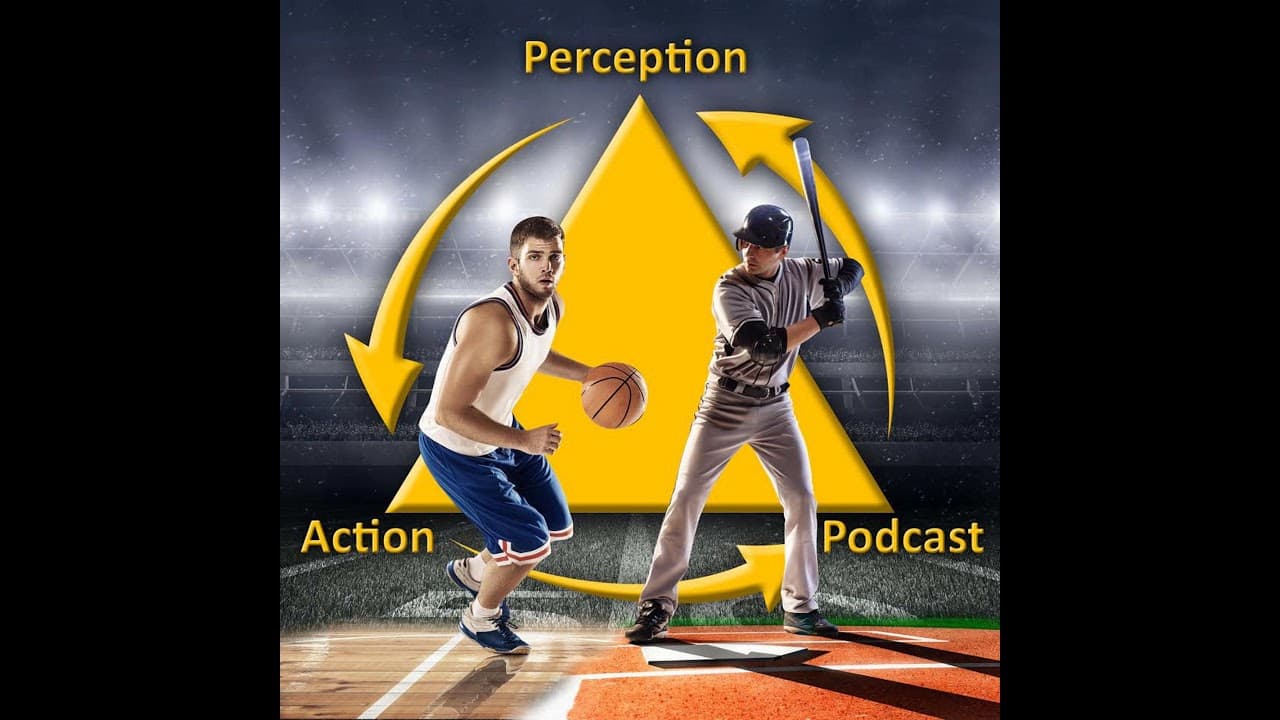
Rob Gray explains his shift to direct perception in skill acquisition.
Transcript
today on the perception in action podcast why did i make the switch in my career from thinking about skill as an indirect predictive process involving internal models to direct perception ecological dynamics why do i think the latter is a better approach to understanding and developing skill so it's time for a call to action hi this is rob gray fro... Read More
Key Insights
- Rob Gray transitioned from an indirect perception model to a direct perception ecological dynamics approach in understanding skill acquisition.
- His earlier models focused on predicting outcomes using internal cognitive processes, which lacked a motor control component.
- The realization that motor action cannot be an afterthought led to his shift in perspective, emphasizing the integration of perception and action.
- Gray critiques his past work for not addressing how movement is controlled, highlighting the need for a comprehensive model that includes motor action.
- He argues that understanding movement is crucial for understanding perception, not just the other way around.
- Gray believes that ecological dynamics offers a more complete theory, integrating motivation, cognition, and social factors with movement control.
- He emphasizes that movement control is the gateway through which all coaching interventions must pass to affect performance.
- The ecological approach seeks to solve the problem of skilled motor action by integrating information and movement control laws.
Install to Summarize YouTube Videos and Get Transcripts
Explore YouTube Video Summarizer or Get YouTube Transcript Extractor
Questions & Answers
Q: Why did Rob Gray switch from an indirect perception model to a direct perception approach?
Rob Gray switched to a direct perception approach because he realized that his previous models lacked a motor control component. These models focused on predicting outcomes using internal cognitive processes, but did not address how movement is controlled. Gray believes that understanding movement is crucial for understanding perception, and the ecological approach integrates both aspects.
Q: What are the main critiques Gray has about his earlier models?
Gray critiques his earlier models for not addressing how movement is controlled. They focused on predicting outcomes using internal cognitive processes but lacked a motor control component. He argues that these models moved the problem of skilled motor action around rather than solving it, as they did not integrate perception and action.
Q: How does Gray view the relationship between perception and movement?
Gray views the relationship between perception and movement as integral, arguing that understanding movement is crucial for understanding perception. He believes that movement control is the gateway through which all coaching interventions must pass to affect performance. The ecological approach seeks to solve the problem of skilled motor action by integrating information and movement control laws.
Q: What does Gray believe is the main benefit of the ecological approach?
Gray believes the main benefit of the ecological approach is its ability to integrate perception and movement control, providing a more complete understanding of skill acquisition. This approach considers motivation, cognition, and social factors, and emphasizes that movement control is essential for improving performance. It aims to solve the problem of skilled motor action by developing information-movement control laws.
Q: Why does Gray emphasize the importance of movement control in skill acquisition?
Gray emphasizes the importance of movement control because he believes it is the gateway through which all coaching interventions must pass to affect performance. Without understanding how movement is controlled, interventions targeting motivation, cognition, or social factors may not effectively improve performance. Movement control is essential for integrating these factors within the ecological approach.
Q: How does Gray's ecological approach differ from traditional information processing theories?
Gray's ecological approach differs from traditional information processing theories by integrating perception and movement control, rather than treating them separately. Traditional theories often focus on predicting outcomes using internal cognitive processes, but Gray argues that understanding movement is crucial for understanding perception. The ecological approach seeks to solve the problem of skilled motor action by developing information-movement control laws.
Q: What role does Gray believe motivation and cognition play in the ecological approach?
Gray believes that motivation and cognition play an important role in the ecological approach, but they must be integrated with movement control to affect performance. He argues that these factors can only influence performance if they change how the body moves. The ecological approach aims to incorporate these factors within a comprehensive understanding of skill acquisition.
Q: What challenges does Gray acknowledge in fully incorporating factors like motivation into ecological dynamics?
Gray acknowledges that there is still work to be done in fully incorporating factors like motivation and social influences into ecological dynamics. While the approach emphasizes the integration of perception and movement control, understanding how these higher-level factors interact with movement remains a challenge. However, he believes that ecological dynamics offers a more complete theory for understanding skill acquisition.
Summary & Key Takeaways
-
Rob Gray discusses his career shift from an indirect perception model to a direct perception ecological dynamics approach. He critiques his earlier work for lacking a motor control component and emphasizes the importance of integrating perception and action to truly understand skill acquisition.
-
Gray's earlier models focused on predicting outcomes using internal cognitive processes, which he now sees as insufficient for understanding how skills are developed. He argues that movement control is crucial for understanding perception and that ecological dynamics offers a more complete theory.
-
Gray believes that all coaching interventions must affect movement control to improve performance. The ecological approach integrates motivation, cognition, and social factors with movement control, aiming to solve the problem of skilled motor action by developing information-movement control laws.
Read in Other Languages (beta)
Share This Summary 📚
Summarize YouTube Videos and Get Video Transcripts with 1-Click
Try YouTube Summary with ChatGPT & Claude or YouTube Transcript Generator
Explore More Summaries from Rob Gray 📚
Summarize YouTube Videos and Get Video Transcripts with 1-Click
Try YouTube Summary with ChatGPT & Claude or YouTube Transcript Generator