How to Integrate Sports Science in MMA Coaching
TL;DR
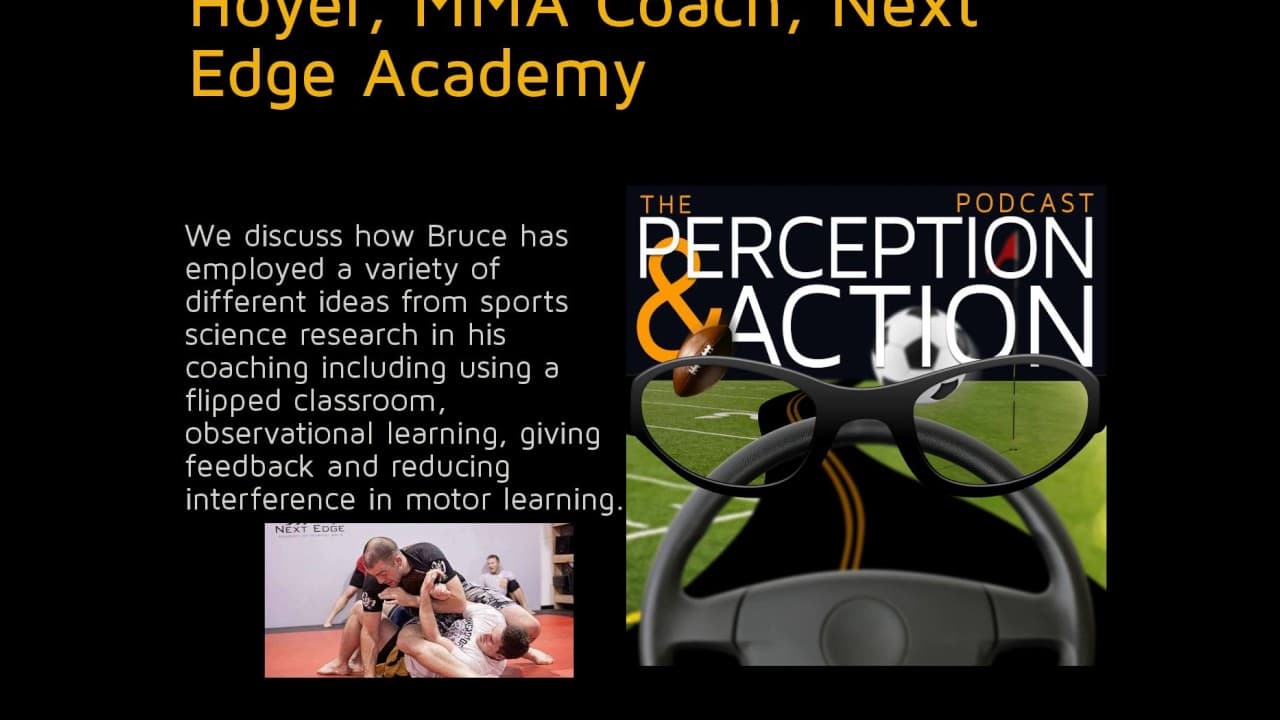
Bruce Hoyer, an MMA coach at Next Edge Academy, utilizes sports science research to enhance his coaching methods. By incorporating a flipped classroom model, observational learning, and video feedback, Hoyer effectively reduces interference in motor learning. His approach allows students to progress at their own pace, fostering a more personalized and effective learning environment.
Transcript
this is Rob Gray from ASU and perception action.com today on the perception and action podcast my interview with Bruce Hoyer martial arts coach at the next Edge Academy in South Dakota hi everyone welcome to the perception and action podcast where I discuss how psychological research can be applied to improving performance accelerating skill acquis... Read More
Key Insights
- Bruce Hoyer is a black belt in Brazilian jiu-jitsu and a two-time world championship medalist.
- He employs a flipped classroom model, allowing students to watch instructional videos before practice.
- Observational learning is integral, with students reviewing sparring sessions to identify areas for improvement.
- Feedback is provided through video analysis rather than live coaching during sparring.
- Reducing interference in motor learning is achieved by varying techniques and positions.
- The scientific approach to coaching leads to faster skill acquisition and improved performance.
- Student numbers at Next Edge Academy have increased significantly due to the new coaching methods.
- Students are encouraged to model themselves after top-level athletes to enhance decision-making skills.
Install to Summarize YouTube Videos and Get Transcripts
Explore YouTube Video Summarizer or Get YouTube Transcript Extractor
Questions & Answers
Q: How does the flipped classroom model work in MMA coaching?
In MMA coaching, the flipped classroom model involves students watching instructional videos before attending practice sessions. This approach allows students to familiarize themselves with techniques and concepts at their own pace. During practice, they can focus on drilling and applying these techniques under the guidance of the coach, who acts more as a facilitator than a traditional instructor.
Q: What is the role of video feedback in Bruce Hoyer's coaching?
Video feedback plays a crucial role in Bruce Hoyer's coaching by allowing students to review their sparring sessions and identify areas for improvement. Instead of receiving live coaching during sparring, students watch recordings and receive feedback on specific techniques and decisions. This method helps reduce anxiety and enhances learning by allowing students to reflect and correct their mistakes outside the high-pressure environment of live practice.
Q: How does reducing interference in motor learning benefit MMA students?
Reducing interference in motor learning benefits MMA students by minimizing confusion between similar techniques and enhancing the retention of skills. By varying techniques and positions, students can focus on mastering one technique at a time before moving on to more complex combinations. This approach ensures that students develop a strong foundation and can apply learned skills effectively during sparring and competition.
Q: Why is modeling after top-level athletes encouraged in MMA training?
Modeling after top-level athletes is encouraged in MMA training to help students understand the application of techniques and decision-making in real-world scenarios. By observing elite athletes, students can learn about timing, positioning, and strategic openings during matches. This observational learning complements technical training and helps students develop a comprehensive understanding of the sport.
Q: What impact has the scientific approach had on student numbers at Next Edge Academy?
The scientific approach to coaching at Next Edge Academy has led to a significant increase in student numbers. By incorporating research-based methods such as the flipped classroom model and video feedback, the academy offers a more personalized and effective learning experience. This approach attracts more students, as it demonstrates a commitment to modern, evidence-based training techniques that enhance skill acquisition and performance.
Q: How do students progress through skill levels in Bruce Hoyer's program?
Students progress through skill levels in Bruce Hoyer's program by completing a curriculum structured into levels. Each level contains around 20 techniques, and students watch instructional videos to learn them. Progression is based on mastering techniques to a satisfactory level, assessed through video feedback and sparring performance. Students move to the next level once they demonstrate competency in the current one.
Q: What challenges did Bruce Hoyer face when implementing the flipped classroom model?
Bruce Hoyer faced challenges such as initial resistance from students who were unfamiliar with the flipped classroom model. Students had to adapt to doing homework by watching videos before practice, which was a new concept for many. However, once they experienced the benefits of reduced anxiety and more effective practice sessions, acceptance grew, leading to increased engagement and improved learning outcomes.
Q: How does Bruce Hoyer address the issue of feedback overload in coaching?
Bruce Hoyer addresses feedback overload by limiting the amount of live coaching during sparring sessions. Instead of providing constant corrections, he uses video analysis to offer targeted feedback on specific areas for improvement. This approach prevents overwhelming students with information and allows them to focus on one or two key adjustments at a time, enhancing their ability to learn and apply new techniques effectively.
Summary & Key Takeaways
-
Bruce Hoyer utilizes a flipped classroom model at Next Edge Academy, where students watch instructional videos prior to practice. This approach allows for a more personalized learning experience, enabling students to progress through skill levels at their own pace. Video feedback during sparring sessions helps students identify and correct mistakes without live coaching interference.
-
The integration of sports science research into coaching has led to faster skill acquisition and improved performance. Hoyer's methods focus on reducing interference in motor learning by varying techniques and positions, allowing students to apply learned skills effectively. This scientific approach has increased student numbers and engagement at the academy.
-
Students at Next Edge Academy benefit from modeling themselves after top-level athletes, enhancing their decision-making skills during practice. The use of video analysis provides a clear understanding of when and how to apply techniques, contributing to a comprehensive and effective learning environment.
Read in Other Languages (beta)
Share This Summary 📚
Summarize YouTube Videos and Get Video Transcripts with 1-Click
Try YouTube Summary with ChatGPT & Claude or YouTube Transcript Generator
Explore More Summaries from Rob Gray 📚
Summarize YouTube Videos and Get Video Transcripts with 1-Click
Try YouTube Summary with ChatGPT & Claude or YouTube Transcript Generator