How Does Brain Stimulation Affect Sports Skills?
TL;DR
Non-invasive brain stimulation, like tDCS, shows potential in enhancing motor learning and sports performance, but its real-world application remains uncertain. While studies indicate benefits in controlled tasks, results vary widely due to methodological inconsistencies and individual differences. The practicality of using such technology in sports is limited by unclear effects during active movement and lack of consistency in stimulation timing.
Transcript
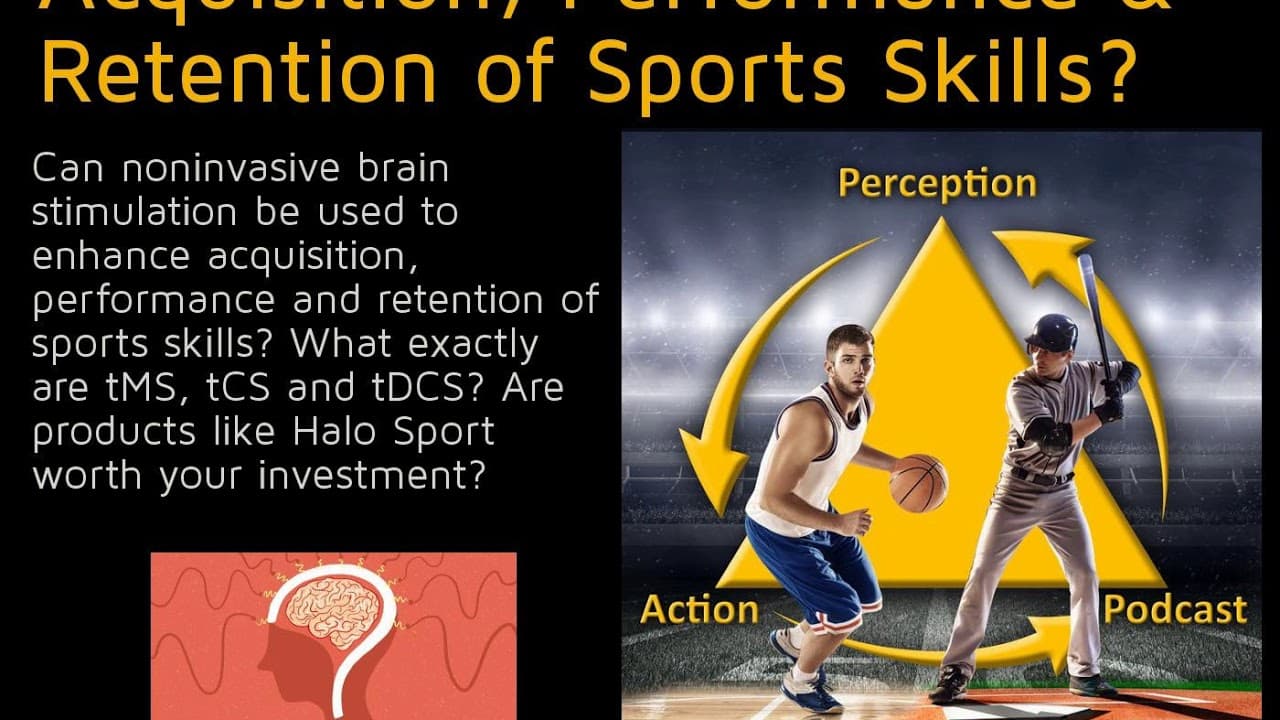
today on the perception and action podcast can non-invasive brain stimulation be used to enhance acquisition performance and retention of sports skills what exactly are TMS TCS and tDCS our products like halo sport worth your investment so it's time for a call to action hi everyone this is Rob gray from Arizona State University in perception action... Read More
Key Insights
- Non-invasive brain stimulation includes techniques like TMS and tDCS, which aim to enhance brain plasticity and motor learning.
- TMS uses magnetic fields to stimulate specific brain areas but is expensive and not portable, limiting its use in sports.
- tDCS applies electrical currents and is cheaper and more portable, but affects larger brain areas and has less precision.
- Studies show tDCS can improve motor learning tasks when applied during practice but not before or after.
- The effectiveness of brain stimulation varies greatly due to factors like age, genetics, and individual physiological states.
- Real-world application in sports is limited; moving subjects complicate the stimulation effects, making it unpredictable.
- The Halo Sport device claims to enhance motor learning through tDCS but lacks consistent scientific backing for sports use.
- Current research is mostly on non-experts; effects on trained athletes remain unclear and require further study.
Install to Summarize YouTube Videos and Get Transcripts
Explore YouTube Video Summarizer or Get YouTube Transcript Extractor
Questions & Answers
Q: How does tDCS enhance motor learning?
Transcranial direct current stimulation (tDCS) enhances motor learning by modulating brain plasticity. It involves applying a weak electrical current to specific brain areas, increasing neuron excitability near the anode. This process makes the brain more receptive to learning new skills, potentially improving reaction times and skill retention. However, its effectiveness depends on timing, being most beneficial when paired with active task performance.
Q: What are the limitations of using brain stimulation in sports?
The limitations of using brain stimulation in sports include inconsistent results across studies, individual variability in response, and practical challenges during active movement. The effects of stimulation are not well understood when subjects are moving, and stimulation parameters like timing and dosage lack standardization. These factors make it difficult to predict outcomes and apply the technology effectively in real-world sports settings.
Q: Is Halo Sport effective for enhancing athletic performance?
Halo Sport claims to enhance athletic performance through tDCS-induced brain plasticity. However, scientific evidence supporting its effectiveness is limited and inconsistent. While some studies show benefits in controlled tasks, the application in real sports is uncertain due to practical limitations and lack of understanding of optimal stimulation conditions. Current recommendations suggest caution in investing in such devices without further research.
Q: Why is the timing of brain stimulation important?
The timing of brain stimulation is crucial because its effectiveness is closely linked to active task performance. Studies indicate that tDCS is most beneficial when applied during practice, as it enhances motor cortex activity and skill acquisition. Stimulation before or after practice shows no consistent benefits, as the brain's plasticity state diminishes quickly, reducing the potential for skill enhancement.
Q: What factors influence the effectiveness of brain stimulation?
The effectiveness of brain stimulation is influenced by factors such as age, genetics, physiological state, and individual brain structure. These factors contribute to variability in how individuals respond to stimulation, affecting outcomes like motor learning and skill retention. Understanding these influences is essential for optimizing stimulation parameters and tailoring interventions to individual needs for better results.
Q: What are the potential risks of using TMS and tDCS?
TMS and tDCS are generally safe when used properly, but there are potential risks. TMS has been associated with rare cases of inducing seizures, while tDCS is considered safer with no such incidents reported. However, improper use or homemade devices can pose safety hazards. Users should follow guidelines and consult professionals to minimize risks and ensure safe application.
Q: How do TMS and tDCS differ in their application?
TMS and tDCS differ in their application methods and effects. TMS uses magnetic fields to stimulate specific brain areas with precision, making it effective for targeted interventions but expensive and non-portable. tDCS applies electrical currents, affecting larger brain areas with less precision but offering portability and ease of use. These differences influence their suitability and practicality for various applications, including sports.
Q: What is the current research focus on brain stimulation in sports?
Current research on brain stimulation in sports focuses on understanding its effects on motor learning, optimizing stimulation parameters, and addressing individual variability. Studies aim to establish reliable methods for enhancing athletic performance, exploring factors like timing, dosage, and brain area targeting. Researchers also investigate the ethical implications of neurodoping and the potential for real-world application in competitive sports.
Summary & Key Takeaways
-
Non-invasive brain stimulation techniques like tDCS and TMS are explored for enhancing sports skills. While tDCS shows promise in controlled tasks, its real-world application in sports is questionable due to inconsistent results and practical limitations. The effectiveness of brain stimulation varies widely among individuals, influenced by factors like age and genetics.
-
tDCS is more practical than TMS for sports due to its portability, but its effects are less precise. Studies indicate benefits when tDCS is applied during practice, improving reaction times and skill retention. However, stimulation before or after practice shows no consistent advantage, raising doubts about devices like Halo Sport.
-
The application of brain stimulation in sports faces challenges, such as unpredictable effects during movement and lack of understanding of optimal stimulation parameters. While research on non-experts shows potential benefits, the impact on skilled athletes is uncertain. More research is needed to establish reliable methods and understand individual variability in response to brain stimulation.
Read in Other Languages (beta)
Share This Summary 📚
Summarize YouTube Videos and Get Video Transcripts with 1-Click
Try YouTube Summary with ChatGPT & Claude or YouTube Transcript Generator
Explore More Summaries from Rob Gray 📚
Summarize YouTube Videos and Get Video Transcripts with 1-Click
Try YouTube Summary with ChatGPT & Claude or YouTube Transcript Generator