What Caused the Rise and Fall of the Islamic Empire?
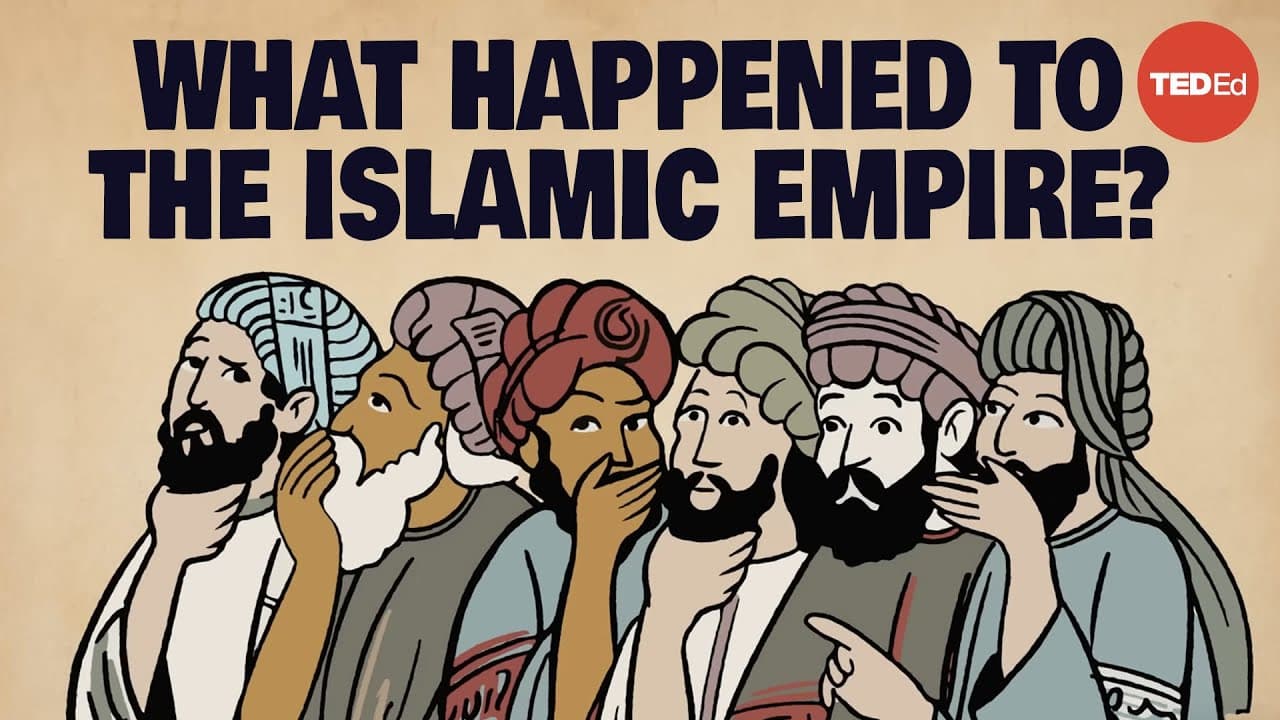
TL;DR
The Islamic Empire rose through the unification efforts of Muhammad and the subsequent expansions by his successors, who conquered vast territories. However, internal strife, including civil wars and succession disputes, weakened the empire, culminating in the Mongol invasion that destroyed Baghdad in 1258 CE, effectively ending the era of a unified Islamic state.
Transcript
In the 7th century CE, one man started a chain of events that would change the world order for good. The prophet Muhammad united the people of the Arabian Peninsula through the formation of Islam. These people included both nomadic Bedouin tribes and the inhabitants of oasis cities like Mecca and Medina. Until Muhammad’s time, the region hadn’t ... Read More
Key Insights
- 🇦🇪 Prophet Muhammad united Arabian Peninsula under Islam.
- 😀 Successors expanded empire, facing dissent and civil war.
- 📏 Umayyads and Abbasids ruled, with succession struggles.
- 📏 Mongol invasion destroyed Baghdad and symbolic rule.
Install to Summarize YouTube Videos and Get Transcripts
Explore YouTube Video Summarizer or Get YouTube Transcript Extractor
Questions & Answers
Q: Who was the leader that united the Arabian Peninsula under Islam in the 7th century?
Prophet Muhammad was the leader who united the Arabian Peninsula under Islam in the 7th century, bringing together nomadic Bedouin tribes and oasis city inhabitants.
Q: What factors led to the fracturing of the Islamic Empire after Muhammad's death?
The fracturing of the Islamic Empire after Muhammad's death was due to internal dissent, succession struggles, civil war, and the rise of competing dynasties like the Umayyads and Abbasids.
Q: How did the Abbasids come to power and what changes did they bring to the Islamic Empire?
The Abbasids came to power by overthrowing the Umayyads in 750 CE and moving the capital to Baghdad. They promoted themselves as descendants of the Prophet and brought cultural, artistic, and scientific advancements to the empire.
Q: What event marked the end of the Islamic Empire and its symbolic rule by the caliphs?
The Mongol invasion in 1258 CE, where they sacked and destroyed Baghdad, marked the end of the Islamic Empire and revealed the declining power of the caliphs over the disparate regions within the empire.
Summary & Key Takeaways
-
Prophet Muhammad united Arabian Peninsula under Islam.
-
Successors expanded empire, but civil war and dissent arose.
-
Rise of Abbasids, luxury in Baghdad, succession issues, Mongol invasion ended Islamic Empire.
Read in Other Languages (beta)
Share This Summary 📚
Summarize YouTube Videos and Get Video Transcripts with 1-Click
Try YouTube Summary with ChatGPT & Claude or YouTube Transcript Generator
Explore More Summaries from TED-Ed 📚






Summarize YouTube Videos and Get Video Transcripts with 1-Click
Try YouTube Summary with ChatGPT & Claude or YouTube Transcript Generator