Do Black Holes Create New Universes? The Science Explained
TL;DR
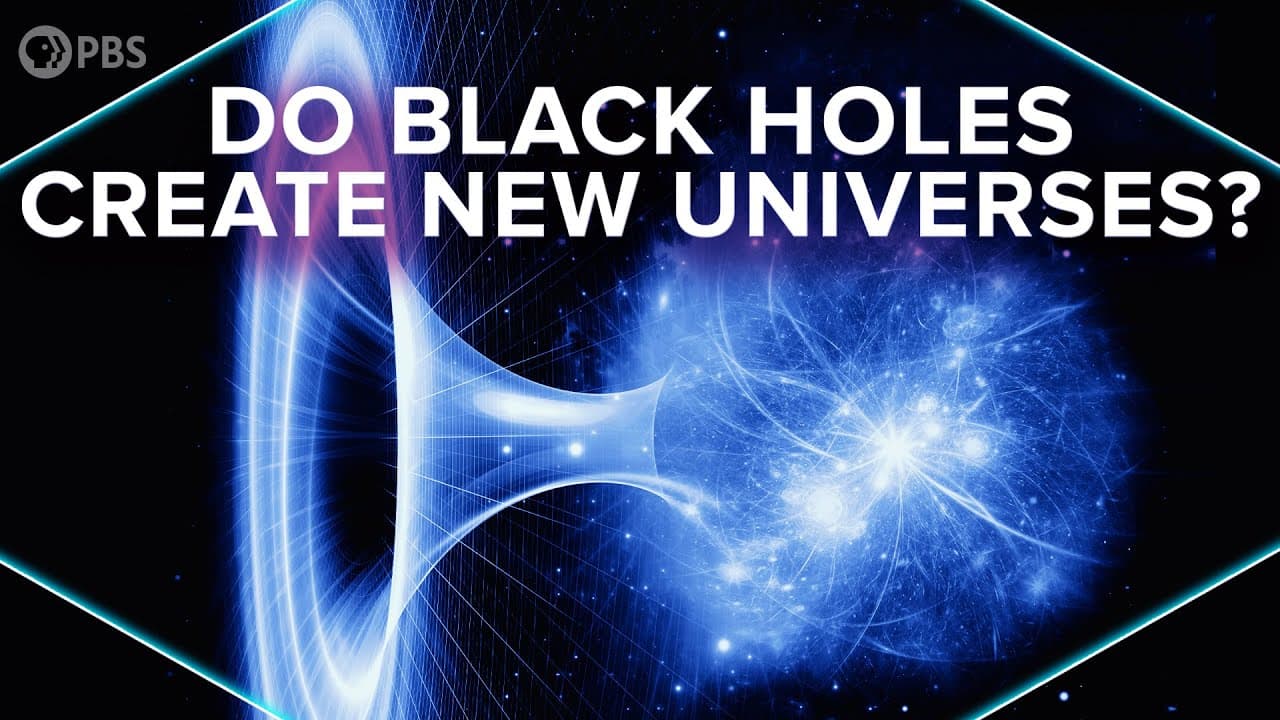
Black holes may create new universes through a process called cosmological natural selection, which suggests that each new universe has slightly different fundamental constants. Although this theory offers a testable framework and parallels biological evolution, it remains speculative with no direct evidence confirming that black holes indeed spawn new universes.
Transcript
Thank you to brilliant.org for supporting PBS. What if every single black hole that formed in our universe sparked the big bang of a new universe? Cosmological natural selection proposes exactly this - but even better, it claims to be able to test the hypothesis. Physicists have been struggling for some time to figure out why our universe is so com... Read More
Key Insights
- Cosmological natural selection suggests that black holes can spawn new universes, each with slightly different fundamental constants.
- The theory parallels biological evolution, proposing that universes evolve to optimize black hole production.
- For this theory to hold, black holes must create new universes, a highly speculative idea lacking concrete evidence.
- The hypothesis predicts that universes should be optimized for black hole production, which may correlate with conditions favorable for life.
- The theory faces challenges, such as the existence of neutron stars with masses slightly above the predicted limit for black hole formation.
- Alternative theories, like the anthropic principle and multiverse, offer different explanations for the fine-tuning of our universe.
- Cosmological natural selection remains speculative but offers a framework for testing ideas about universe formation and evolution.
- The theory encourages exploration of the boundaries of scientific understanding, even if it ultimately proves incorrect.
Install to Summarize YouTube Videos and Get Transcripts
Explore YouTube Video Summarizer or Get YouTube Transcript Extractor
Questions & Answers
Q: What is cosmological natural selection?
Cosmological natural selection is a theoretical framework suggesting that black holes might create new universes. Each new universe would have slightly altered fundamental constants, similar to genetic mutations. This process could lead to universes optimized for black hole production, paralleling the concept of biological evolution by natural selection.
Q: How does cosmological natural selection relate to biological evolution?
Cosmological natural selection draws a parallel to biological evolution by suggesting that universes evolve to optimize certain traits, like black hole production. Just as mutations in organisms can lead to advantageous traits, slight changes in fundamental constants during universe formation might enhance a universe's ability to produce black holes.
Q: What evidence supports the idea that black holes create new universes?
Currently, there is no concrete evidence supporting the idea that black holes create new universes. The concept is highly speculative and rooted in theoretical physics. It suggests that black holes might lead to the formation of new regions of spacetime, effectively creating new universes, but this remains unproven and lacks empirical support.
Q: What challenges does cosmological natural selection face?
Cosmological natural selection faces several challenges, including the speculative nature of black holes creating new universes and the existence of neutron stars with masses above the predicted limit for black hole formation. Additionally, alternative explanations like the anthropic principle and multiverse theory offer different perspectives on the fine-tuning of our universe.
Q: How does the theory explain the fine-tuning of fundamental constants?
The theory suggests that universes evolve to optimize black hole production, which might correlate with conditions favorable for life. This optimization could explain the fine-tuning of fundamental constants, as universes with parameters conducive to black hole formation would proliferate, potentially leading to the emergence of life-supporting conditions.
Q: What is the anthropic principle, and how does it relate to this theory?
The anthropic principle posits that the universe's fundamental constants are as they are because they allow for the emergence of life, and we observe them because we exist. It contrasts with cosmological natural selection by suggesting that life-supporting conditions are a result of chance rather than an evolutionary process optimizing for black hole production.
Q: What predictions does cosmological natural selection make?
Cosmological natural selection predicts that universes should be optimized for black hole production, with fundamental constants favoring this outcome. It suggests that parameters favoring black hole formation should be independently optimized from those favoring life. However, some predictions, like the mass limit for neutron stars, have faced challenges from observational data.
Q: Why explore speculative theories like cosmological natural selection?
Exploring speculative theories like cosmological natural selection is valuable for probing the edges of scientific understanding. Such theories encourage exploration of the vast space of possible realities and help develop frameworks for testing ideas about universe formation. Even if they prove incorrect, they contribute to expanding our knowledge and understanding of cosmology.
Summary & Key Takeaways
-
Cosmological natural selection posits that black holes might create new universes, each with slightly mutated fundamental constants. This process could lead to universes optimized for black hole production, paralleling biological evolution. While speculative, it provides a framework for testing hypotheses about universe formation.
-
The theory suggests that universes evolve to maximize black hole production, potentially explaining the fine-tuning of fundamental constants. However, the idea is highly speculative, with no concrete evidence supporting black holes' ability to create new universes. It remains an intriguing but unproven concept in cosmology.
-
Challenges to the theory include the existence of neutron stars with masses above the predicted limit for black hole formation and alternative explanations like the anthropic principle. Despite these challenges, cosmological natural selection encourages exploration of the limits of scientific understanding and universe formation.
Read in Other Languages (beta)
Share This Summary 📚
Summarize YouTube Videos and Get Video Transcripts with 1-Click
Try YouTube Summary with ChatGPT & Claude or YouTube Transcript Generator
Explore More Summaries from PBS Space Time 📚
Summarize YouTube Videos and Get Video Transcripts with 1-Click
Try YouTube Summary with ChatGPT & Claude or YouTube Transcript Generator