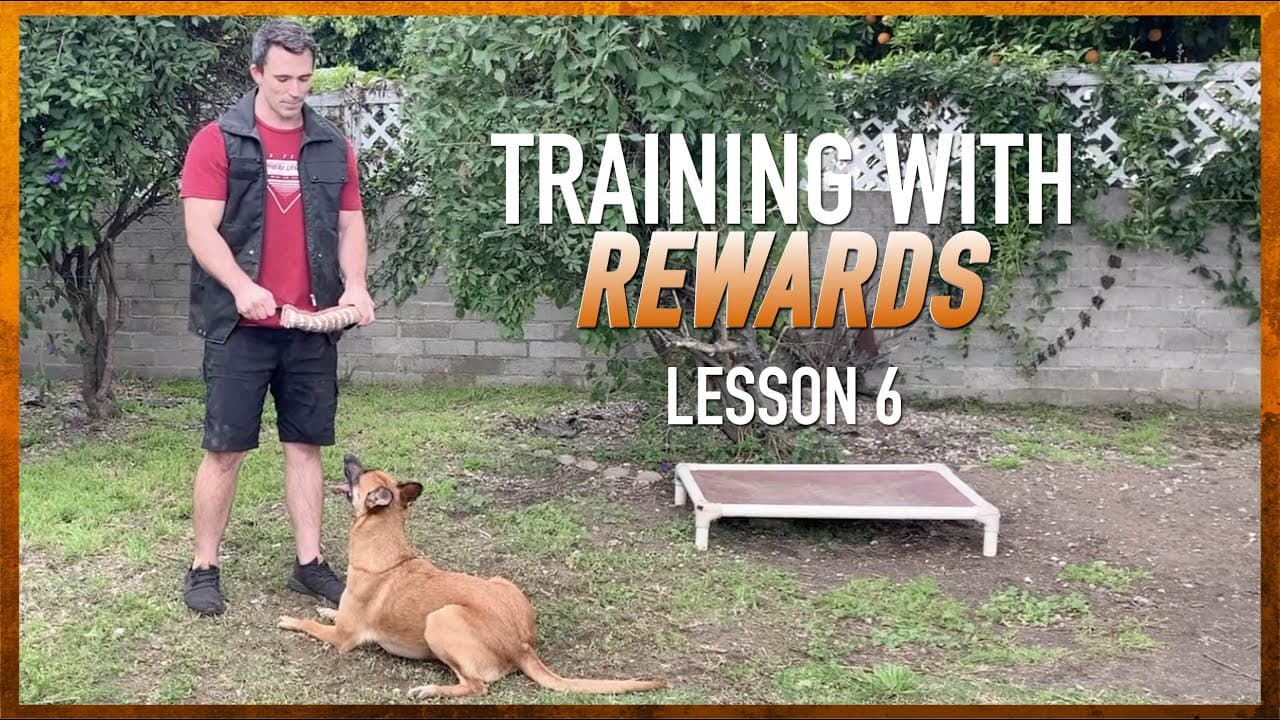
Dog Training with Rewards. Lesson 6
TL;DR
Learn effective dog training using rewards and motivation techniques.
Transcript
before we start training our dogs we should know what motivates them with any dog i'm training i like to begin with food and using the technique known as luring now sometimes people tell me that they're unable to use food because their dogs simply are not motivated by it first let me start by saying that every dog has some interest in food what var... Read More
Key Insights
- Understanding a dog's motivation is crucial for effective training, with food being a common starting point. Dogs have varying levels of food motivation, which can be influenced by feeding habits.
- Food deprivation can be used to increase a dog's food drive, turning mealtime into training time to encourage working for food.
- Continual reinforcement is essential when teaching new commands, gradually transitioning to intermittent rewards to maintain motivation.
- Free shaping can teach dogs to perform desired behaviors without visible rewards, fostering a proactive approach to training.
- Toys can be integrated into obedience training once dogs perform commands on verbal cues alone, requiring the 'drop it' command for effective use.
- Building toy drive involves restricting access to toys and creating frustration, encouraging dogs to work for toys as rewards.
- The 'drop it' command is taught using value transfer, starting with two identical toys and gradually increasing the challenge.
- Training sessions can be made more engaging by using toys as rewards, alternating between commands and play to maintain interest.
Install to Summarize YouTube Videos and Get Transcripts
Explore YouTube Video Summarizer or Get YouTube Transcript Extractor
Questions & Answers
Q: How can I increase my dog's food motivation?
To increase your dog's food motivation, consider using food deprivation techniques. Turn mealtime into training time by offering food as a reward for performing commands. If your dog shows no interest, remove the food and try again later. Consistency will help your dog understand that working for food is necessary.
Q: What is the concept of free shaping in dog training?
Free shaping involves rewarding a dog for desired behaviors without visible rewards, encouraging them to perform actions proactively. By marking and rewarding behaviors throughout the day, dogs learn that their actions can lead to rewards, even if they don't see them. This approach fosters a proactive attitude in dogs.
Q: When should toys be introduced into obedience training?
Toys can be introduced into obedience training once a dog consistently performs commands on verbal cues alone, without needing a reward after every behavior. Before using toys, ensure the dog understands the 'drop it' command, allowing for smooth transitions between commands and play sessions during training.
Q: What is the process for teaching the 'drop it' command?
Teaching the 'drop it' command involves value transfer using two identical toys. Present one toy, engage the dog with play, and use the command when switching to the other toy. Gradually increase the time between giving the toy back, ensuring the dog learns to release the toy on command for continued play.
Q: How can I build my dog's toy drive?
Building toy drive can be achieved by restricting access to toys, much like food motivation. Keep toys out of reach, making them rewards for desired behaviors. Additionally, create frustration by teasing with toys just out of reach, encouraging the dog to work for the toy and increasing their interest in play.
Q: Why is it important to transition from continual to intermittent reinforcement?
Transitioning from continual to intermittent reinforcement is crucial to maintain a dog's motivation. Initially, rewards for every correct behavior help establish new commands. Once learned, spacing out rewards creates a sense of unpredictability, similar to a slot machine, keeping the dog engaged and eager to perform.
Q: What role does frustration play in increasing toy drive?
Frustration plays a key role in increasing toy drive by making toys seem more desirable. By teasing with toys just out of reach, dogs become more eager to obtain them. This technique leverages the idea that dogs, like humans, often want what they can't easily have, enhancing their motivation to work for toys.
Q: How can training be made more engaging for dogs?
Training can be made more engaging by incorporating toys as rewards. Alternate between commands and short play sessions, using toys to maintain interest. Ensure the dog performs commands correctly before rewarding with play, keeping sessions dynamic and enjoyable. This approach helps sustain the dog's enthusiasm and focus.
Summary & Key Takeaways
-
This video discusses how to effectively use rewards in dog training, focusing on understanding and enhancing a dog's motivation, particularly with food and toys. Techniques such as food deprivation and free shaping are explored to increase motivation and encourage desired behaviors.
-
The 'drop it' command is explained, highlighting the use of value transfer with toys. The video emphasizes the importance of transitioning from continual to intermittent reinforcement to maintain a dog's interest in training.
-
Building toy drive through restricting access and creating frustration is covered, along with integrating toys into obedience training. The video aims to make training sessions engaging and effective by alternating commands with play.
Read in Other Languages (beta)
Share This Summary 📚
Summarize YouTube Videos and Get Video Transcripts with 1-Click
Try YouTube Summary with ChatGPT & Claude or YouTube Transcript Generator
Explore More Summaries from Nate Schoemer 📚




Summarize YouTube Videos and Get Video Transcripts with 1-Click
Try YouTube Summary with ChatGPT & Claude or YouTube Transcript Generator