Getting to Space Could Become a Lot Easier
TL;DR
The space elevator could revolutionize space access and humanity's future.
Transcript
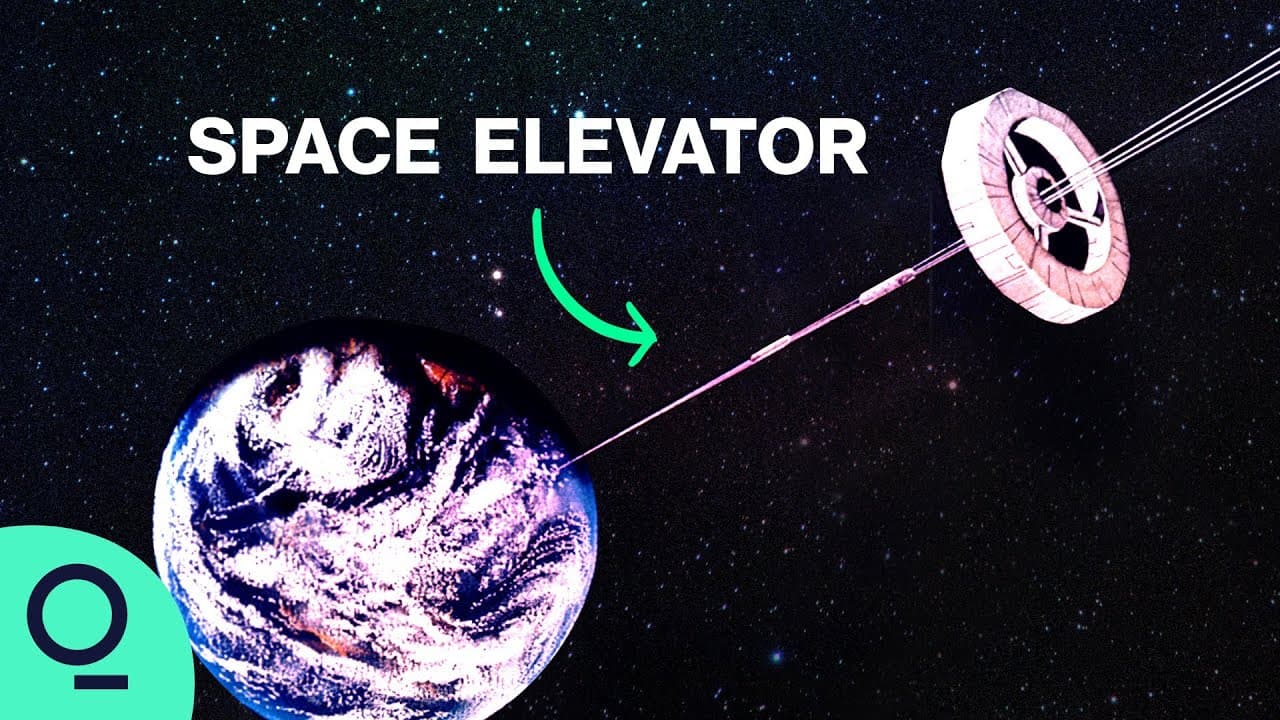
When historians look back at this time 500 years from now, they will put a breaking point right where we build a space elevator. This is pre-space and this was post. This is an entire new society. Everything changes. Imagine simply climbing a cable into space. No rocket, just press the up button and you're there. The concept is known as the space e... Read More
Key Insights
- The space elevator concept could mark a significant societal shift, changing how humanity interacts with space by making access cheaper and more efficient.
- Current technology and materials, like carbon nanotubes, make building a space elevator feasible, though financial and logistical challenges remain.
- The space elevator could drastically reduce the cost of sending payloads into space, potentially lowering it to dollars per pound compared to current rocket launches.
- A space elevator would function by using a cable held taut by a counterweight beyond geosynchronous orbit, leveraging Earth's rotation and gravity.
- Despite advancements, challenges like space debris and the need for long, strong carbon nanotubes hinder progress on the space elevator.
- The potential economic benefits of a space elevator are significant, with a growing space economy that could reach over $1 trillion by 2040.
- Building a space elevator on the Moon could be an initial step, benefiting from lower gravity and no atmosphere, though it wouldn't offer the same cost savings as one on Earth.
- The space elevator could enable sustainable resource extraction from asteroids, reducing environmental impact on Earth and supporting space colonization.
Install to Summarize YouTube Videos and Get Transcripts
Explore YouTube Video Summarizer or Get YouTube Transcript Extractor
Questions & Answers
Q: What is the basic concept of a space elevator?
A space elevator involves a cable held taut by a counterweight beyond geosynchronous orbit. This setup uses Earth's rotation and gravity to keep the cable vertical. The elevator would allow payloads to ascend into space without rockets, significantly reducing costs and increasing efficiency.
Q: What technological advancements make a space elevator feasible today?
Recent advancements in materials like carbon nanotubes, which are incredibly strong and lightweight, make the construction of a space elevator feasible. These nanotubes have strengths far exceeding conventional materials, potentially allowing for the creation of the necessary cable for a space elevator.
Q: What are the economic implications of building a space elevator?
Economically, a space elevator could drastically reduce the cost of sending payloads into space, potentially lowering it to mere dollars per pound. This reduction could support the burgeoning space economy, projected to exceed $1 trillion by 2040, and offer significant returns for those investing in its construction.
Q: What challenges does space debris pose to the space elevator?
Space debris poses a significant challenge to the space elevator concept. With millions of small objects orbiting Earth, the risk of collisions with the elevator cable is high. Although designs include mechanisms to avoid larger objects, the cumulative effect of smaller debris remains a substantial obstacle.
Q: How could a space elevator impact environmental conservation on Earth?
A space elevator could facilitate the mining of asteroids for minerals, reducing the need to exploit Earth's resources. This shift could prevent environmental degradation, such as deforestation and habitat destruction, by sourcing materials from space rather than Earth's ecosystems.
Q: Why might building a space elevator on the Moon be advantageous?
Building a space elevator on the Moon is advantageous due to its lower gravity and lack of atmosphere, which allow for the use of weaker, existing materials. This setup could serve as a proof of concept, demonstrating the technology's feasibility before attempting construction on Earth.
Q: What role do carbon nanotubes play in the construction of a space elevator?
Carbon nanotubes are crucial for the space elevator's construction due to their exceptional strength-to-weight ratio. These materials could form the cable necessary to support the elevator, with current research focusing on extending their length to meet the structural requirements for a space elevator.
Q: How does the concept of a space elevator compare to traditional rocket launches?
Compared to traditional rocket launches, a space elevator offers a more sustainable and cost-effective method of reaching space. Rockets require significant fuel and are expensive, whereas a space elevator could provide continuous, low-cost access to space, revolutionizing how we transport materials and people beyond Earth.
Summary & Key Takeaways
-
The space elevator concept, a potentially transformative technology, could change humanity's relationship with space by providing a cheaper, more efficient means of space travel. Current technology, including carbon nanotubes, suggests feasibility, though challenges like cost and space debris remain significant hurdles.
-
A space elevator would function by using a cable held taut by a counterweight beyond geosynchronous orbit, using Earth's rotation and gravity. The economic benefits are immense, with the potential to drastically reduce payload costs and support a growing space economy.
-
While a space elevator on Earth faces challenges, building one on the Moon could be a viable first step due to lower gravity and lack of atmosphere. The technology could enable sustainable resource extraction from asteroids, supporting both space colonization and environmental preservation on Earth.
Read in Other Languages (beta)
Share This Summary 📚
Summarize YouTube Videos and Get Video Transcripts with 1-Click
Try YouTube Summary with ChatGPT & Claude or YouTube Transcript Generator
Explore More Summaries from Bloomberg Originals 📚





Summarize YouTube Videos and Get Video Transcripts with 1-Click
Try YouTube Summary with ChatGPT & Claude or YouTube Transcript Generator