This Drought-Resistant Grain Could Feed a Warmer World
TL;DR
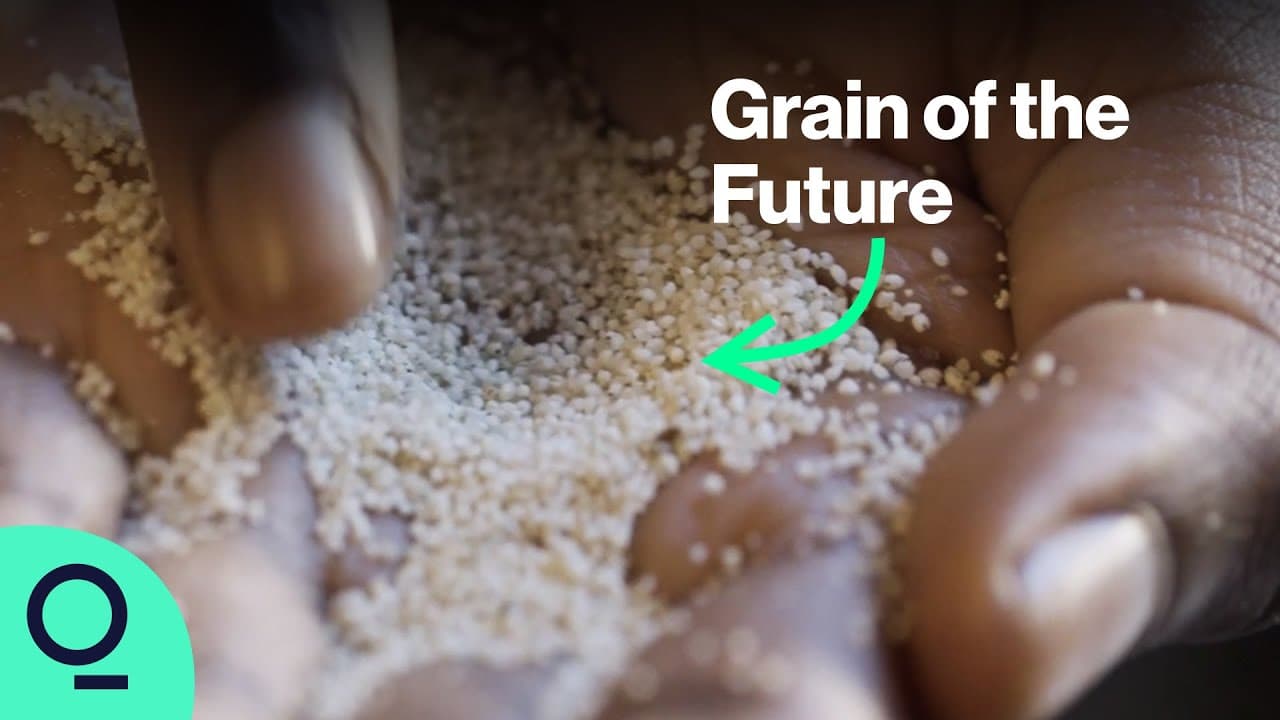
Fonio, a drought-resistant grain, offers potential to combat food insecurity.
Transcript
Staples like wheat, maize and rice feed the world, providing nearly half the calories we eat. But in many regions these crops and our access to them are under threat. There's definitely an urgency to find alternatives to the current food systems, especially in the current context that we're in now where you've had supply chains disrupted by Covid, ... Read More
Key Insights
- Fonio is a small grain native to West Africa, known for its drought resistance and ability to grow in poor soil, making it a potential solution for food security in climate-affected regions.
- Despite its benefits, fonio has been neglected, with limited research and investment hindering its commercial viability and widespread adoption.
- Fonio is gluten-free, protein-rich, anti-glycemic, and easy to digest, offering nutritional benefits that make it an attractive alternative to traditional staples like wheat and rice.
- The processing of fonio remains labor-intensive and traditional, requiring technological innovation to increase efficiency and production scale.
- Chef Fatmata Binta is a key advocate for fonio, working to decolonize African cuisine and promote the grain's potential through culinary collaborations and local partnerships.
- Fonio is currently expensive and primarily used for sustenance in local communities, with commercialization needed to reduce costs and increase availability.
- Investment in research and development is crucial for improving fonio yields and modernizing its production process, enabling it to compete with other staple crops.
- Building a value chain for fonio, including local processing and international distribution, is essential for its success as a sustainable food source.
Install to Summarize YouTube Videos and Get Transcripts
Explore YouTube Video Summarizer or Get YouTube Transcript Extractor
Questions & Answers
Q: What makes fonio a suitable crop for addressing food insecurity?
Fonio is suitable for addressing food insecurity due to its drought resistance and ability to grow in poor soil, making it ideal for regions affected by climate change. Its nutritional benefits, including being gluten-free, protein-rich, and anti-glycemic, further enhance its potential as a staple food source.
Q: Why has fonio not gained widespread commercial success?
Fonio has not gained widespread commercial success due to a lack of research and investment, which has left its processing methods largely traditional and labor-intensive. Additionally, limited awareness and high costs have hindered its adoption as a mainstream crop.
Q: How is Chef Fatmata Binta contributing to the promotion of fonio?
Chef Fatmata Binta is promoting fonio by using it in her culinary ventures to highlight its cultural and nutritional significance. She collaborates with Michelin star chefs, organizes pop-up restaurants, and partners with local farmers to build a value chain and increase the grain's visibility and accessibility.
Q: What are the challenges associated with fonio processing?
Fonio processing is challenged by its labor-intensive and traditional methods, which involve separating the grain from the stem and de-husking it manually. This process is time-consuming and limits production scale, necessitating technological innovation to improve efficiency and meet commercial demands.
Q: What role does technological innovation play in fonio's future?
Technological innovation is crucial for fonio's future as it can modernize the processing methods, increase production efficiency, and reduce costs. This would enable fonio to be produced at a commercial scale, making it more accessible and competitive with other staple crops.
Q: How does fonio's price compare to other grains?
Fonio is currently much more expensive than other grains, such as rice, being about eight times the price for the same quantity. This high cost is attributed to its limited production and traditional processing methods, highlighting the need for commercialization to reduce prices.
Q: What is the significance of building a value chain for fonio?
Building a value chain for fonio is significant as it would involve local processing, packaging, and distribution, both locally and internationally. This would increase its availability, reduce costs, and promote its adoption as a staple crop, ultimately enhancing food security in affected regions.
Q: Why is local exposure important for fonio's success?
Local exposure is important for fonio's success because it helps build appreciation and demand for the grain within its native regions. By establishing a local market and placing value on fonio, it can gain traction and support, paving the way for its commercialization and international expansion.
Summary & Key Takeaways
-
Fonio, a drought-resistant grain from West Africa, shows potential as a sustainable food source amid climate-induced hunger. However, its commercial viability is limited by traditional processing methods and lack of investment.
-
Chef Fatmata Binta advocates for fonio by promoting its nutritional benefits and cultural significance. Her efforts aim to decolonize African cuisine and build a local value chain for the grain.
-
Despite being expensive and underutilized, fonio's unique properties make it a promising alternative to traditional staples. Investment in research and technological innovation is needed to enhance its production and accessibility.
Read in Other Languages (beta)
Share This Summary 📚
Summarize YouTube Videos and Get Video Transcripts with 1-Click
Try YouTube Summary with ChatGPT & Claude or YouTube Transcript Generator
Explore More Summaries from Bloomberg Originals 📚




Summarize YouTube Videos and Get Video Transcripts with 1-Click
Try YouTube Summary with ChatGPT & Claude or YouTube Transcript Generator