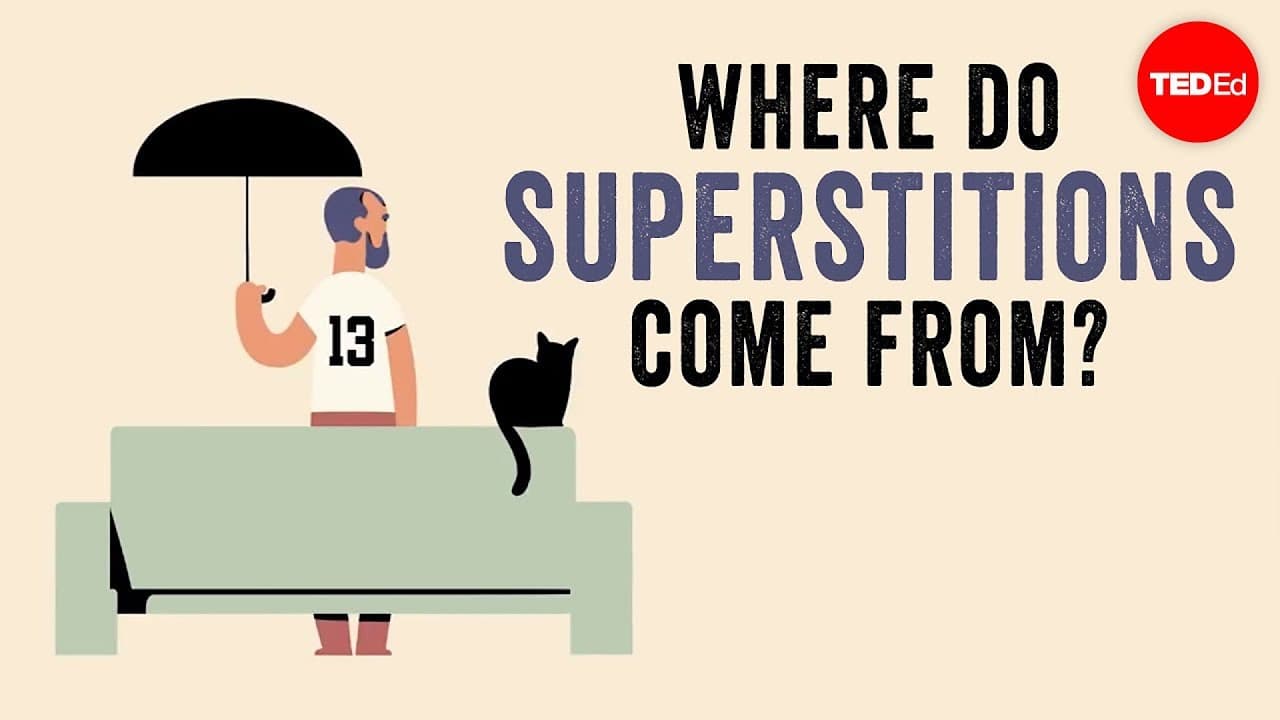
Where do superstitions come from? - Stuart Vyse
TL;DR
Explore the origins and cultural significance of common superstitions.
Transcript
Are you afraid of black cats? Would you open an umbrella indoors? And how do you feel about the number thirteen? Whether or not you believe in them, you're probably familiar with a few of these superstitions. So how did it happen that people all over the world knock on wood, or avoid stepping on sidewalk cracks? Well, although they have no basis i... Read More
Key Insights
- ❓ Superstitions often have religious or pagan origins, influencing beliefs and practices.
- #️⃣ Linguistic associations contribute to the superstitions surrounding certain numbers in various cultures.
- 🖐️ Cultural habits and psychological biases play a significant role in the persistence of superstitions.
Install to Summarize YouTube Videos and Get Transcripts
Explore YouTube Video Summarizer or Get YouTube Transcript Extractor
Questions & Answers
Q: What is the origin of the fear of the number thirteen?
The fear of the number thirteen originated from the association with the Last Supper, where Jesus dined with twelve disciples, eventually leading to triskaidekaphobia.
Q: How did the tradition of knocking on wood come about?
The tradition of knocking on wood is believed to stem from ancient Indo-Europeans who thought trees housed protective spirits, offering blessings when touched.
Q: Why do some cultures fear specific numbers like 17 or 4?
Cultures fear numbers like 17 or 4 due to linguistics, such as the word for 17 resembling 'my life had ended' in Roman numerals or the similarity between 'four' and 'death' in Cantonese.
Q: Why do superstitions persist even when their original purpose is no longer relevant?
Superstitions persist through cultural habit and psychological bias, providing a sense of control and confidence, even if individuals logically understand the irrationality behind them.
Summary & Key Takeaways
-
Superstitions have peculiar origins, from the Last Supper influencing the fear of the number thirteen to ancient tree spirits inspiring the practice of knocking on wood.
-
Many superstitions stem from religious beliefs or pagan traditions, while others are based on unfortunate coincidences like numbers resembling words for death.
-
Despite their irrationality, superstitions often persist as cultural habits and can provide a sense of control and confidence.
Read in Other Languages (beta)
Share This Summary 📚
Summarize YouTube Videos and Get Video Transcripts with 1-Click
Try YouTube Summary with ChatGPT & Claude or YouTube Transcript Generator
Explore More Summaries from TED-Ed 📚



Summarize YouTube Videos and Get Video Transcripts with 1-Click
Try YouTube Summary with ChatGPT & Claude or YouTube Transcript Generator