What Are Effective Trading Strategies for Beginners?
TL;DR
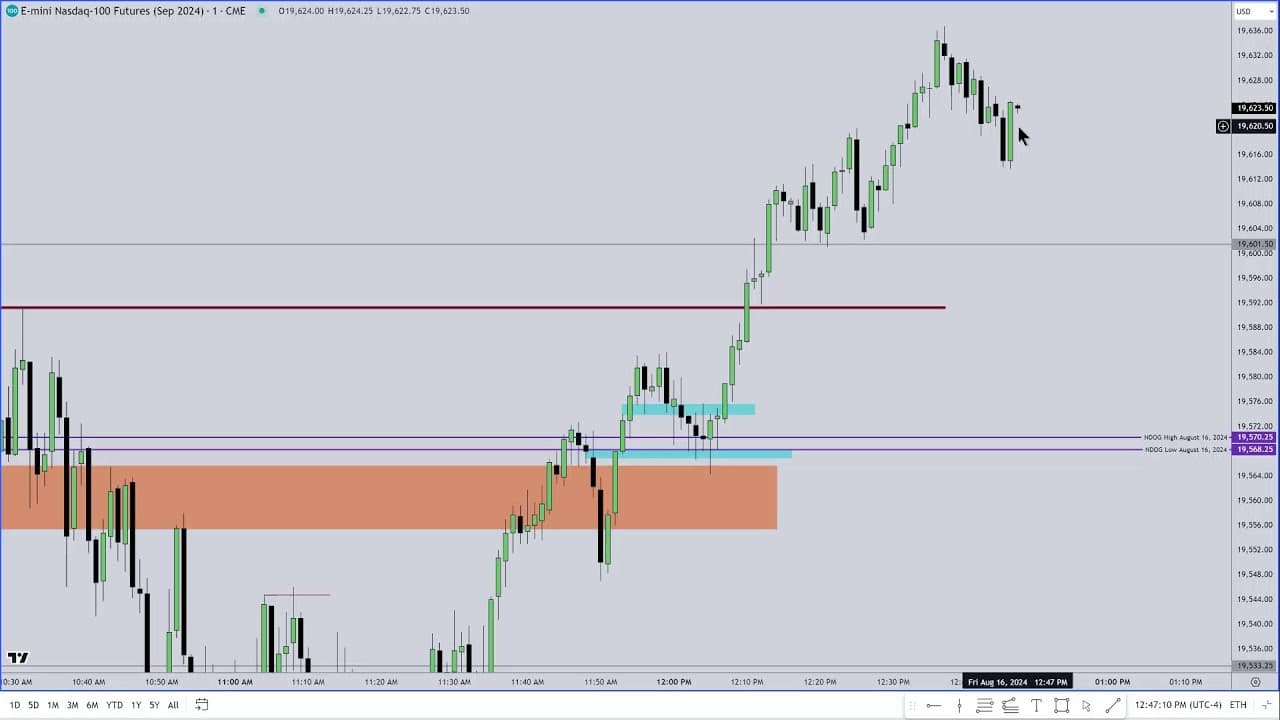
Effective trading strategies for beginners include understanding market dynamics such as opening range gaps and utilizing Fibonacci retracement levels. Documentation of trades and observations enhances learning and helps develop better decision-making, making patience and consistent practice crucial for success in trading.
Transcript
e e good morning folks how are you give me a second here stupid OBS is uh for the folks that use OBS for live streaming the window captured that I try to use it never it never populates the chart so I'm not sure why it doesn't do it but fights me I'll go over these levels in a moment just give me a second make sure the audio is coming through audio... Read More
Key Insights
- 🤗 Trading requires a comprehensive understanding of market structures, including opening ranges and Fibonacci levels, to inform decision-making.
- 🤳 Documentation of trades, observations, and outcomes is crucial for self-assessment and improvement in trading skills.
- ™️ Market conditions significantly influence trading strategies, and recognizing when to trade or avoid trading is essential for success.
- 🖐️ Emotional management plays a critical role in trading; understanding one's psychological response to trades helps prevent rash decisions.
- ❓ Deep knowledge of price action and sufficient practice are imperative for developing a successful trading model.
- ❓ Consistent observation and analysis of trading behavior assist in refining strategies and recognizing personal trading patterns.
- ❓ Thicker market conditions can hinder effective trading; traders should adapt their strategies accordingly.
Install to Summarize YouTube Videos and Get Transcripts
Explore YouTube Video Summarizer or Get YouTube Transcript Extractor
Questions & Answers
Q: What is the significance of the opening range in trading?
The opening range is vital because it sets the initial price levels for the trading day. It helps traders identify potential support and resistance zones, guiding their entry and exit strategies. Analyzing the first 30 minutes of trading can yield insights into market momentum and potential price movements for the rest of the day.
Q: How can traders utilize Fibonacci retracement levels effectively?
Traders can use Fibonacci retracement levels to identify potential reversal points in the market by measuring the distance between significant high and low price points. By drawing these levels on a price chart, traders can gauge areas where price may pull back before continuing in the original direction, allowing for better-informed trading decisions.
Q: What role does documentation play in improving trading skills?
Documentation is crucial as it allows traders to record their observations, decisions, and outcomes. By reviewing this information, traders can identify patterns in their behavior, assess the effectiveness of their strategies, and learn from mistakes. Writing a trading journal helps build discipline and provides a framework for progress assessment.
Q: Why is it important for traders to understand market conditions?
Understanding market conditions helps traders identify favorable trading environments. Different conditions may signal when to enter or avoid trades. For instance, a volatile market might present different opportunities than a sideways market, making knowledge of price action essential for timing and strategy adjustments.
Q: What does the speaker mean by "thick market conditions"?
Thick market conditions refer to periods when price action is choppy and indecisive, exhibiting back-and-forth movements without clear direction. During such times, traders may face challenges in effectively executing trades, leading to greater risks of being "chopped up" or losing their positions due to unclear market signals.
Q: How should a trader handle losing trades?
Traders should approach losing trades with a mindset focused on learning rather than self-criticism. It's important to analyze losing trades to understand what went wrong, and to document these insights. This reflective process can ultimately lead to better decision-making in future trades.
Q: What is the 'lunch macro' mentioned in the content?
The 'lunch macro' refers to a time frame in trading, specifically between 11:30 AM and 1:30 PM, when price action can present retracement opportunities. During this period, traders often anticipate a pullback or reversal after the initial market movements, making it integral for trade planning.
Q: How does the speaker suggest traders should manage their emotional response to market fluctuations?
The speaker advises traders to maintain awareness of their emotions and prepare for the psychological aspects of trading. Understanding that setbacks are part of the learning process and developing coping strategies can help mitigate negative feelings, leading to better mental fortitude during trading sessions.
Summary & Key Takeaways
-
The speaker discusses their approach to trading, emphasizing the importance of understanding market dynamics and utilizing specific strategies like opening range gaps and Fibonacci retracement levels.
-
They stress the necessity of documentation in trading, detailing how observations and experiences can enhance understanding and drive improvement in trading outcomes.
-
The session emphasizes the significance of patience and learning from mistakes, suggesting that consistent practice and observation of price action are critical to becoming a successful trader.
Read in Other Languages (beta)
Share This Summary 📚
Summarize YouTube Videos and Get Video Transcripts with 1-Click
Try YouTube Summary with ChatGPT & Claude or YouTube Transcript Generator
Explore More Summaries from The Inner Circle Trader 📚

Summarize YouTube Videos and Get Video Transcripts with 1-Click
Try YouTube Summary with ChatGPT & Claude or YouTube Transcript Generator