How Do Myths Influence Modern English Language?
TL;DR
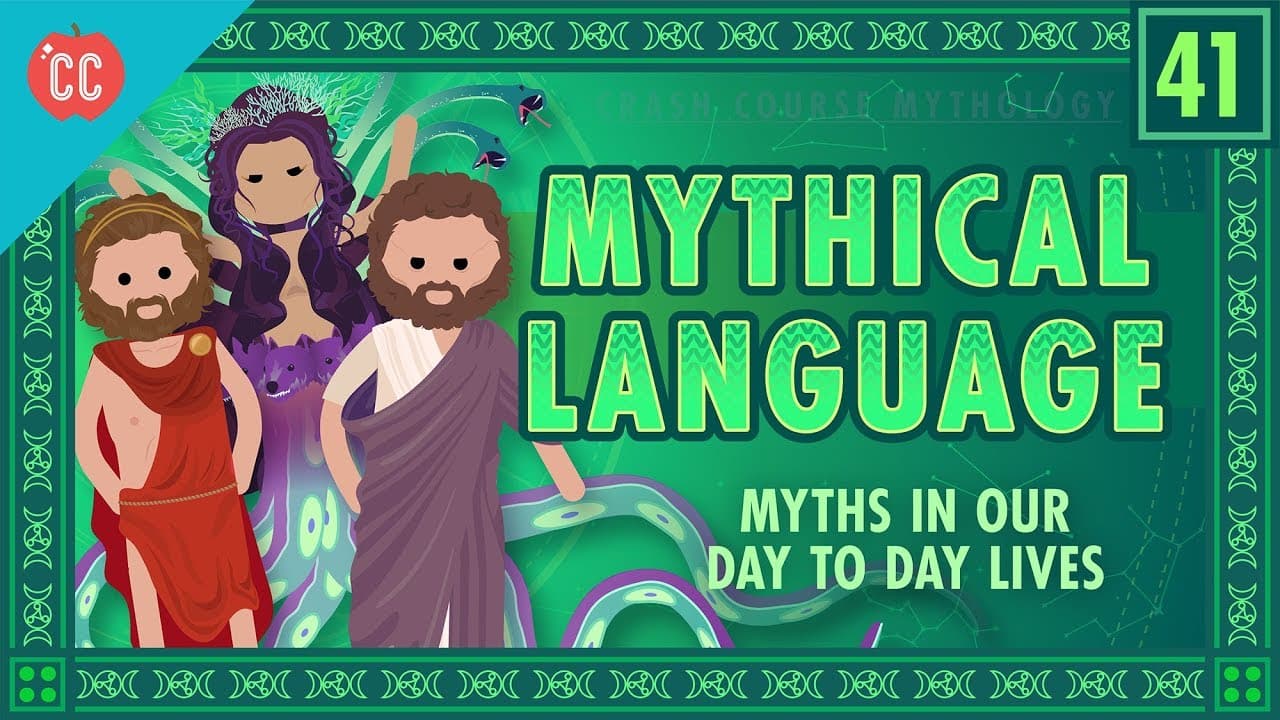
Myths, especially Greek ones, have significantly shaped modern English by influencing phrases and idioms. Terms like 'Herculean task' and 'Achilles heel' originate from these stories, illustrating challenges and vulnerabilities. The episode explores how these enduring tales continue to impact language and culture, suggesting that contemporary narratives may also evolve into future myths.
Transcript
Hey there, I’m Mike Rugnetta, this is Crash Course Mythology and today ... we behold our own apocalypse. Yes, it’s the end of our time together, on this here earthly plane. Our journey together has surely been epic. And we could go on for months with more exciting and uncomfortable stories of floods and incest, but alas - Thoth and I must retire to... Read More
Key Insights
- Mythological stories have significantly influenced the English language, providing phrases and idioms that are still in use today, such as 'Herculean task' and 'Sisyphean task.'
- Greek mythology, in particular, has had a profound impact on English, with many words and phrases derived from stories like the Odyssey and the Iliad.
- The story of Sisyphus, who was condemned to endlessly push a boulder uphill, gives us the term 'Sisyphean task,' symbolizing a futile and endless endeavor.
- The Odyssey introduces phrases like 'siren song' and 'between Scylla and Charybdis,' illustrating difficult choices and irresistible temptations.
- The Iliad contributes to language with terms like 'Achilles heel,' referring to a person's point of vulnerability, and 'Trojan horse,' implying a deceptive gift.
- Mythological figures like Narcissus and Midas have given rise to terms such as 'narcissism' and 'Midas touch,' reflecting self-obsession and success in endeavors, respectively.
- Myths have staying power and continue to influence culture and language, serving as a bridge between the past and present.
- The series concludes with a reflection on the potential for modern stories to become future myths, highlighting the timeless nature of storytelling.
Install to Summarize YouTube Videos and Get Transcripts
Explore YouTube Video Summarizer or Get YouTube Transcript Extractor
Questions & Answers
Q: What is the significance of the term 'Herculean task'?
The term 'Herculean task' originates from the myth of Herakles (Hercules), who completed twelve labors that required immense strength and effort. In modern language, it describes any task that is extremely difficult and requires great strength, patience, and dedication, reflecting the challenges faced by Herakles in his mythological adventures.
Q: How does the myth of Sisyphus relate to modern language?
The myth of Sisyphus, who was condemned to roll a boulder uphill only for it to roll back down repeatedly, gives us the term 'Sisyphean task.' This term is used to describe any task that is both pointless and endless, capturing the futility and perpetual nature of Sisyphus's punishment in the underworld, as depicted in Greek mythology.
Q: What is the origin of the phrase 'siren song'?
The phrase 'siren song' comes from the story of Odysseus in the Odyssey, where Sirens are mythical creatures that lure sailors to their doom with their enchanting music. In modern language, it describes an alluring but potentially dangerous temptation, reflecting the irresistible and perilous nature of the Sirens' song in the mythological tale.
Q: Explain the phrase 'between Scylla and Charybdis.'
The phrase 'between Scylla and Charybdis' originates from the Odyssey, where Odysseus must navigate a narrow strait between two dangers: the monster Scylla and the whirlpool Charybdis. It is used to describe a situation where one must choose between two equally perilous options, akin to being caught 'between a rock and a hard place.'
Q: What does 'Achilles heel' mean and where does it come from?
The term 'Achilles heel' refers to a person's point of vulnerability or weakness. It originates from the myth of Achilles, whose mother dipped him in the river Styx to make him invincible, except for the heel by which she held him. This vulnerable spot was exploited by Paris, leading to Achilles' downfall in the Trojan War.
Q: How has the story of King Midas influenced modern language?
The story of King Midas, who wished for everything he touched to turn to gold, gives us the phrase 'Midas touch.' While the myth highlights the negative consequences of his wish, the modern usage of 'Midas touch' often refers to someone who is successful in all their endeavors, focusing on the positive aspect of the tale.
Q: What is the connection between Narcissus and the term 'narcissism'?
The term 'narcissism' is derived from the myth of Narcissus, a beautiful youth who fell in love with his own reflection and drowned. In modern usage, 'narcissism' refers to excessive self-love or self-involvement, capturing the essence of Narcissus's self-obsession and the consequences of his inability to look beyond himself.
Q: Why are myths important in understanding language and culture?
Myths are important because they offer insights into the values, beliefs, and experiences of past civilizations. They have shaped language through idioms and phrases, reflecting cultural narratives and human psychology. Understanding myths helps us appreciate their lasting impact on language, culture, and the ways we interpret the world around us.
Summary & Key Takeaways
-
The final episode of Crash Course Mythology explores how myths have influenced the English language, particularly through Greek mythology. This includes phrases like 'Herculean task' and 'Sisyphean task,' which describe challenging or endless tasks.
-
Greek myths like the Odyssey and the Iliad have left a lasting impact on language. Phrases such as 'siren song' and 'Achilles heel' illustrate concepts of temptation and vulnerability, while 'Trojan horse' refers to deceptive tactics.
-
The episode reflects on the enduring nature of myths, suggesting that modern stories may become future myths. It emphasizes the cultural significance of myths and their role in shaping language and understanding.
Read in Other Languages (beta)
Share This Summary 📚
Summarize YouTube Videos and Get Video Transcripts with 1-Click
Try YouTube Summary with ChatGPT & Claude or YouTube Transcript Generator
Explore More Summaries from CrashCourse 📚


Summarize YouTube Videos and Get Video Transcripts with 1-Click
Try YouTube Summary with ChatGPT & Claude or YouTube Transcript Generator