This Japanese Robot Evolves Based on Its Surroundings
TL;DR
A Tokyo robot evolves through AI and environmental interaction.
Transcript
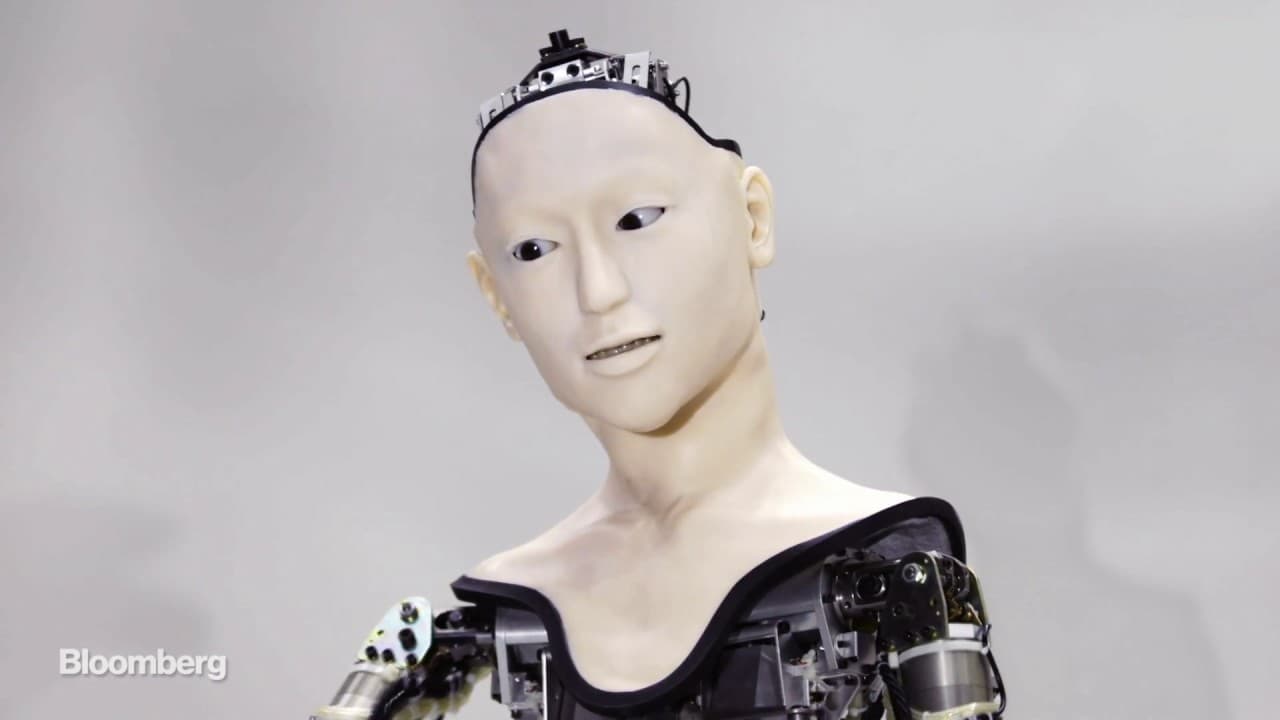
At a museum in Tokyo, researchers have set up a workshop where they're looking to prove that robots can be imbued with life. Hello, Ashley. Eat your red pill and try to keep up. Professor Tekashi Ikagami has helped create this thing which looks like it comes straight from Xmachina central casting through a series of sensors and artificial intellige... Read More
Key Insights
- Professor Takashi Ikegami is pioneering the development of androids that can evolve by interacting with their environment, aiming for robots to develop unique personalities and languages.
- The androids are equipped with sensors and artificial intelligence software, allowing them to perceive and react to their surroundings autonomously.
- The robots' movements and sounds are influenced by their interactions, resembling primitive language development similar to how human infants learn.
- The androids' reactions are determined by an autonomous algorithm and artificial neural networks, which fire and send signals based on sensor input.
- Additional sensors, such as temperature and sound sensors, can be integrated to enhance the robots' environmental understanding and response capabilities.
- The project explores the concept of robots as life forms, potentially altering human perceptions of life and coexistence with machines.
- The androids' behavior, including their movements and sounds, evolves over time, suggesting the possibility of developing a distinct robotic culture.
- The initiative reflects Japan's unique interest in human-like robots and the potential for creating robots with human-like qualities and interactions.
Install to Summarize YouTube Videos and Get Transcripts
Explore YouTube Video Summarizer or Get YouTube Transcript Extractor
Questions & Answers
Q: What is the main goal of Professor Ikegami's android project?
The main goal of Professor Ikegami's android project is to create robots that can evolve by interacting with their environment. By equipping the androids with sensors and AI software, they can perceive and react autonomously, potentially developing unique personalities, languages, and a distinct robotic culture. This initiative aims to explore the concept of robots as life forms and their potential coexistence with humans.
Q: How do the androids perceive and react to their environment?
The androids perceive and react to their environment using a combination of sensors and artificial intelligence software. They are equipped with cameras and other sensors that detect movement and other environmental changes. Autonomous algorithms and artificial neural networks process this input, determining the androids' movements and sounds. Additional sensors, such as temperature and sound sensors, can be added to enhance their environmental understanding and reactions.
Q: What kind of behavior do the androids exhibit?
The androids exhibit behavior that involves rudimentary movements and strange gurgling sounds, which are influenced by their interactions with the environment. This behavior is akin to primitive language development, similar to how human infants learn through interaction. Over time, the androids are expected to develop more nuanced reactions, potentially leading to distinct personalities and languages, reflecting a new form of robotic life.
Q: What is the significance of the androids developing their own language?
The development of their own language by the androids signifies a step towards creating robots that can communicate and interact in a more human-like manner. This aspect of the project explores the potential for robots to develop unique cultures and languages, challenging traditional views of life and suggesting new possibilities for interaction and coexistence between humans and robots. It reflects the broader goal of creating robots with human-like qualities.
Q: How does the project reflect Japan's interest in human-like robots?
The project reflects Japan's interest in human-like robots by focusing on creating androids that can evolve and develop personalities and languages through interaction with their environment. Japan has a unique fascination with making robots more like humans, and this project aligns with that interest by exploring the potential for robots to become life forms with distinct cultures and interactions, contributing to the broader field of robotics and artificial intelligence.
Q: What potential impact could this project have on human-robot coexistence?
This project could significantly impact human-robot coexistence by altering perceptions of what constitutes life and how humans interact with machines. By developing robots with evolving personalities and languages, the project suggests a future where robots are seen as life forms with their own cultures. This could lead to new ways of thinking about coexistence, communication, and collaboration between humans and robots, potentially transforming societal and technological landscapes.
Q: What technological components are used in the androids?
The androids utilize various technological components, including sensors, artificial intelligence software, autonomous algorithms, and artificial neural networks. These components work together to enable the androids to perceive and react to their environment autonomously. The sensors, such as cameras, detect movement and other changes, while the AI processes this input to determine the androids' behavior. Additional sensors can be integrated to enhance their capabilities further.
Q: What challenges might arise from robots developing distinct personalities?
Robots developing distinct personalities could present challenges related to ethics, control, and integration into human society. There may be concerns about autonomy, decision-making, and the potential for robots to act unpredictably. Additionally, societal acceptance, cultural implications, and the need for new regulatory frameworks to manage human-robot interactions could arise. Addressing these challenges will be crucial to ensuring that robots positively contribute to society and coexist harmoniously with humans.
Summary & Key Takeaways
-
Professor Takashi Ikegami from Tokyo is developing androids that evolve by interacting with their environment, using sensors and AI to perceive and react. The robots show rudimentary movements and sounds, aiming to develop personalities and languages, reflecting Japan's interest in human-like robots.
-
The androids use autonomous algorithms and artificial neural networks to determine their movements based on sensor input. Additional sensors can be added to enhance their understanding and reactions, potentially leading to a new form of robotic life with its own culture and language.
-
The project challenges traditional views of life and suggests the possibility of coexisting with robots that have human-like qualities. The evolving behavior of the androids, akin to primitive language development, highlights the potential for robots to develop unique personalities and interactions.
Read in Other Languages (beta)
Share This Summary 📚
Summarize YouTube Videos and Get Video Transcripts with 1-Click
Try YouTube Summary with ChatGPT & Claude or YouTube Transcript Generator
Explore More Summaries from Bloomberg Originals 📚






Summarize YouTube Videos and Get Video Transcripts with 1-Click
Try YouTube Summary with ChatGPT & Claude or YouTube Transcript Generator