Contract Law 9 I Langer v Superior Steel (repudiated pension)
TL;DR
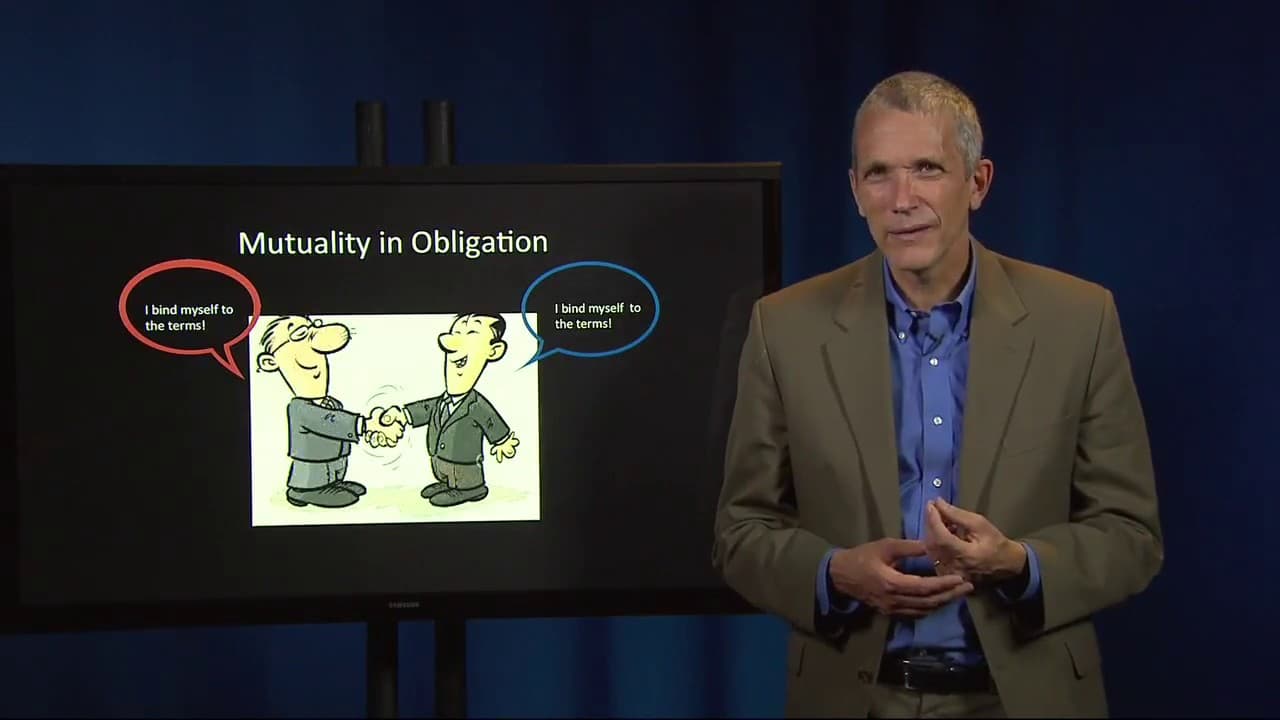
The Langer vs. Superior Steel Corporation case explores the concept of consideration in contract law, distinguishing it from the previous Kirksey case and also introducing the concept of promissory estoppel.
Transcript
last time we talked about Kirksey versus Kirksey where the court deemed a promise a mere gratuity because the promise lacked consideration today we will continue to discuss consideration this time we'll examine Langer versus Superior Steel Corporation a case that is explicitly distinguished from Kirksey and which presents an interesting transition ... Read More
Key Insights
- ❓ Contracts require consideration, which can include minor requested performance or refraining from doing something.
- 🤩 The key factor is whether the performance is bargained for, rather than the magnitude of the performance.
- 🏆 Williston's benefit test provides a useful means of determining if a condition was bargained for or merely a gratuitous provision.
Install to Summarize YouTube Videos and Get Transcripts
Explore YouTube Video Summarizer or Get YouTube Transcript Extractor
Questions & Answers
Q: What is the main issue in the Langer vs. Superior Steel Corporation case?
The main issue is whether the company's promise to pay a pension to Langer was supported by consideration, making it an enforceable contract.
Q: How did the court distinguish Langer from the Kirksey case?
Unlike Kirksey, where a promise was deemed a mere gratuity, the court found that the condition in Langer's case, related to loyalty and non-competition, would benefit the company and therefore constituted sufficient consideration.
Q: What is the benefit test proposed by Williston?
Williston's benefit test suggests that if a condition in an offer benefits the promisee, it can be inferred that the occurrence of the condition was requested as consideration, making it a basis for an enforceable contract.
Q: Why did the court also consider the theory of promissory estoppel in the Langer case?
The court considered promissory estoppel as an alternative basis for enforcing the promise in case the consideration requirement was not met. Promissory estoppel comes into play when a promise induces action or forbearance on the part of the promisee, and injustice can only be avoided by enforcing the promise.
Summary & Key Takeaways
-
Langer vs. Superior Steel Corporation involves a dispute over the enforcement of a pension payment promise made by the company to Langer, its former Foreman.
-
The court examines whether the company's promise was supported by consideration, with a focus on the benefit test proposed by Williston.
-
The court also considers the theory of promissory estoppel as an alternative basis for enforcing the promise.
Read in Other Languages (beta)
Share This Summary 📚
Summarize YouTube Videos and Get Video Transcripts with 1-Click
Try YouTube Summary with ChatGPT & Claude or YouTube Transcript Generator
Explore More Summaries from YaleCourses 📚

Summarize YouTube Videos and Get Video Transcripts with 1-Click
Try YouTube Summary with ChatGPT & Claude or YouTube Transcript Generator