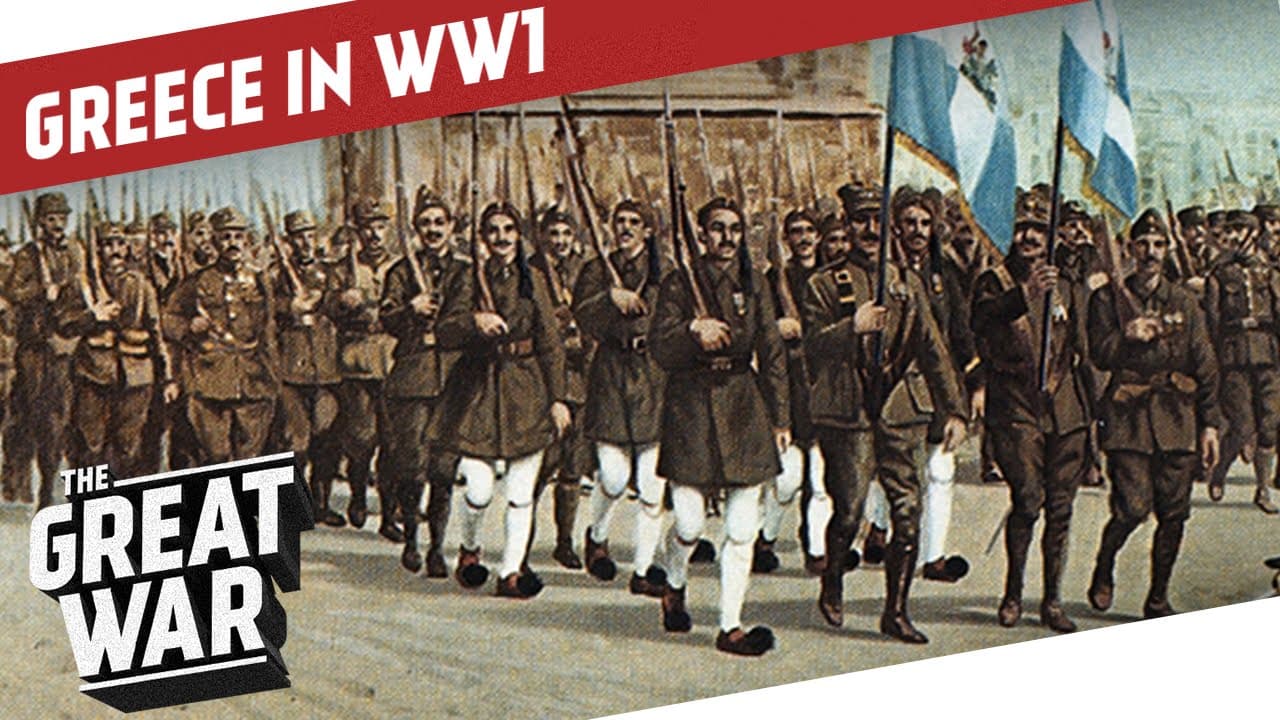
A Crucial Test For Unity - Greece in WW1 I THE GREAT WAR Special
TL;DR
Greece's neutrality in WW1 was fraught with internal conflict.
Transcript
At this point 100 years ago, Greece was neutral and had not joined the First World War, but it was anything but a simple situation and in fact was a dangerous time for all Greeks, and that’s what I’m going to talk about today. I’m Indy Neidell; welcome to a Great War special episode about Greece during the First World War. Going back, the Greek nat... Read More
Key Insights
- Greece remained officially neutral during World War I, despite internal and external pressures to join the conflict.
- The Greek political landscape was divided between the pro-German King Constantine and the pro-Entente Prime Minister Venizelos.
- The concept of the Megáli Idéa, or Great Idea, influenced Greek foreign policy, aiming to unite all ethnic Greeks under one nation.
- Greece's territorial and population expansion after the Balkan Wars created both opportunities and tensions within the country.
- The National Schism in Greece was marked by a struggle between monarchists and Venizelists, leading to a near civil war.
- The Entente powers played a significant role in influencing Greek politics, offering incentives like Cyprus to sway Greece to their side.
- King Constantine's refusal to join the war on the side of the Entente led to his eventual abdication and the rise of Venizelos.
- The internal conflict in Greece during WW1 set the stage for future political and social upheavals in the country.
Install to Summarize YouTube Videos and Get Transcripts
Explore YouTube Video Summarizer or Get YouTube Transcript Extractor
Questions & Answers
Q: What was the Megáli Idéa and how did it influence Greek foreign policy?
The Megáli Idéa, or Great Idea, was a nationalist concept aiming to unite all ethnic Greeks under one nation, including territories with Greek populations outside the existing state boundaries. This idea influenced Greek foreign policy by motivating territorial expansion and alliances to reclaim lands with historical or ethnic ties to Greece, impacting decisions during the Balkan Wars and WW1.
Q: How did the Balkan Wars affect Greece's position in WW1?
The Balkan Wars significantly expanded Greece's territory and population, enhancing its strategic importance in the region. However, the inclusion of diverse ethnic groups and the subsequent national morale boost were countered by internal divisions and external pressures during WW1, complicating Greece's position and contributing to the National Schism between royalists and Venizelists.
Q: Why did King Constantine favor neutrality during WW1?
King Constantine favored neutrality during WW1 due to his pro-German sympathies, familial ties to the German monarchy, and the belief that Germany would win the war. Despite his admiration for German militarism, he recognized that an alliance with the Central Powers was impractical given Greece's historical enmity with the Ottomans and Bulgarians, thus opting for neutrality.
Q: What role did the Entente play in Greece's internal conflict?
The Entente played a significant role in Greece's internal conflict by exerting diplomatic and military pressure to sway Greece to their side. They offered territorial incentives like Cyprus and supported Venizelos and the National Defense Organization against the royalists. Their involvement exacerbated the National Schism, leading to King Constantine's abdication and Greece's eventual entry into the war on the Entente's side.
Q: How did the National Schism impact Greek society during WW1?
The National Schism deeply divided Greek society along political and class lines, with royalists supporting King Constantine and traditional institutions, while Venizelists pushed for modernization and alignment with the Entente. This division led to civil unrest, political purges, and a near civil war, straining social cohesion and setting the stage for future conflicts in Greece.
Q: What was the outcome of the November Events in Greece?
The November Events in Greece were marked by violent clashes between royalists and Venizelists, with the latter supported by the Entente. The conflict resulted in a blockade and military interventions by the Entente, leading to King Constantine's abdication and the establishment of a Venizelist government, effectively ending the National Schism and uniting Greece under Venizelos' leadership.
Q: Why did the Entente consider Greece a hostile nation during WW1?
The Entente considered Greece a hostile nation after King Constantine's refusal to disband the Greek army and his perceived alignment with the Central Powers, despite official neutrality. The Entente's military presence in Salonika and Greece's strategic importance further heightened tensions, leading to demands for Constantine's abdication and military actions against royalist forces.
Q: What were the long-term effects of Greece's involvement in WW1?
Greece's involvement in WW1 had long-term effects, including political instability, social divisions, and economic challenges. The National Schism left a legacy of distrust between royalists and republicans, while the territorial gains and losses during and after the war reshaped Greece's national identity. These issues contributed to future conflicts, including the Asia Minor Catastrophe and subsequent political upheavals.
Summary & Key Takeaways
-
Greece's position during World War I was marked by internal political strife, with King Constantine favoring neutrality and Prime Minister Venizelos advocating for alignment with the Entente. This division led to a significant national schism, impacting Greece's political landscape.
-
Despite its official stance of neutrality, Greece was deeply divided between royalists and Venizelists, with external pressures from the Entente and Central Powers further complicating the situation. The political turmoil eventually led to King Constantine's abdication.
-
The Greek National Schism during WW1 highlighted the tensions between modernizing forces and traditionalists within the country. The conflict had lasting effects on Greece's political and social fabric, influencing its post-war trajectory.
Read in Other Languages (beta)
Share This Summary 📚
Summarize YouTube Videos and Get Video Transcripts with 1-Click
Try YouTube Summary with ChatGPT & Claude or YouTube Transcript Generator
Explore More Summaries from The Great War 📚
Summarize YouTube Videos and Get Video Transcripts with 1-Click
Try YouTube Summary with ChatGPT & Claude or YouTube Transcript Generator