Learning to Speak Again, One Brainwave at a Time
TL;DR
Brainwaves enable communication for locked-in syndrome patients.
Transcript
Everything I do comes from seeing patients and not having an answer for how to help them. Right now, all of us are using mobile technologies and computers for typing and texting, and sending messages, generating language. Folks with locked-in syndrome don't have any way to do that! Gregory had brain damage. I don't think he'll ever be able to do th... Read More
Key Insights
- Locked-in syndrome leaves individuals unable to communicate due to loss of voluntary motor function, requiring innovative solutions for interaction.
- Brain-computer interfaces (BCIs) allow communication through brainwave detection, promising new possibilities for severely disabled individuals.
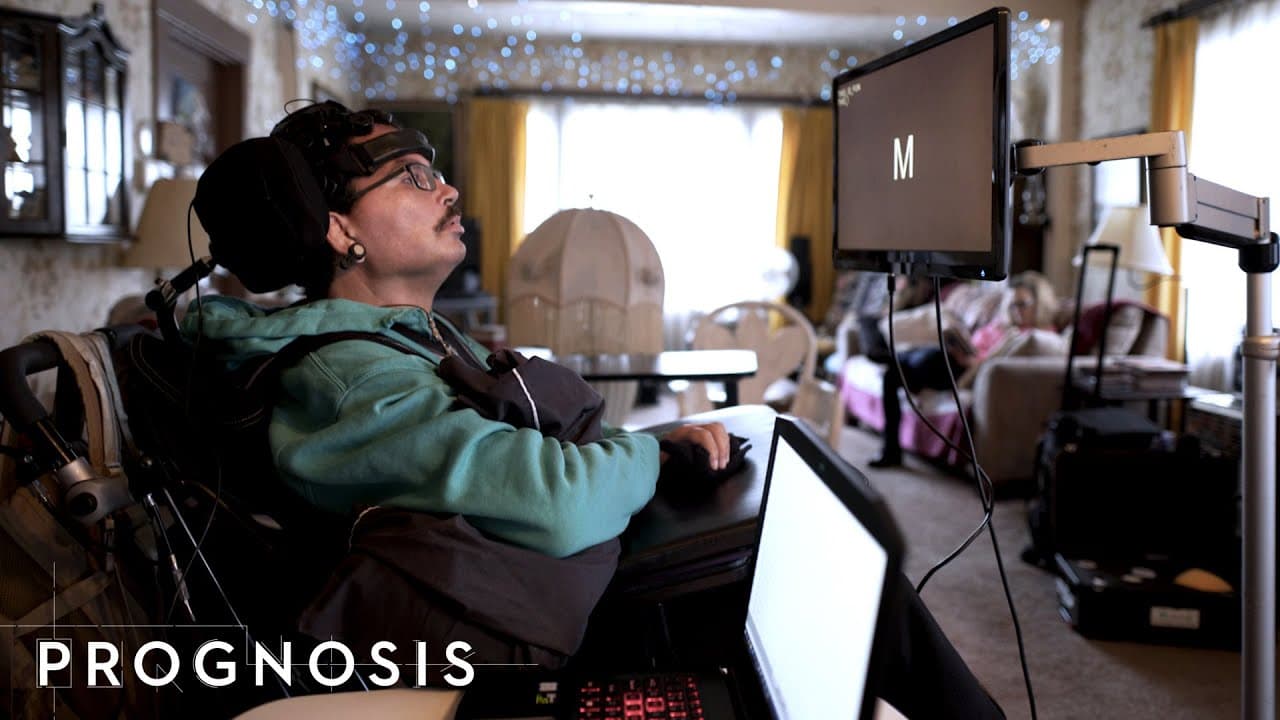
- Dr. Melanie Fried-Oken and her team have developed a noninvasive BCI that uses brainwaves as keystrokes for communication.
- Greg Bieker, a locked-in syndrome patient, is part of a pioneering effort to enhance communication capabilities using BCI technology.
- The BCI system uses an electrode cap to capture brainwaves, translating them into communication by detecting specific responses like the P300 wave.
- Current BCI technology works effectively under controlled conditions but faces challenges in real-world applications with disabled users.
- The ultimate goal of BCI research is to enable real-time communication for those with severe disabilities, improving their quality of life.
- Despite technological advancements, societal attitudes towards individuals with disabilities remain a significant barrier to interaction and inclusion.
Install to Summarize YouTube Videos and Get Transcripts
Explore YouTube Video Summarizer or Get YouTube Transcript Extractor
Questions & Answers
Q: What is locked-in syndrome and how does it affect individuals?
Locked-in syndrome is a condition where individuals lose all voluntary motor functions, rendering them unable to move or communicate verbally. Despite being mentally aware, they cannot interact with their surroundings, leading to a profound sense of isolation. This condition necessitates innovative communication solutions to improve their quality of life.
Q: How does the brain-computer interface technology work for communication?
The brain-computer interface (BCI) technology uses an electrode cap placed on the scalp to detect brainwaves. When a user sees a desired letter on a screen, their brain emits a P300 wave, which the system recognizes as a keystroke. This allows individuals to communicate by selecting letters with their brainwaves, bypassing the need for physical movement.
Q: What challenges do researchers face in developing BCI technology for real-world use?
Researchers face several challenges in adapting BCI technology for real-world use, particularly with severely disabled individuals. While the technology works well under controlled conditions, it often struggles with reliability and consistency in everyday scenarios. Additionally, individual differences in brainwave patterns and the complexity of translating them into accurate communication present significant hurdles.
Q: What role does Dr. Melanie Fried-Oken play in the development of BCI technology?
Dr. Melanie Fried-Oken is a leading figure in the development of BCI technology, working as a speech-language pathologist and researcher. She leads a team at Oregon Health & Science University, focusing on creating noninvasive BCIs to aid communication for individuals with severe disabilities, such as those with locked-in syndrome, by translating brainwaves into digital communication.
Q: How does Greg Bieker contribute to the BCI research efforts?
Greg Bieker, a patient with locked-in syndrome, actively participates in BCI research efforts. His involvement provides valuable insights into the practical application of the technology, helping researchers understand the unique challenges faced by users. His feedback aids in refining the system to better meet the needs of individuals with severe communication impairments.
Q: What is the ultimate goal of brain-computer interface research?
The ultimate goal of brain-computer interface (BCI) research is to enable real-time communication for individuals with severe disabilities, providing them with a reliable and efficient means of interacting with their environment. By improving the speed and accuracy of BCIs, researchers hope to significantly enhance the quality of life for those affected by conditions like locked-in syndrome.
Q: What societal challenges do individuals with locked-in syndrome face?
Individuals with locked-in syndrome often face societal challenges, including misconceptions about their condition and a lack of understanding from others. Many people mistakenly perceive them as deaf or unaware, leading to exclusion from conversations and social interactions. Overcoming these societal barriers is crucial for improving the lives of those with severe communication impairments.
Q: How can BCI technology impact the lives of individuals with severe disabilities?
BCI technology has the potential to transform the lives of individuals with severe disabilities by providing them with a means of communication that does not rely on physical movement. By enabling interaction with their environment and others, BCIs can reduce isolation, promote independence, and improve overall quality of life, offering new opportunities for participation in society.
Summary & Key Takeaways
-
Locked-in syndrome is a condition where individuals lose all voluntary motor functions, severely limiting their ability to communicate. Brain-computer interfaces (BCIs) are being developed to bridge this gap, allowing communication through brainwave detection, offering hope to those affected by this condition.
-
Dr. Melanie Fried-Oken's team has been working on noninvasive BCI technology for over a decade. The system uses an electrode cap to detect brainwaves, enabling users to control a computer and communicate by selecting letters displayed on a screen.
-
Greg Bieker, a locked-in syndrome patient, participates in BCI research efforts. Despite challenges in real-world application, the technology aims to provide reliable communication methods for individuals with severe disabilities, enhancing their interaction with the world.
Read in Other Languages (beta)
Share This Summary 📚
Summarize YouTube Videos and Get Video Transcripts with 1-Click
Try YouTube Summary with ChatGPT & Claude or YouTube Transcript Generator
Explore More Summaries from Bloomberg Originals 📚





Summarize YouTube Videos and Get Video Transcripts with 1-Click
Try YouTube Summary with ChatGPT & Claude or YouTube Transcript Generator