Making my own custom voltage logger based on the ADS1256 - Prototype
TL;DR
The video walks through creating a custom data acquisition system using a microcontroller and an ADC.
Transcript
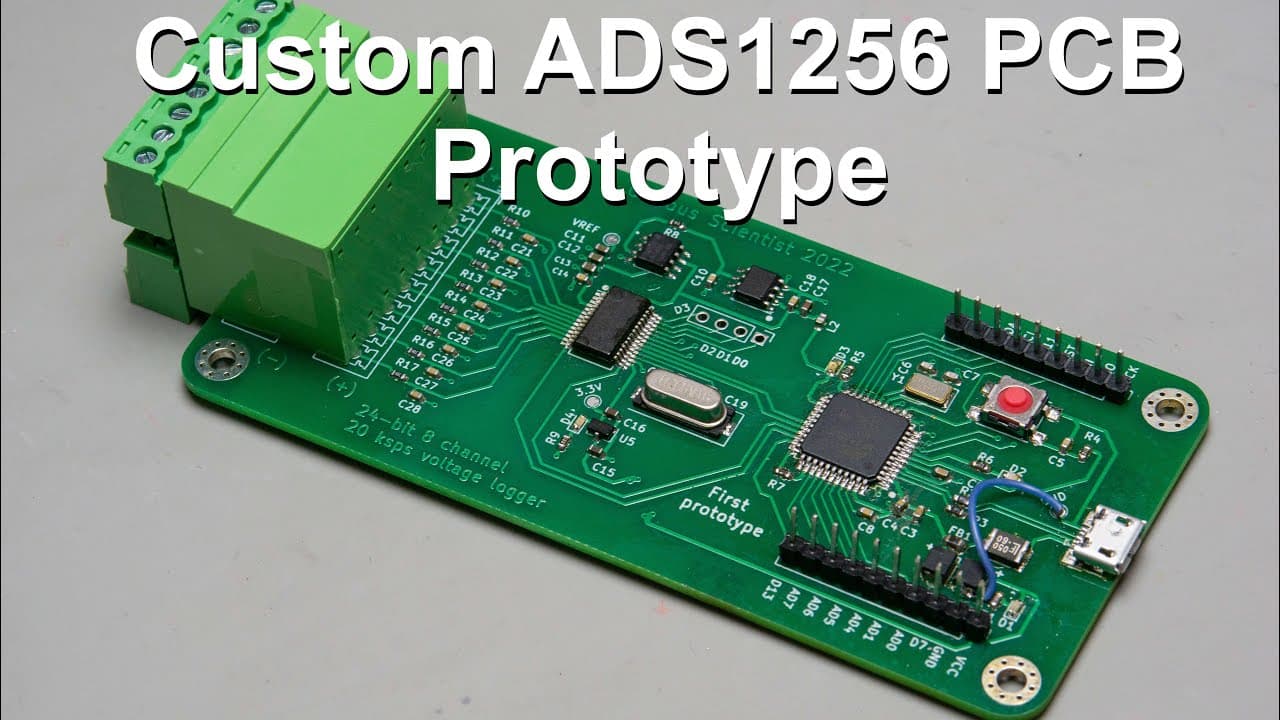
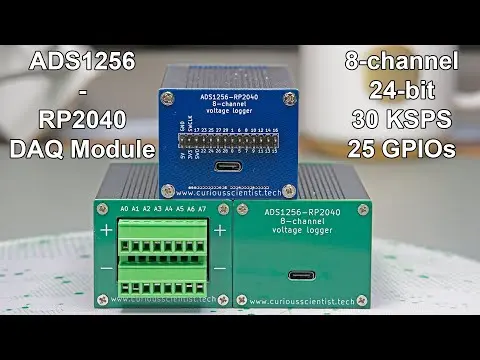
welcome everyone in this video i'm going to show you a new project and this new project involves some of my earlier projects which is based on an ads 1256 8 channel 24 bit analog digital converter so this pcb is actually a microcontroller combined with this ads 1256 uh anal digital converter so of course you can buy the two parts separately on an a... Read More
Key Insights
- ✋ A combination of microcontrollers and ADCs enables high-precision data acquisition systems, suitable for various applications.
- 🥵 PCB assembly requires careful attention to detail, especially regarding soldering and heat distribution to avoid operational failures.
- 😴 Troubleshooting techniques, such as checking individual pins for connection integrity, are critical for resolving issues in electronic projects.
- 📽️ Proper documentation and planning for future revisions are important for the development and commercialization stages of electronics projects.
- 📽️ Utilizing sponsors like PCBA for quality PCB production can significantly enhance project feasibility and reliability.
- 🪡 Continuous software development and improvement are needed to cater to evolving user needs and technological advancements in data logging.
- 👻 The ability to recycle previous designs can save time and resources while allowing for continued innovation within electronic projects.
Install to Summarize YouTube Videos and Get Transcripts
Explore YouTube Video Summarizer or Get YouTube Transcript Extractor
Questions & Answers
Q: What components are integrated into the custom PCB designed by the presenter?
The custom PCB integrates an ATmega32 microcontroller and an ADS1256 analog-to-digital converter. The design includes various connections, such as a USB port for power, reference voltage, and filtering components, facilitating high-speed data acquisition necessary for the project.
Q: What challenges did the presenter face during the PCB assembly process?
The presenter faced several challenges, including uneven heating during the reflow soldering, which led to issues with solder attachment on some components. Additionally, some pins were not soldered correctly, resulting in shorts and the need for troubleshooting and repairs after the initial assembly.
Q: How did the presenter address the soldering mistakes made during the assembly?
To fix the soldering mistakes, the presenter manually re-soldered connections, especially focusing on important pins like the reset pin of the microcontroller. They also used a heat gun to clean up excess solder and carefully checked each pin to ensure no shorts were present after reworking the board.
Q: What is the significance of creating a custom library for the project?
A custom library is essential for utilizing the ADS1256 chip effectively, streamlining programming tasks, and enhancing data acquisition speed and accuracy. The presenter highlighted that existing libraries did not fully exploit the chip's capabilities, so they plan to develop their own to ensure proper functionality according to the datasheet specifications.
Summary & Key Takeaways
-
The presenter showcases a custom PCB design integrating an ATmega32 microcontroller with an ADS1256 analog-to-digital converter, detailing the components and functionalities of the circuit.
-
The assembly process includes applying solder paste, placing components, and reflow soldering, while addressing challenges such as incorrect heat distribution and component placement during the reflow.
-
After successfully powering on the board and troubleshooting issues, the presenter confirms the system's functionality, emphasizing plans for future improvements and potential commercialization of the product.
Read in Other Languages (beta)
Share This Summary 📚
Summarize YouTube Videos and Get Video Transcripts with 1-Click
Try YouTube Summary with ChatGPT & Claude or YouTube Transcript Generator
Explore More Summaries from Curious Scientist 📚
Summarize YouTube Videos and Get Video Transcripts with 1-Click
Try YouTube Summary with ChatGPT & Claude or YouTube Transcript Generator