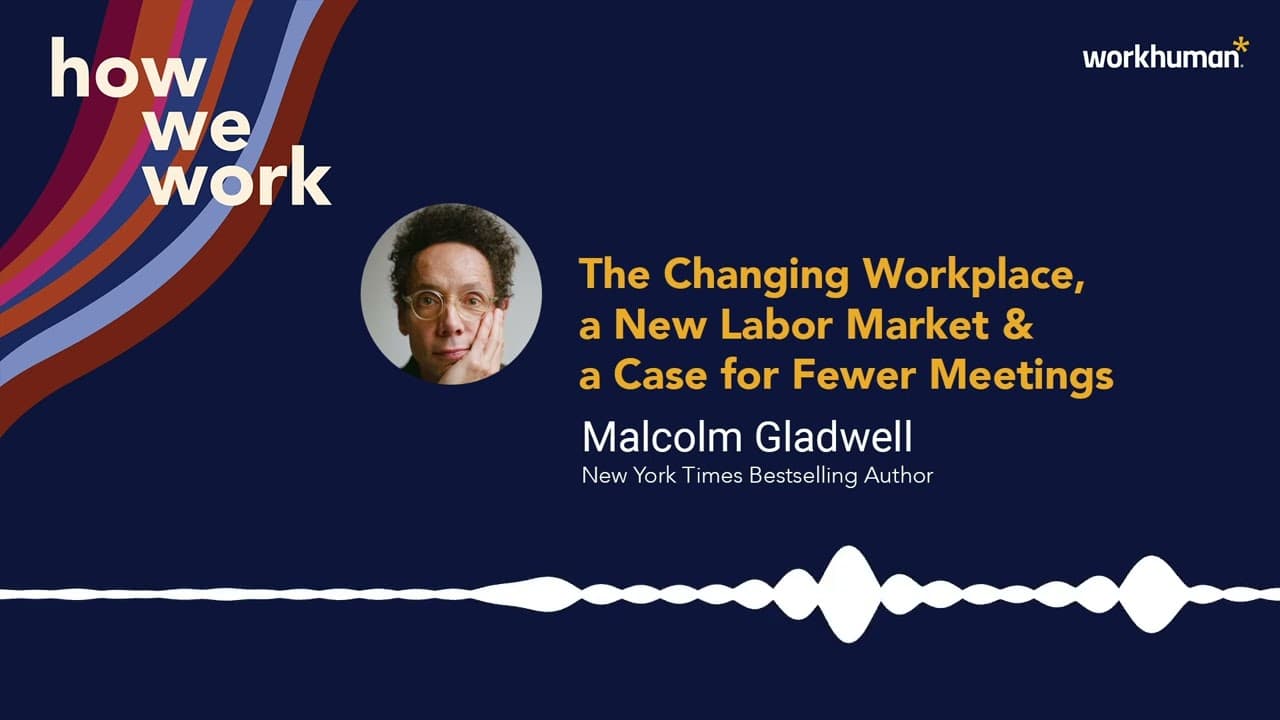
How We Work Podcast: Malcolm Gladwell on a New Labor Market & a Case for Fewer Meetings | Workhuman
TL;DR
Malcolm Gladwell discusses the changing landscape of work post-pandemic, highlighting the importance of adaptability and challenging conventions.
Transcript
hello everyone welcome to how we work this is a podcast from work human about the trends relationships and experiences that shape the human workplace both now and into the future my name is Stacy Thompson and I'm the senior director of content strategy and activation here at work human So today we're talking about the hashtag future work it's a top... Read More
Key Insights
- 🪡 The COVID-19 pandemic accelerated technological changes, highlighting the need for adaptability in the workforce.
- 💦 Generational shifts, such as remote work preferences and increased mobility, are reshaping power dynamics in the workplace.
- 🪘 Experimentation in hiring practices, like providing longer runways for growth, is crucial for developing talent.
- 🤔 Protecting time for reflection and fostering creative thinking spaces are essential for a collaborative and innovative workplace.
- 👾 Giving individuals space for introspection and creativity is vital for navigating complex work environments.
- 💦 Nationalization of the labor market offers new opportunities for location-independent work and diverse talent acquisition.
- 🥺 Recognizing individual learning and growth rates can lead to more effective talent development strategies.
Install to Summarize YouTube Videos and Get Transcripts
Explore YouTube Video Summarizer or Get YouTube Transcript Extractor
Questions & Answers
Q: How has the pandemic accelerated changes in the workplace?
The pandemic has heightened the pace of technological advancements, pushing companies to adapt rapidly to changing environments by developing vaccines and drugs faster than ever before, showcasing the power of science and technology to address crises.
Q: What generational shifts are observed in the current workforce?
Younger generations are entering a workforce with different expectations, including a preference for remote work, increased job mobility, and a shift in power dynamics due to phenomena like the "Great Resignation," where employees are seeking more autonomy and fulfillment in their careers.
Q: How can workplaces challenge conventional hiring practices?
By recognizing that not all individuals mature at the same rate and that some may need a longer runway to develop their skills, companies can experiment with providing more opportunities for growth and fostering environments that encourage creative thinking and collaboration.
Q: How does thin slicing impact collaboration in the workplace?
While people may make quick judgments based on first impressions, it's important to be aware of the limitations of snap judgments in areas requiring deeper assessments of character and abilities. Encouraging individuals to suspend judgment and invest in getting to know others over time can improve collaboration.
Summary & Key Takeaways
-
Malcolm Gladwell discusses the significance of flexibility in expertise and the necessity to hire individuals who can adapt to rapid technological changes in the workplace.
-
The post-pandemic period highlights generational fissures, shifting power dynamics, and the nationalization of the labor market.
-
Experimentation in the workplace, such as giving individuals a longer runway to grow and fostering an environment for creative thinking, is essential for future work success.
Read in Other Languages (beta)
Share This Summary 📚
Summarize YouTube Videos and Get Video Transcripts with 1-Click
Try YouTube Summary with ChatGPT & Claude or YouTube Transcript Generator
Explore More Summaries from How We Work Podcast 📚

Summarize YouTube Videos and Get Video Transcripts with 1-Click
Try YouTube Summary with ChatGPT & Claude or YouTube Transcript Generator