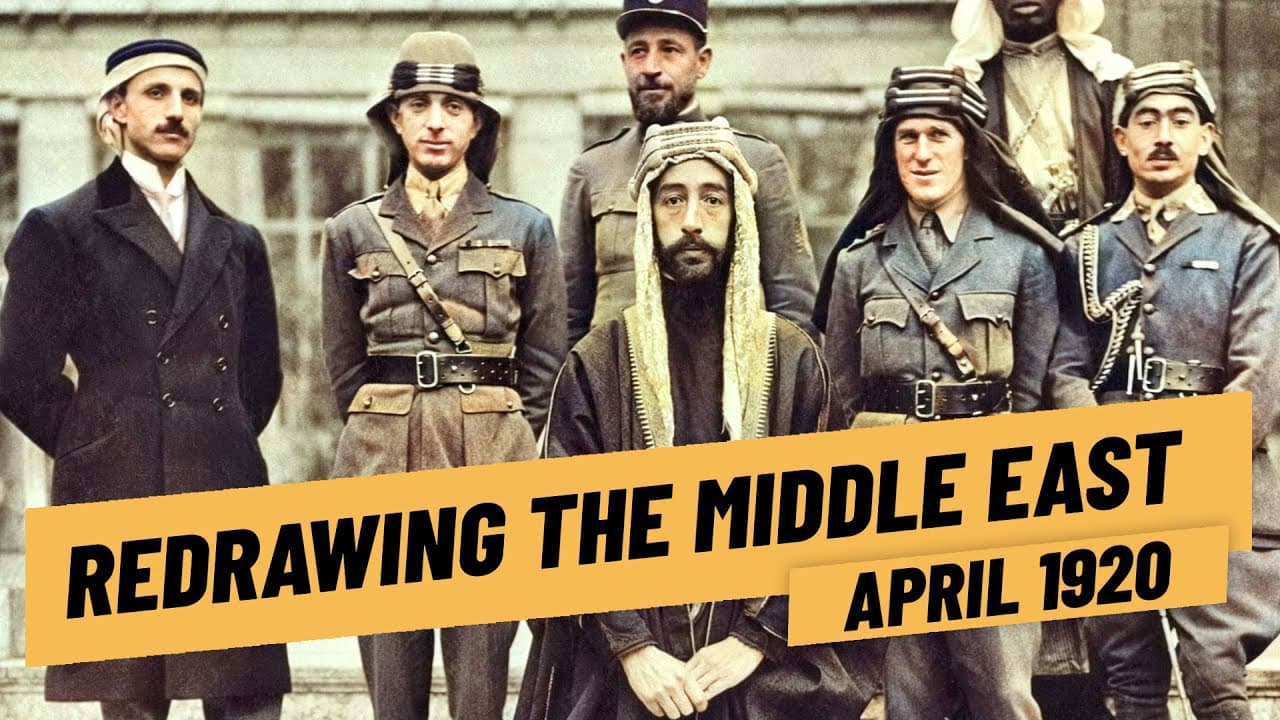
Redrawing the Map of the Middle East in 1920
TL;DR
The 1920 San Remo Conference redrew the Middle East map.
Transcript
hi I'm Jesse Alexander and welcome to the Great War which is being filmed today in our special coid 19 lockdown studio also known as my living room now despite these trying times we still feel like it's important to remember history even when we're living through historic times ourselves so let's jump right into this episode of April 1920 now durin... Read More
Key Insights
- The 1920 San Remo Conference was pivotal in reshaping the Middle East, with Britain and France gaining control under the League of Nations mandate system.
- The Middle East's strategic and economic importance, especially for Britain and France, was a key factor in the region's post-war division.
- The Sykes-Picot Agreement between Britain and France contradicted earlier promises made to Arab leaders, complicating post-war territorial arrangements.
- The Balfour Declaration promised a Jewish homeland in Palestine, adding another layer of complexity to British promises in the Middle East.
- The League of Nations' mandate system was intended to guide territories to independence but often served as a guise for colonial control.
- Local populations largely opposed mandates, favoring independence, with the King-Crane Commission revealing widespread discontent with foreign control.
- The French and British ignored petitions from Middle Eastern populations, leading to tensions and eventual unrest in the region.
- The San Remo Conference's decisions set the stage for future conflicts in the Middle East, as local aspirations for independence were sidelined.
Install to Summarize YouTube Videos and Get Transcripts
Explore YouTube Video Summarizer or Get YouTube Transcript Extractor
Questions & Answers
Q: What was the main outcome of the 1920 San Remo Conference?
The main outcome of the 1920 San Remo Conference was the division of the Middle East into zones of influence controlled by Britain and France under the League of Nations mandate system. This conference formalized the territorial arrangements that had been previously discussed during World War I, particularly in the Sykes-Picot Agreement.
Q: How did the Sykes-Picot Agreement affect the post-war Middle East?
The Sykes-Picot Agreement affected the post-war Middle East by dividing the region into areas of British and French influence, contradicting earlier promises made to Arab leaders about independence. This secret agreement laid the groundwork for the territorial arrangements decided at the San Remo Conference, leading to long-term geopolitical tensions.
Q: What role did the Balfour Declaration play in the Middle East's post-war landscape?
The Balfour Declaration played a significant role in shaping the post-war landscape by promising a Jewish homeland in Palestine. This declaration added complexity to the British promises made to Arabs and contributed to tensions between Jewish and Arab communities, as it was perceived as conflicting with the goal of Arab independence.
Q: What was the League of Nations' mandate system intended to achieve?
The League of Nations' mandate system was intended to guide former Ottoman territories towards independence by placing them under the administration of more developed nations. However, in practice, it allowed Britain and France to maintain colonial control, as the mandates were often used to further their own strategic and economic interests.
Q: How did local populations in the Middle East respond to the mandate system?
Local populations in the Middle East largely opposed the mandate system, favoring independence and self-determination. The King-Crane Commission documented widespread discontent with the foreign control imposed by the mandates, but these petitions and expressions of opposition were largely ignored by the British and French authorities.
Q: What was the King-Crane Commission, and what did it reveal?
The King-Crane Commission was a U.S. initiative to assess the desires of the Middle Eastern populations regarding their future governance. It revealed that the majority of the local populations favored independence and were opposed to the mandates. The commission's findings highlighted the disconnect between the aspirations of the people and the decisions made by the colonial powers.
Q: Why did the British and French ignore petitions from Middle Eastern populations?
The British and French ignored petitions from Middle Eastern populations because they prioritized their strategic interests and colonial ambitions over the desires of the local people. The petitions, which called for independence and opposed the mandates, were seen as obstacles to the control and influence that Britain and France sought to establish in the region.
Q: What were the long-term implications of the San Remo Conference decisions?
The long-term implications of the San Remo Conference decisions included ongoing geopolitical tensions and conflicts in the Middle East. By sidelining local aspirations for independence and imposing foreign control, the conference set the stage for future unrest and struggles for sovereignty in the region, contributing to the complex political landscape that persists today.
Summary & Key Takeaways
-
The 1920 San Remo Conference marked a significant turning point in Middle Eastern history, as Britain and France divided the region under the League of Nations mandate system. This decision was rooted in the strategic and economic interests of the European powers, who had fought the Ottoman Empire during World War I.
-
The Sykes-Picot Agreement and the Balfour Declaration complicated the post-war landscape, as they contradicted promises made to Arab leaders. The League of Nations' mandate system was intended to facilitate independence, but in reality, it allowed Britain and France to maintain colonial control over the region.
-
Local populations expressed strong opposition to foreign mandates, favoring independence and self-determination. The King-Crane Commission revealed widespread discontent, but the petitions were largely ignored by the British and French, leading to tensions and eventual unrest across the Middle East.
Read in Other Languages (beta)
Share This Summary 📚
Summarize YouTube Videos and Get Video Transcripts with 1-Click
Try YouTube Summary with ChatGPT & Claude or YouTube Transcript Generator
Explore More Summaries from The Great War 📚
Summarize YouTube Videos and Get Video Transcripts with 1-Click
Try YouTube Summary with ChatGPT & Claude or YouTube Transcript Generator