Products
Features
YouTube Video Summarizer
Summarize YouTube videos
Web & PDF Highlighter
Highlight web pages & PDFs
Chat with PDF
Ask any PDF questions with AI
Ask AI Clone
Chat with your highlights & memories
Audio Transcriber
Transcribe audio files to text
Glasp Reader
Read and highlight articles
Kindle Highlight Export
Export your Kindle highlights
Idea Hatch
Hatch ideas from your highlights
Integrations
Obsidian Plugin
Notion Integration
Pocket Integration
Instapaper Integration
Medium Integration
Readwise Integration
Snipd Integration
Hypothesis Integration
Apps & Extensions
Chrome Extension
Safari Extension
Edge Add-ons
Firefox Add-ons
iOS App
Android App
Discover
Discover
Ideas
Discover new ideas and insights
Articles
Curated articles and insights
Books
Book recommendations by great minds
Posts
Essays and notes from readers
Quotes
Inspiring quotes collection
Videos
Curated videos and summaries
Explore Glasp
Glasp Newsletter
Weekly insights and updates
Glasp Talk
Interview series with great minds
Glasp Blog
Latest news and articles
Glasp Use Cases
Learn how others use Glasp
Build & Support
Glasp API
Access Glasp's API for developers
MCP Connector
Connect Glasp to Claude & ChatGPT
Community
Glasp Reddit Community
Students
Student discount and benefits
FAQs
Frequently Asked Questions
AboutPricing
DashboardLog inSign up

The Science of Sweetness
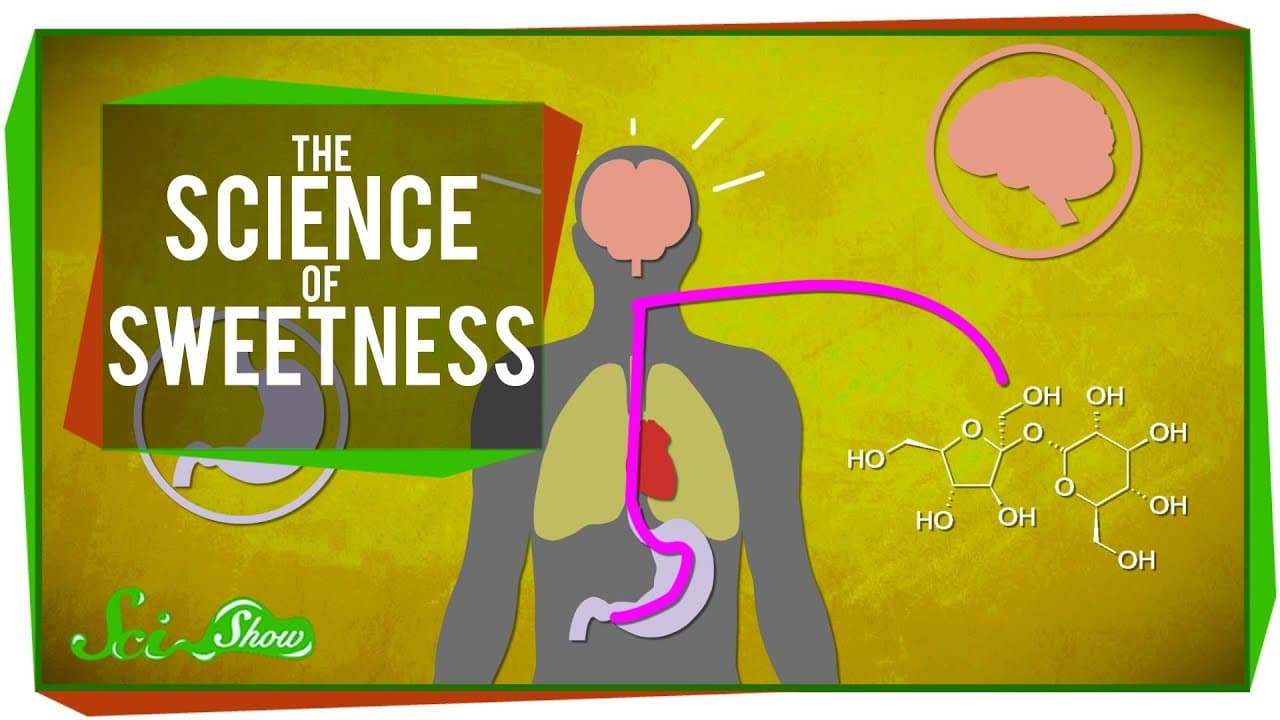
633.8K views
•
August 7, 2013
by
SciShow
YouTube video player
The Science of Sweetness

TL;DR

Humans love sweet tastes due to evolutionary reasons, but artificial sweeteners may have health risks.

Transcript

the whole world is a wonka factory niger has blessed us with a tantalizing smorgasbord of sweet treats and the right kind of tongues with which to taste them and oh how we enjoy it traditionally sweetness wasn't a huge part of the human eating experience and in some part of the world like say the Arctic it was exceedingly rare yes humans have alway... Read More

Key Insights

  • 👅 Taste buds translate food's chemical makeup for taste perception.
  • 😋 Sweet tastes are preferred due to evolutionary associations with high-energy foods.
  • 🖤 Artificial sweeteners, though sweet, lack calories and may have health risks.
  • 👅 Different artificial sweeteners have unique molecular structures affecting taste perception.
  • ❓ Synthetic sweeteners like saccharin, aspartame, and sucralose have distinct properties.
  • 🛰️ FDA-regulated sweeteners like stevia and artificial sweeteners are commonly used.
  • 🧑‍⚕️ Studies suggest potential health risks with artificial sweeteners and their effects on weight regulation.

Install to Summarize YouTube Videos and Get Transcripts

Explore YouTube Video Summarizer or Get YouTube Transcript Extractor

Questions & Answers

Q: How do taste buds translate food flavors for the brain?

Taste buds, comprising taste cells, interact with food molecules to detect flavors, sending signals to the brain for taste perception, making eating enjoyable.

Q: Why do humans prefer sweet tastes?

Sweet tastes are associated with high-calorie, high-energy foods, making them desirable. Evolutionarily, humans are inclined towards sweet tastes for energy acquisition.

Q: What distinguishes natural sugars from artificial sweeteners?

Natural sugars trigger taste buds immediately and fade without aftertaste, while artificial sweeteners, due to unique molecular structures, can be much sweeter and lack calories.

Q: What are potential health risks associated with artificial sweeteners?

Studies suggest potential risks like weight gain, interference with calorie regulation, increased risk of diseases like diabetes, and uncertainties about long-term effects.

Summary & Key Takeaways

  • Taste buds on the tongue translate food's chemical makeup into signals for the brain.

  • Humans enjoy sweetness due to calories associated with high-energy foods.

  • Artificial sweeteners may have risks, potentially affecting weight regulation and health.


Read in Other Languages (beta)

English

Share This Summary 📚

Summarize YouTube Videos and Get Video Transcripts with 1-Click

Download browser extensions on:

Try YouTube Summary with ChatGPT & Claude or YouTube Transcript Generator

Explore More Summaries from SciShow 📚
Meet The Black Swallower: Nature's Top Competitive Eater thumbnail
Meet The Black Swallower: Nature's Top Competitive Eater
SciShow
Glenn Seaborg: Shaking Up the Periodic Table thumbnail
Glenn Seaborg: Shaking Up the Periodic Table
SciShow
7 Animals with Super Weird (and Sometimes Horrifying) Teeth thumbnail
7 Animals with Super Weird (and Sometimes Horrifying) Teeth
SciShow
There Probably Aren't Different Strains of SARS-CoV-2 (Yet) thumbnail
There Probably Aren't Different Strains of SARS-CoV-2 (Yet)
SciShow
Firehawks: Nature's Arsonists thumbnail
Firehawks: Nature's Arsonists
SciShow
Why Ferns Have More Chromosomes Than You thumbnail
Why Ferns Have More Chromosomes Than You
SciShow

Summarize YouTube Videos and Get Video Transcripts with 1-Click

Download browser extensions on:

Try YouTube Summary with ChatGPT & Claude or YouTube Transcript Generator

Apps & Extensions

  • Chrome Extension
  • Safari Extension
  • Edge Add-ons
  • Firefox Add-ons
  • iOS App
  • Android App

Key Features

  • YouTube Video Summarizer
  • Web & PDF Summarizer
  • Web & PDF Highlighter
  • Chat with PDF
  • Ask AI Clone
  • Audio Transcriber
  • Glasp Reader
  • Kindle Highlight Export
  • Idea Hatch

Integrations

  • Obsidian Plugin
  • Notion Integration
  • Pocket Integration
  • Instapaper Integration
  • Medium Integration
  • Readwise Integration
  • Snipd Integration
  • Hypothesis Integration

More Features

  • APIs
  • MCP Connector
  • Blog & Post
  • Embed Links
  • Image Highlight
  • Personality Test
  • Quote Shots

Company

  • About us
  • Blog
  • Community
  • FAQs
  • Job Board
  • Newsletter
  • Pricing
Terms

•

Privacy

•

Guidelines

© 2026 Glasp Inc. All rights reserved.