Firehawks: Nature's Arsonists
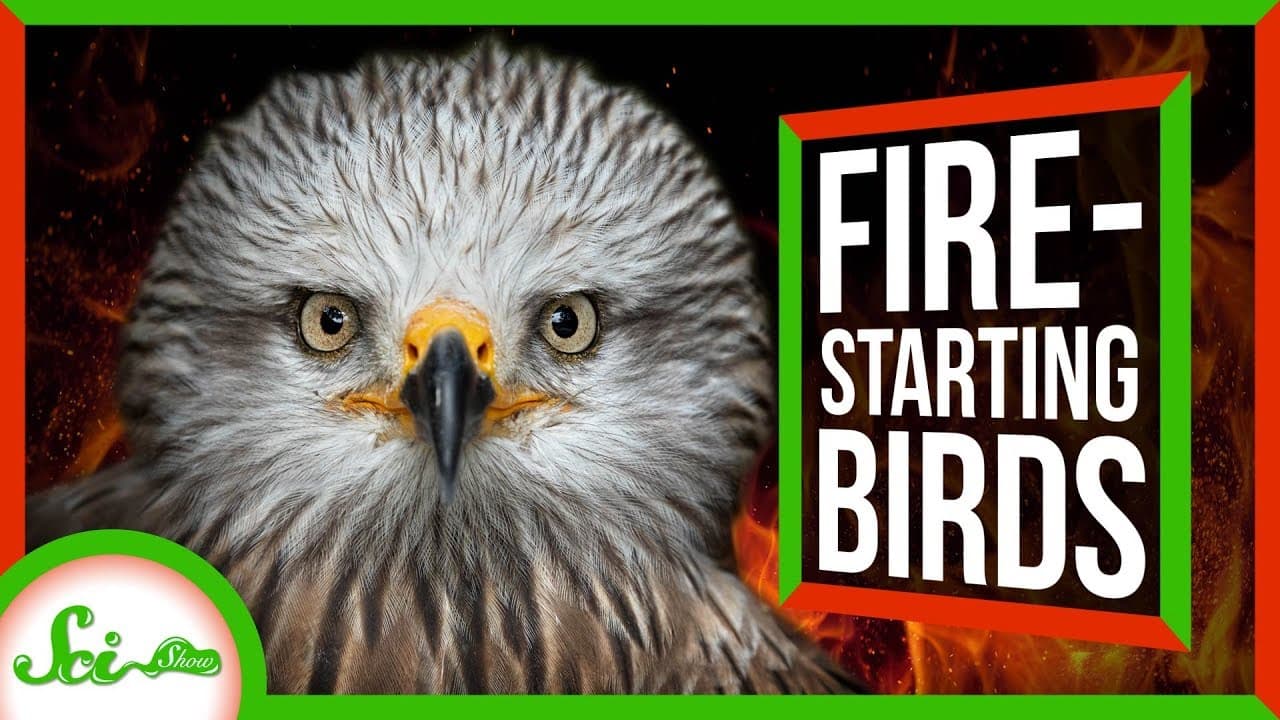
TL;DR
Some birds in Australia have been observed intentionally starting fires, making them the only animals besides humans known to do so.
Transcript
thanks to curiosity stream for sponsoring this episode of scishow to learn more go to curiosity stream comm slash scishow it's no secret that birds can be pretty smart you've probably heard of birds using tools or solving puzzles but in Australia they take things to the next level there some birds are said to intentionally start fires making them t... Read More
Key Insights
- ❤️🔥 Birds in Australia have evoked curiosity due to their unique behavior of intentionally starting fires.
- ❤️🔥 Indigenous ecological knowledge, passed down through generations, has provided valuable information about fire-starting birds.
- 🥳 Fire-starting birds have been observed in various parts of Australia, indicating a widespread occurrence of this behavior.
- ❤️🔥 Researchers plan to conduct further studies, interviews, and experiments to gain a better understanding of how often birds start fires and how to mitigate the impact.
- ❤️🔥 The behavior of fire-starting birds has implications for firefighting strategies and ecosystem management.
- 🖐️ The cultural knowledge of indigenous communities plays a significant role in deepening our understanding of natural phenomena.
- ❤️🔥 The research on fire-starting birds highlights the importance of curiosity and inquisitiveness in scientific discovery.
Install to Summarize YouTube Videos and Get Transcripts
Explore YouTube Video Summarizer or Get YouTube Transcript Extractor
Questions & Answers
Q: Why do birds intentionally start fires?
Birds start fires to flush out prey that panic and try to escape from the flames, making them easier targets. The fire creates a chaotic environment that benefits these birds of prey.
Q: How did the indigenous cultures in Australia learn about this behavior?
Indigenous cultures have observed and shared stories of fire-starting birds for generations. It is suggested that early Aboriginal people may have learned the behavior by watching and imitating the birds.
Q: What steps are researchers taking to learn more about this behavior?
Researchers plan to conduct more interviews, set up field experiments, and equip local Rangers with tools to catch the birds in the act. These efforts aim to scientifically observe and document the behavior.
Q: How do firefighters deal with fire-starting birds?
Firefighters in Australia are aware of these birds and actively lookout for them during wildfire incidents. They try to control the fires started by birds and plan strategies to minimize their impact.
Summary & Key Takeaways
-
Birds in Australia have been observed intentionally flying towards wildfires, using fire as a means to catch fleeing prey.
-
Indigenous cultures in Australia have passed down stories of these fire-starting birds for generations, with at least 12 different ethnic groups reporting first-hand knowledge of the behavior.
-
Firefighters in Australia have encountered instances where birds have started multiple fires, causing damage to the environment and local livestock.
Read in Other Languages (beta)
Share This Summary 📚
Summarize YouTube Videos and Get Video Transcripts with 1-Click
Try YouTube Summary with ChatGPT & Claude or YouTube Transcript Generator
Explore More Summaries from SciShow 📚


Summarize YouTube Videos and Get Video Transcripts with 1-Click
Try YouTube Summary with ChatGPT & Claude or YouTube Transcript Generator