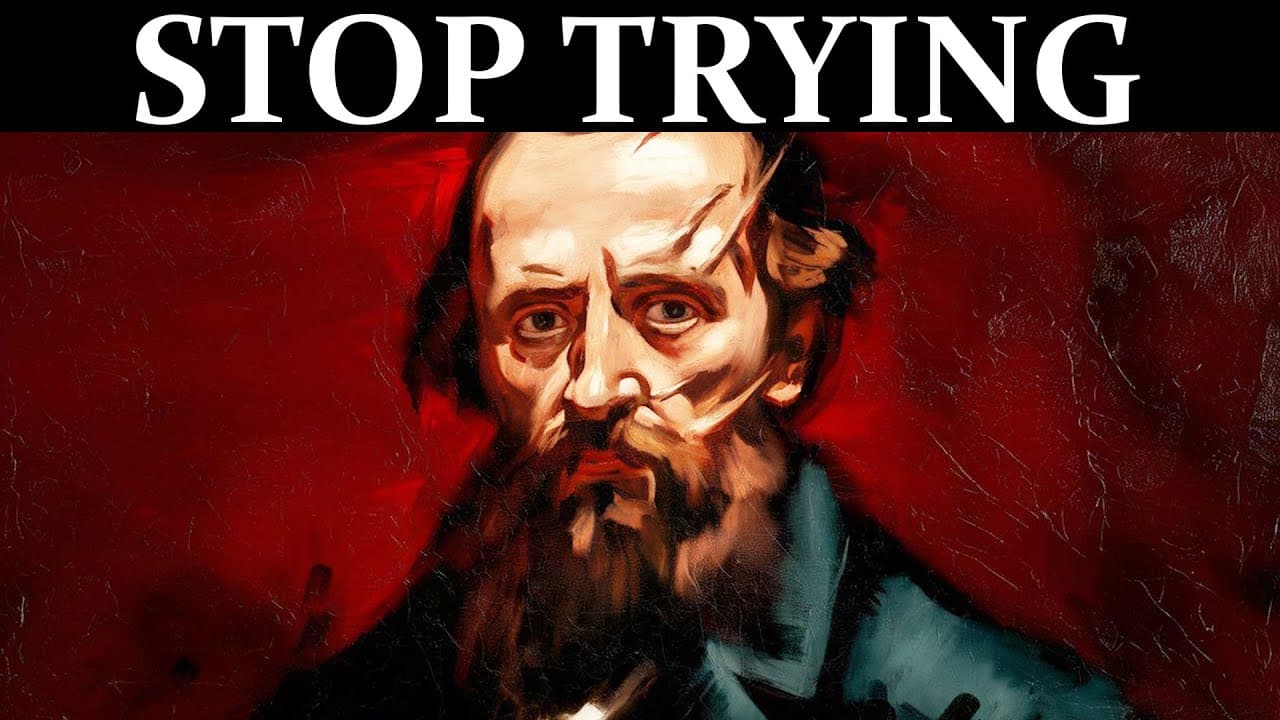
The More You Try to Be Happy, The More You’ll Suffer – Dostoevsky
TL;DR
Chasing happiness may increase suffering; embrace pain for true freedom.
Transcript
you are tired aren't you tired of chasing a happiness that never arrives you wake up and feel an emptiness you go to sleep and it's still there and the most ironic thing is that the more you try to get rid of this weight the more you force a smile the more you repeat those positive phrases you read on the internet the deeper you sink and maybe no o... Read More
Key Insights
- The modern pursuit of happiness is seen as a disease, not a solution, leading to deeper suffering rather than fulfillment.
- Dostoevsky suggests true happiness arises when we stop avoiding pain and face it, finding meaning in suffering.
- The societal pressure to maintain a facade of constant happiness is oppressive and leads to superficial living.
- Suffering is portrayed as a necessary element for personal transformation and self-awareness, not a defect to be avoided.
- Modern culture often pathologizes sadness and discomfort, ignoring the potential for growth and truth in these emotions.
- Dostoevsky's characters illustrate the dangers of self-deception and the pursuit of artificial happiness, leading to despair.
- True freedom is found in accepting and confronting pain, not in the avoidance of discomfort or pursuit of pleasure.
- The narrative shifts from seeking happiness to living sincerely, embracing pain as a guide to deeper understanding and peace.
Install to Summarize YouTube Videos and Get Transcripts
Explore YouTube Video Summarizer or Get YouTube Transcript Extractor
Questions & Answers
Q: Why does Dostoevsky view the pursuit of happiness as problematic?
Dostoevsky views the pursuit of happiness as problematic because it often leads to deeper suffering. He believes that modern society's obsession with happiness creates a superficial existence, where individuals are pressured to maintain a facade of constant positivity. This pursuit distracts from the deeper truths of the human condition, as true happiness is not something to be chased but arises naturally when one stops avoiding pain and faces it head-on.
Q: How does suffering contribute to personal transformation according to Dostoevsky?
According to Dostoevsky, suffering is essential for personal transformation as it forces individuals to confront their inner truths and move beyond superficial living. He suggests that suffering is not a defect but a necessary element for self-awareness and growth. Through suffering, individuals can achieve a deeper understanding of themselves and the world, leading to authentic freedom and fulfillment, rather than living under the illusion of constant happiness.
Q: What is the danger of societal pressure to appear constantly happy?
The societal pressure to appear constantly happy is dangerous because it leads to a superficial existence, where individuals mask their true emotions and experiences. This pressure creates a facade that ignores the complexity and depth of human emotions, leading to self-deception and a disconnection from one's true self. By prioritizing appearances over authenticity, individuals may experience greater inner turmoil and dissatisfaction, as they are unable to confront and embrace their true feelings and experiences.
Q: How does Dostoevsky's philosophy challenge modern views on mental health?
Dostoevsky's philosophy challenges modern views on mental health by emphasizing the value of suffering and discomfort as essential components of the human experience. While contemporary culture often pathologizes sadness and discomfort, seeking to eliminate them through medication or avoidance, Dostoevsky suggests that these emotions can lead to growth and self-awareness. By embracing rather than silencing pain, individuals can achieve a deeper understanding of themselves and their place in the world, leading to authentic freedom and fulfillment.
Q: What role does self-deception play in the pursuit of happiness?
Self-deception plays a significant role in the pursuit of happiness, as individuals often create a false image of themselves to fit societal expectations. This self-deception leads to a disconnect between one's true self and the facade they present to the world, resulting in inner turmoil and dissatisfaction. Dostoevsky's characters illustrate the dangers of this pursuit, as they become trapped in a cycle of despair when they fail to confront their true emotions and experiences. By recognizing and addressing self-deception, individuals can move towards genuine fulfillment and authenticity.
Q: How can embracing pain lead to true freedom?
Embracing pain can lead to true freedom by allowing individuals to confront and accept their true selves, rather than hiding behind a facade of constant happiness. Dostoevsky suggests that true freedom comes not from the absence of pain but from the conscious decision to face and embrace it. By doing so, individuals can break free from societal expectations and self-deception, achieving a deeper understanding of themselves and the world. This acceptance of pain allows for authentic living and genuine fulfillment, rather than the superficial pursuit of happiness.
Q: What is the significance of Dostoevsky's characters in illustrating his philosophy?
Dostoevsky's characters are significant in illustrating his philosophy as they embody the struggles and complexities of the human condition. Through their experiences, he explores the dangers of self-deception, the pursuit of artificial happiness, and the transformative power of suffering. Characters like Raskolnikov and Sonia demonstrate the journey from despair to self-awareness, highlighting the importance of confronting pain and embracing one's true self. Their stories serve as a reflection of Dostoevsky's belief that true freedom and fulfillment come from accepting and understanding suffering.
Q: What is the ultimate message of the video regarding the pursuit of happiness?
The ultimate message of the video regarding the pursuit of happiness is that chasing happiness can lead to greater suffering, as it often involves self-deception and a superficial existence. Instead, the video encourages viewers to embrace pain and discomfort as essential components of the human experience, leading to self-awareness and authentic freedom. By confronting and accepting one's true emotions and experiences, individuals can achieve genuine fulfillment and peace, moving beyond the illusion of constant happiness and societal expectations.
Summary & Key Takeaways
-
The relentless quest for happiness often leads to greater suffering, as Dostoevsky argues that true fulfillment comes from facing and accepting pain. Modern society's obsession with appearing happy creates a superficial existence, masking the deeper truths of the human condition.
-
Dostoevsky's philosophy reveals that suffering is not an enemy but a necessary component of self-awareness and transformation. By confronting pain, individuals can achieve true freedom and authenticity, moving beyond the deceptive allure of constant happiness.
-
The video challenges viewers to reconsider their pursuit of happiness, suggesting that embracing discomfort and acknowledging inner truths can lead to genuine peace and liberation. This shift requires courage and a willingness to confront the illusions of modern life.
Read in Other Languages (beta)
Share This Summary 📚
Summarize YouTube Videos and Get Video Transcripts with 1-Click
Try YouTube Summary with ChatGPT & Claude or YouTube Transcript Generator
Explore More Summaries from Psyphoria 📚



Summarize YouTube Videos and Get Video Transcripts with 1-Click
Try YouTube Summary with ChatGPT & Claude or YouTube Transcript Generator