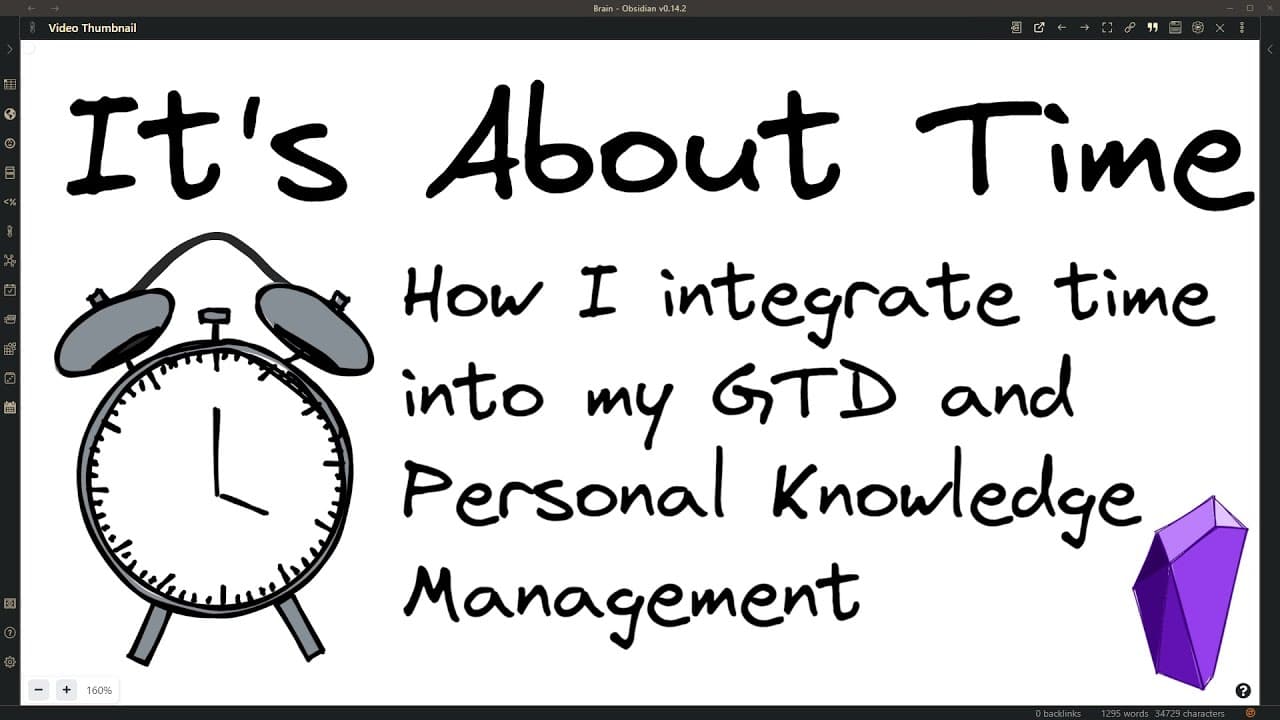
IT'S ABOUT TIME - How I integrate time into my Obsidian notes - GTD
TL;DR
Learn how to maximize the reusability of information in your knowledge graph through an effective daily note-taking workflow in Obsidian.
Transcript
hi in today's video i'd like to talk about the representation of time in my personal knowledge management system specifically i want to show you my daily notes page in obsidian and talk you through my daily note-taking workflow according to richard sol worman there are only five ways to organize information any information these five ways are locat... Read More
Key Insights
- 🥡 The daily note-taking workflow in Obsidian provides a comprehensive knowledge graph by incorporating links, transclusions, and organization based on context.
- 👻 The integration of task sections on each page allows for easy task management and follow-up.
- 💁 The combination of the daily notes first and content first approaches maximizes the reusability and accessibility of information in the knowledge graph.
- 😒 The use of templates and scripts streamlines the note-taking process, saving time and ensuring consistency.
- ❓ The CSS snippet customization enhances the visual presentation of transclusions, providing a better reading experience.
- 💁 The organization of topics into folders helps in structuring and locating relevant information.
- 👻 The chronological order of notes on each page allows for quick access to recent information while maintaining the ability to review past history.
Install to Summarize YouTube Videos and Get Transcripts
Explore YouTube Video Summarizer or Get YouTube Transcript Extractor
Questions & Answers
Q: What are the five aspects to consider when organizing information according to Richard Sormann's latch principle?
According to Sormann, the five aspects to consider are location, alphabet, time, category, and hierarchy. These aspects help in designing an effective information system.
Q: What is the difference between the daily notes first and content first approaches?
In the daily notes first approach, all notes are linked to the daily notes page, providing a chronological log of activities. In the content first approach, notes are linked to relevant topics or contexts, focusing on the meaningfulness of information rather than the date.
Q: How does the presenter use transclusions to organize their notes?
The presenter uses transclusions to link information from various pages to the daily notes page. This allows for easy reference and access to notes, even if they reside in different locations.
Q: How does the presenter ensure efficient referencing and task management in their workflow?
The presenter uses data view queries and templater scripts to create task sections on each page, allowing them to see tasks related to a specific context or discussion. This helps in efficient task management and follow-up.
Key Insights:
- The daily note-taking workflow in Obsidian provides a comprehensive knowledge graph by incorporating links, transclusions, and organization based on context.
- The integration of task sections on each page allows for easy task management and follow-up.
- The combination of the daily notes first and content first approaches maximizes the reusability and accessibility of information in the knowledge graph.
- The use of templates and scripts streamlines the note-taking process, saving time and ensuring consistency.
- The CSS snippet customization enhances the visual presentation of transclusions, providing a better reading experience.
- The organization of topics into folders helps in structuring and locating relevant information.
- The chronological order of notes on each page allows for quick access to recent information while maintaining the ability to review past history.
- The daily notes page acts as a log of activities, providing a comprehensive overview of each day's events.
Summary & Key Takeaways
-
Richard Sormann's latch principle suggests organizing information based on location, alphabet, time, category, and hierarchy for an effective information system.
-
The video explores the concept of daily notes first and content first approaches in personal knowledge management systems, highlighting the importance of context.
-
The presenter demonstrates their daily notes page in Obsidian, showing how they link various topics, meetings, projects, and actions for a comprehensive knowledge graph.
Read in Other Languages (beta)
Share This Summary 📚
Summarize YouTube Videos and Get Video Transcripts with 1-Click
Try YouTube Summary with ChatGPT & Claude or YouTube Transcript Generator
Explore More Summaries from Zsolt's Visual Personal Knowledge Management 📚

Summarize YouTube Videos and Get Video Transcripts with 1-Click
Try YouTube Summary with ChatGPT & Claude or YouTube Transcript Generator