How Does Cathodic Protection Prevent Rust?
TL;DR
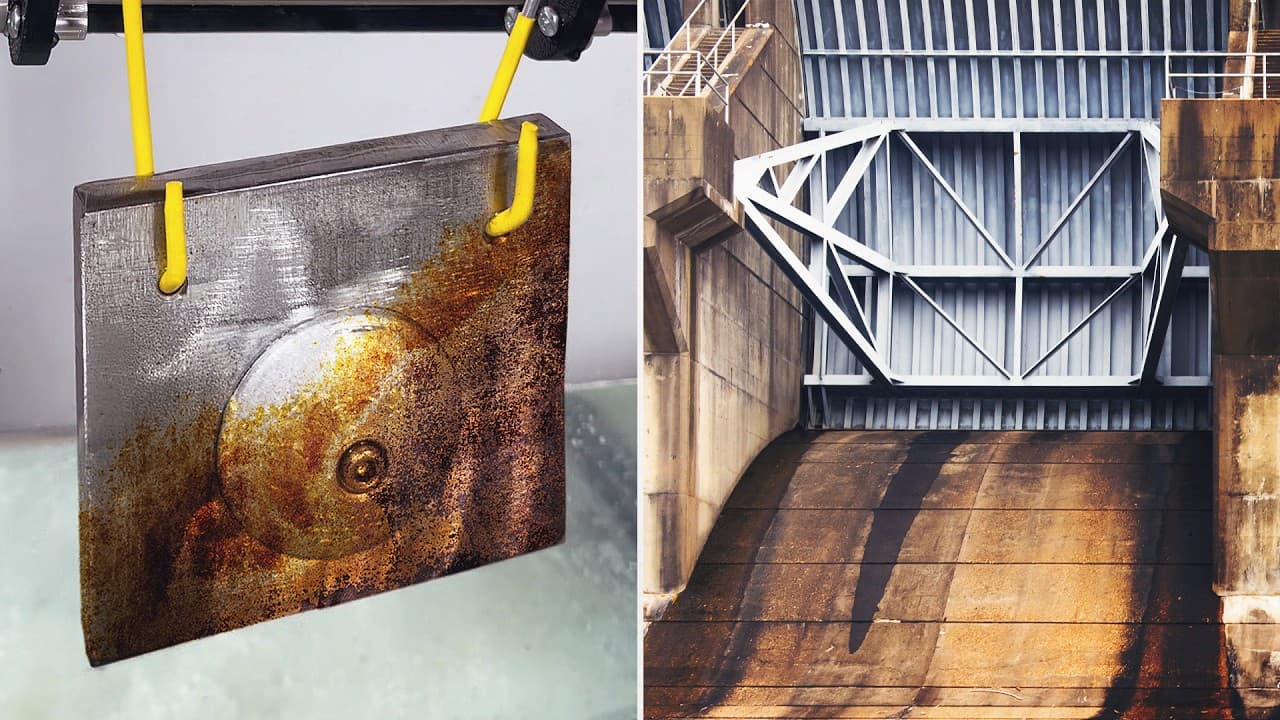
Cathodic protection is a method used to prevent rust and corrosion in metal structures by making them the cathode of an electrochemical cell. This technique extends the lifespan of infrastructure like bridges and pipelines by using sacrificial anodes or impressed current systems to control corrosion, proving more cost-effective than replacing structures.
Transcript
This is the old Howard Frankland Bridge that carries roughly 180,000 vehicles per day across Old Tampa Bay between St. Petersburg and Tampa, Florida. A replacement for the bridge is currently under construction, but the Florida Department of Transportation almost had to replace it decades earlier. The bridge first opened for traffic in 1960, but by... Read More
Key Insights
- Cathodic protection prevents rust by making metal structures the cathode in an electrochemical cell.
- Steel is prone to corrosion, but using less noble metals like zinc, aluminum, or magnesium can protect it.
- Galvanizing involves coating steel with zinc, acting as both a protective barrier and sacrificial anode.
- Impressed current cathodic protection uses an external power source to control electron flow and prevent corrosion.
- Replacing infrastructure is costly, making maintenance and protection strategies like cathodic protection essential.
- The Howard Frankland Bridge's lifespan was extended using zinc anodes and cathodic protection techniques.
- Cathodic protection systems are crucial for infrastructure safety and environmental protection.
- Corrosion is a significant cause of infrastructure deterioration, costing around $1,400 per person annually in the U.S.
Install to Summarize YouTube Videos and Get Transcripts
Explore YouTube Video Summarizer or Get YouTube Transcript Extractor
Questions & Answers
Q: How does cathodic protection prevent rust?
Cathodic protection prevents rust by converting the metal structure into the cathode of an electrochemical cell. This is achieved by attaching a sacrificial anode made of a less noble metal, such as zinc, aluminum, or magnesium, to the structure. The anode corrodes instead of the protected metal, effectively preventing rust and extending the lifespan of the structure.
Q: What is galvanizing and how does it protect steel?
Galvanizing is the process of coating steel with a layer of zinc. This zinc layer serves as both a physical barrier to moisture and a sacrificial anode that corrodes in place of the steel. By doing so, galvanizing effectively protects the steel from rust and corrosion, making it a common and cost-effective method for prolonging the life of steel structures exposed to the environment.
Q: What is impressed current cathodic protection?
Impressed current cathodic protection is a corrosion prevention method that uses an external power source to supply a continuous flow of electrons to a metal structure. This technique ensures that the structure remains the cathode in a corrosion cell, preventing it from rusting. It is often employed in pipelines and other critical infrastructure to reduce corrosion risk and extend service life.
Q: Why is cathodic protection important for infrastructure?
Cathodic protection is crucial for infrastructure because it effectively prevents corrosion, which is a leading cause of structural deterioration. By extending the lifespan of bridges, pipelines, and other critical structures, cathodic protection reduces maintenance costs, enhances safety, and minimizes environmental disruptions. This method proves more economical and sustainable than frequent replacements, ensuring long-term infrastructure integrity.
Q: How was the Howard Frankland Bridge protected from corrosion?
The Howard Frankland Bridge in Tampa was protected from corrosion using cathodic protection, specifically by applying zinc anodes around its concrete girders and foundation piles. These zinc anodes acted as sacrificial elements, corroding in place of the steel reinforcement within the concrete. This approach significantly slowed down the corrosion process, extending the bridge's lifespan and delaying the need for costly replacement.
Q: What are sacrificial anodes and how do they work?
Sacrificial anodes are less noble metals attached to a metal structure to prevent its corrosion. These anodes, typically made of zinc, aluminum, or magnesium, corrode preferentially because they have a higher electrochemical potential than the protected metal. By sacrificing themselves, these anodes preserve the integrity of the structure, effectively preventing rust and extending its service life.
Q: What are the limitations of using paint for corrosion protection?
While paint is an effective barrier against moisture, it has limitations in corrosion protection. Paint can be susceptible to damage, making it less reliable in harsh environments. Additionally, it cannot be applied to internal components like rebar within concrete. In such cases, alternative methods like cathodic protection are necessary to ensure long-term corrosion resistance and structural integrity.
Q: Why is cathodic protection preferred over replacing structures?
Cathodic protection is preferred over replacing structures because it is a more cost-effective and resource-efficient solution. By preventing corrosion and extending the lifespan of infrastructure, cathodic protection reduces the need for frequent replacements, which can be expensive and environmentally disruptive. This approach ensures safety, conserves resources, and minimizes the environmental impact of construction activities.
Summary & Key Takeaways
-
Cathodic protection is a technique used to prevent rust in metal structures by making them the cathode in an electrochemical cell. This method involves using sacrificial anodes or impressed current systems to control corrosion, significantly extending the lifespan of infrastructure like bridges and pipelines. It is a cost-effective solution compared to replacing structures.
-
The Howard Frankland Bridge in Tampa utilized cathodic protection with zinc anodes to extend its life, demonstrating the effectiveness of this method. By coupling different metals, such as zinc, aluminum, or magnesium, with steel, the less noble metals act as sacrificial anodes, protecting the steel from corrosion.
-
Impressed current cathodic protection adds an external power source to control electron flow, ensuring vulnerable steel remains the cathode. This approach is legally required for pipelines in some areas, highlighting its importance in preventing leaks and environmental damage. Overall, cathodic protection is vital for infrastructure safety and sustainability.
Read in Other Languages (beta)
Share This Summary 📚
Summarize YouTube Videos and Get Video Transcripts with 1-Click
Try YouTube Summary with ChatGPT & Claude or YouTube Transcript Generator
Explore More Summaries from Practical Engineering 📚




Summarize YouTube Videos and Get Video Transcripts with 1-Click
Try YouTube Summary with ChatGPT & Claude or YouTube Transcript Generator