Why Don't Lakes Experience Tides Like Oceans?
TL;DR
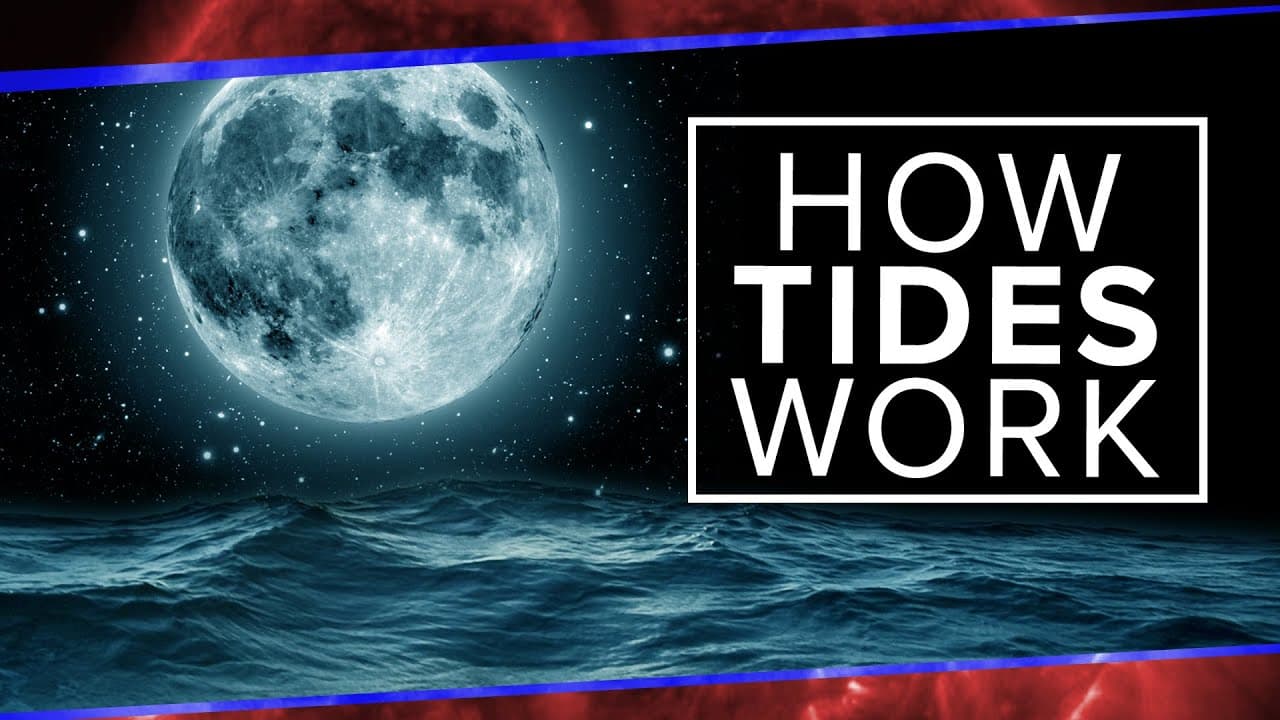
Tides in oceans are caused by the gravitational pull of the Moon and Sun, but not in the way most people think. The ocean's large surface area allows for the accumulation of tiny forces, creating noticeable tidal bulges. Lakes, being smaller, don't have enough surface area for these forces to create significant pressure changes.
Transcript
[MUSIC PLAYING] As we've seen before on "Space Time," gravity affects the motion of all objects identically. So if gravity from the Moon and the Sun is really responsible for tides in the ocean and water is water, then why don't we see tides in lakes? Guess what? Whatever you believe about why ocean tides exist is probably wrong, even at the most ... Read More
Key Insights
- Tides are caused by the gravitational pull of the Moon and Sun, but not by lifting water upward.
- The common explanation of tides involving gravitational differential is incorrect.
- Tidal forces act as a squeezing mechanism rather than a lifting one.
- Lakes do not experience tides because their surface area is too small to accumulate significant pressure from tidal forces.
- Even large lakes like Lake Michigan only experience minimal tides.
- The Earth's surface itself rises slightly during tides, further minimizing visible effects in small water bodies.
- Spring tides occur when the Sun, Moon, and Earth align, amplifying tidal effects.
- Neap tides occur when the Sun and Moon form a right angle with Earth, reducing tidal effects.
Install to Summarize YouTube Videos and Get Transcripts
Explore YouTube Video Summarizer or Get YouTube Transcript Extractor
Questions & Answers
Q: How do tidal forces cause ocean tides?
Tidal forces cause ocean tides through a squeezing mechanism. The Moon's gravity creates tiny tangential forces across the ocean's vast surface, which accumulate to push water sideways, increasing pressure and forming bulges along the Earth-Moon line. This pressure redistribution is akin to hydraulic pressure, not a direct lifting of water.
Q: Why don't lakes have tides like oceans?
Lakes don't have tides like oceans because their surface area is too small to accumulate the necessary pressure from tidal forces. The tiny forces exerted by the Moon's gravity are spread over a smaller area, preventing significant water level changes, unlike in oceans where the large surface allows for noticeable tidal bulges.
Q: What is the common misconception about tides?
The common misconception about tides is that they are caused by the Moon's gravity lifting water directly upward. In reality, tides result from tangential forces that squeeze the ocean, creating pressure that redistributes water, forming bulges. This is more about pressure changes than direct gravitational lifting.
Q: What role does the Sun play in tides?
The Sun plays a secondary role in tides, with effects similar to the Moon but about a third as strong due to its greater distance. When the Sun and Moon align with the Earth, they create larger spring tides, while a 90-degree angle results in smaller neap tides due to partial cancellation of their effects.
Q: How do spring and neap tides differ?
Spring tides occur when the Sun, Moon, and Earth align, amplifying tidal effects and creating higher high tides and lower low tides. Neap tides happen when the Sun and Moon are at a right angle relative to Earth, partially canceling each other's effects and resulting in smaller tidal variations.
Q: Why are tides more noticeable in oceans than in lakes?
Tides are more noticeable in oceans because their vast surface area allows for the accumulation of tiny tangential forces from the Moon's gravity, creating significant pressure changes. Lakes, with smaller surface areas, cannot accumulate enough pressure to cause noticeable changes in water levels.
Q: How do tidal forces affect bodies other than water?
Tidal forces theoretically affect all bodies, but their impact is significant only in large, contiguous bodies like oceans. Smaller bodies, such as lakes, swimming pools, and even human bodies, experience microscopic tidal effects that are negligible due to insufficient surface area for pressure accumulation.
Q: What are tidal bores, and how do they relate to tides?
Tidal bores are phenomena where rising tides create a moving wall of water in narrow inlets or rivers with direct ocean connections. They occur due to the rapid influx of tidal water into confined spaces, demonstrating how tidal forces can manifest differently depending on geographical features and waterway configurations.
Summary & Key Takeaways
-
Tides are not caused by the Moon's gravity lifting water directly, but by tangential forces that squeeze the ocean, creating bulges. This process is akin to hydraulic pressure in a blister, not the stretching of taffy.
-
Lakes and small bodies of water don't experience noticeable tides because their limited surface area prevents the accumulation of sufficient pressure to alter water levels significantly.
-
Tidal forces are more about the redistribution of water pressure across vast oceanic surfaces rather than direct gravitational lifting, explaining why oceans have tides while lakes do not.
Read in Other Languages (beta)
Share This Summary 📚
Summarize YouTube Videos and Get Video Transcripts with 1-Click
Try YouTube Summary with ChatGPT & Claude or YouTube Transcript Generator
Explore More Summaries from PBS Space Time 📚




Summarize YouTube Videos and Get Video Transcripts with 1-Click
Try YouTube Summary with ChatGPT & Claude or YouTube Transcript Generator