Conflicts & Wars In The Aftermath of WW1 I THE GREAT WAR Epilogue
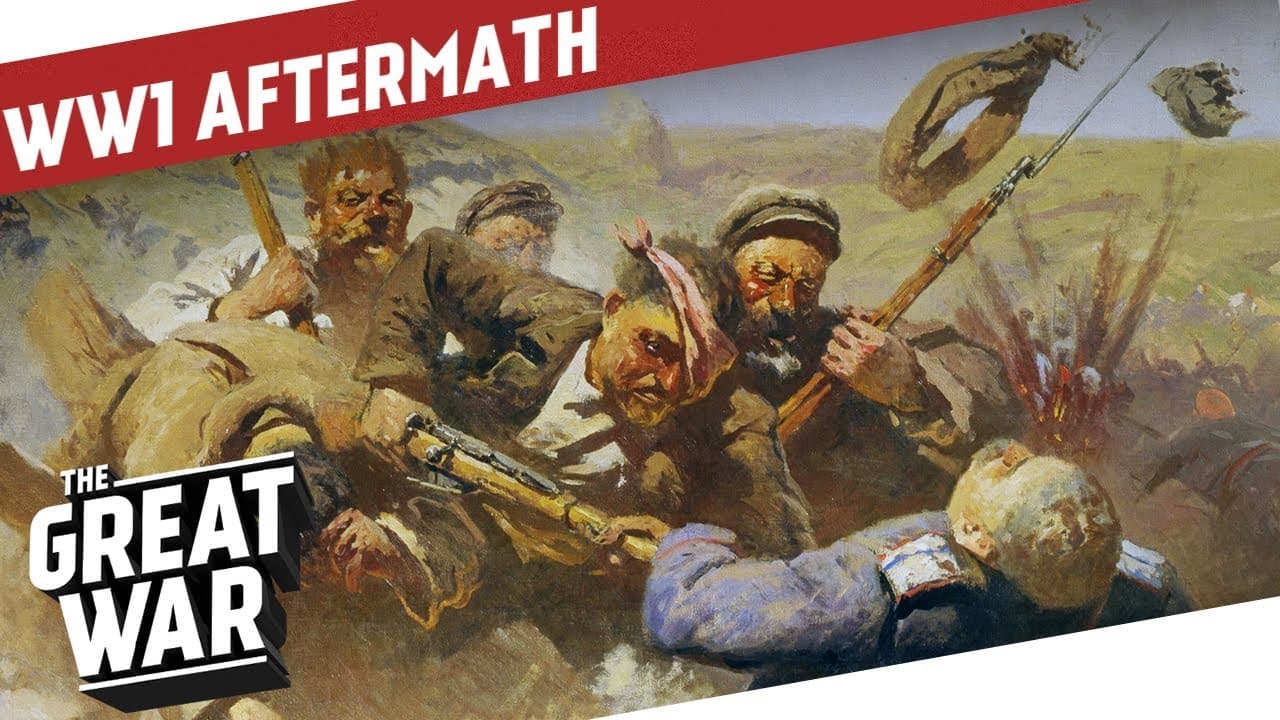
TL;DR
Post-WWI era saw numerous conflicts and unstable new nations.
Transcript
“The war to end all wars” is over – and yet, Henry Wilson, British Army Chief of Staff, wrote in 1919, “One year and three days later, we have between 20 and 30 wars raging in different parts of the world.” I’m Indy Neidell; welcome to a Great War Epilogue Special. At the end of 1918, there are new nations and new leaders springing up all over Euro... Read More
Key Insights
- The aftermath of WWI saw the emergence of 20 to 30 wars globally, highlighting the instability of the new world order.
- New nations formed in Central and Eastern Europe, but lack of natural borders led to ethnic and territorial conflicts.
- Russia experienced a civil war between the Bolsheviks and various counterrevolutionary factions, complicating the post-war landscape.
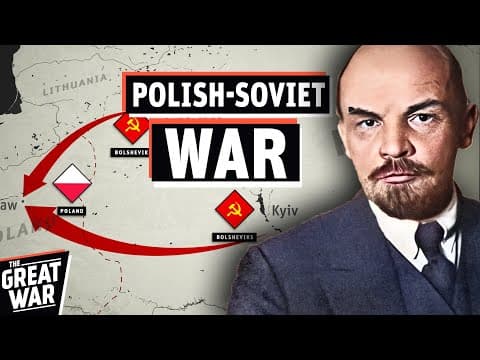
- The Polish-Soviet War exemplified the ongoing territorial disputes in Eastern Europe, with Poland resisting Bolshevik expansion.
- The Treaty of Lausanne set a precedent for forced population exchanges, influencing future ethnic policies worldwide.
- Unrest in colonial regions like the Middle East and Asia was fueled by the imposition of foreign mandates and promises of independence.
- The Weimar Republic in Germany faced political instability and economic challenges, setting the stage for extremist movements.
- The 1920s were marked by ideological struggles between movements such as fascism, communism, and nationalism, shaping global politics.
Install to Summarize YouTube Videos and Get Transcripts
Explore YouTube Video Summarizer or Get YouTube Transcript Extractor
Questions & Answers
Q: What was the state of Europe after WWI?
Europe was in a state of turmoil after WWI, with numerous new nations emerging amidst ethnic and territorial disputes. The lack of natural borders led to conflicts as various ethnic groups found themselves divided. Central and Eastern Europe were particularly unstable, with ongoing wars and civil strife.
Q: How did the Russian civil war affect the post-WWI landscape?
The Russian civil war between the Bolsheviks and counterrevolutionary factions added complexity to the post-WWI landscape. The Bolsheviks aimed to reclaim territories lost under the Brest-Litovsk treaty and spread their ideology, leading to further conflicts in Eastern Europe, especially with Poland.
Q: What was the significance of the Polish-Soviet War?
The Polish-Soviet War was significant as it prevented the Bolshevik expansion into Western Europe. Poland successfully resisted the Soviet forces, halting their influence for the next two decades. This conflict highlighted the ongoing territorial disputes and the fragility of new national borders in Eastern Europe.
Q: What precedent did the Treaty of Lausanne set?
The Treaty of Lausanne set a precedent for forced population exchanges, as it involved relocating Greek and Turkish minorities against their will. This provided a quasi-legal basis for future ethnic cleansing policies, impacting global ethnic relations and setting a troubling standard for addressing minority issues.
Q: How did colonial regions react to the post-WWI changes?
Colonial regions like the Middle East and Asia reacted with increasing unrest to the post-WWI changes. The imposition of European mandates and unfulfilled promises of independence fueled dissatisfaction. The division of territories without regard for ethnic or cultural lines exacerbated tensions and resistance against colonial powers.
Q: What challenges did the Weimar Republic face?
The Weimar Republic faced significant challenges, including political instability and economic difficulties. The government struggled to maintain authority amidst extremist movements and public dissatisfaction. The failed Luttwitz-Kapp Putsch and subsequent political paralysis highlighted the Republic's vulnerability and foreshadowed future turmoil.
Q: What characterized the global political landscape of the 1920s?
The global political landscape of the 1920s was characterized by ideological struggles between movements such as fascism, communism, nationalism, and more. These competing ideologies often clashed violently, shaping the political climate. The decade was marked by social and political upheaval, as societies grappled with the aftermath of WWI.
Q: How did the spectre of violence affect post-WWI society?
The spectre of violence deeply affected post-WWI society, as people became desensitized to conflict after years of war. Casual and institutionalized violence became more accepted as means of resolving disputes, contributing to global instability. This normalization of violence paved the way for future conflicts and authoritarian regimes.
Summary & Key Takeaways
-
The post-WWI era was characterized by a series of conflicts and wars as new nations emerged and old empires disintegrated. Ethnic tensions and territorial disputes were rampant, particularly in Central and Eastern Europe, where new borders often divided cultural groups.
-
Russia's civil war between the Bolsheviks and counterrevolutionaries, along with territorial ambitions in Eastern Europe, added to the region's instability. The Polish-Soviet War was a significant conflict that halted Bolshevik expansion into Western Europe.
-
Globally, colonial unrest was rising as regions like the Middle East and Asia reacted to European mandates and unfulfilled promises of independence. In Germany, political instability and economic woes provided fertile ground for extremist ideologies, foreshadowing future turmoil.
Read in Other Languages (beta)
Share This Summary 📚
Summarize YouTube Videos and Get Video Transcripts with 1-Click
Try YouTube Summary with ChatGPT & Claude or YouTube Transcript Generator
Explore More Summaries from The Great War 📚
Summarize YouTube Videos and Get Video Transcripts with 1-Click
Try YouTube Summary with ChatGPT & Claude or YouTube Transcript Generator