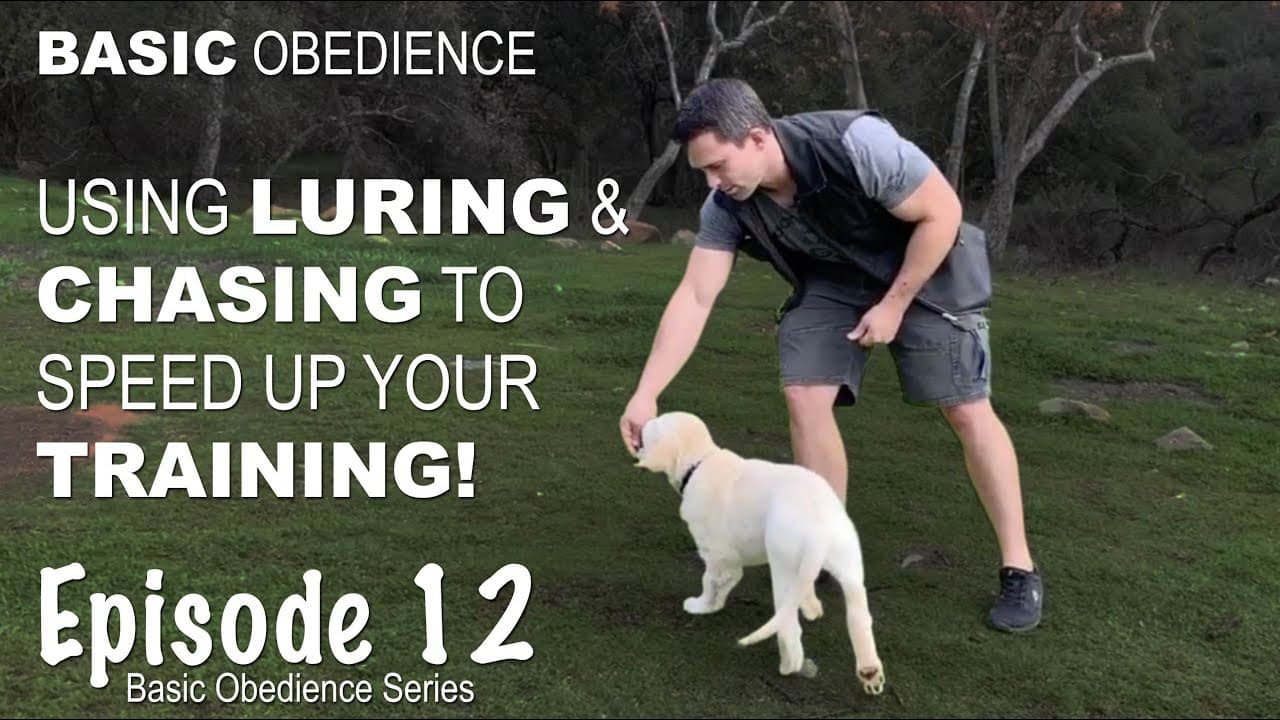
Using Luring & Chasing to Speed Up Your Dog Training. Episode 12
TL;DR
Use luring and chasing to enhance dog training effectiveness.
Transcript
there's different skills that you want to develop before getting into the real training with your dog what I mean is really teaching them their SID they're down there come a lot of those basic obedience commands that you want your dog to know there are certain skill sets we want to develop one is going to be luring luring is where the dog will foll... Read More
Key Insights
- Luring involves guiding a dog into desired positions using food, which helps in teaching basic commands like sit and down.
- Chasing uses food or toys to engage a dog's prey and play drive, making training more enjoyable and effective.
- The technique of luring requires the dog to push into the trainer's hand to earn a reward, reinforcing positive behavior.
- Chasing encourages dogs to follow quickly moving objects, enhancing their focus and responsiveness during training sessions.
- Holding food correctly in the hand is crucial for successful luring, preventing the dog from biting and ensuring effective guidance.
- Incorporating fun elements like chasing into training helps maintain a young puppy's interest and accelerates learning.
- Using a terminal marker during chasing games can increase a dog's energy and engagement, making the training session more dynamic.
- Properly executed luring and chasing can significantly improve a dog's obedience and responsiveness to commands over time.
Install to Summarize YouTube Videos and Get Transcripts
Explore YouTube Video Summarizer or Get YouTube Transcript Extractor
Questions & Answers
Q: What is the purpose of luring in dog training?
Luring is used in dog training to guide dogs into specific positions using food as a motivator. It helps teach basic obedience commands such as sit, down, and come by making the dog follow the food in the trainer's hand, thereby reinforcing desired behaviors through positive reinforcement.
Q: How does chasing enhance a dog's training experience?
Chasing enhances a dog's training experience by incorporating elements of play and prey drive, which makes the training more engaging and enjoyable for the dog. By encouraging the dog to chase food or toys, trainers can increase the dog's focus, responsiveness, and enthusiasm for training sessions.
Q: Why is the correct hand position important in luring?
The correct hand position is important in luring to ensure that the dog can easily follow the food without biting the trainer's hand. Holding the food with the thumb creates a small valley for the dog's muzzle, which facilitates smoother guidance and prevents any accidental biting, making the process more effective.
Q: How can chasing be used to improve a dog's obedience?
Chasing can improve a dog's obedience by tapping into their natural instincts to follow moving objects. By making the dog chase food or toys, trainers can increase the dog's engagement and willingness to follow commands, which can lead to faster learning and improved responsiveness to obedience training.
Q: What are the benefits of using a terminal marker in chasing games?
Using a terminal marker in chasing games benefits training by signaling to the dog that they have completed a desired behavior and will receive a reward. This increases the dog's energy and motivation, making the training session more dynamic and reinforcing the connection between the behavior and the reward.
Q: How does luring help in teaching basic commands to dogs?
Luring helps teach basic commands by guiding the dog into the desired position using food. As the dog follows the food, they naturally perform actions like sitting or lying down, which are then reinforced with a reward. This method effectively teaches commands through repetition and positive reinforcement.
Q: What role does prey drive play in chasing during training?
Prey drive plays a significant role in chasing during training as it taps into the dog's natural instinct to pursue moving objects. By leveraging this drive, trainers can make training sessions more exciting and engaging, which helps maintain the dog's interest and focus, leading to more effective learning.
Q: Why is it important to make training fun for puppies?
Making training fun for puppies is important because it keeps them engaged and interested in the learning process. Puppies have short attention spans, and incorporating playful elements like chasing can make training sessions enjoyable, ensuring that they remain focused and motivated to learn new commands and behaviors.
Summary & Key Takeaways
-
The video demonstrates how luring and chasing can be used to enhance dog training by making it more engaging and effective. Luring involves using food to guide dogs into desired positions, while chasing uses food or toys to stimulate a dog's prey drive, increasing their interest in training.
-
Luring is a foundational skill where the dog learns to follow food in the trainer's hand, which can be used to teach various commands. Chasing, on the other hand, involves using quick movements to make training fun and to harness the dog's natural instincts.
-
Correctly holding food during luring is crucial to prevent the dog from biting and to guide them effectively. Chasing adds excitement to training, helping maintain the dog's focus and interest, which is especially beneficial for young puppies.
Read in Other Languages (beta)
Share This Summary 📚
Summarize YouTube Videos and Get Video Transcripts with 1-Click
Try YouTube Summary with ChatGPT & Claude or YouTube Transcript Generator
Explore More Summaries from Nate Schoemer 📚



Summarize YouTube Videos and Get Video Transcripts with 1-Click
Try YouTube Summary with ChatGPT & Claude or YouTube Transcript Generator