Artificial Meteors and Re-Entry Engineering
TL;DR
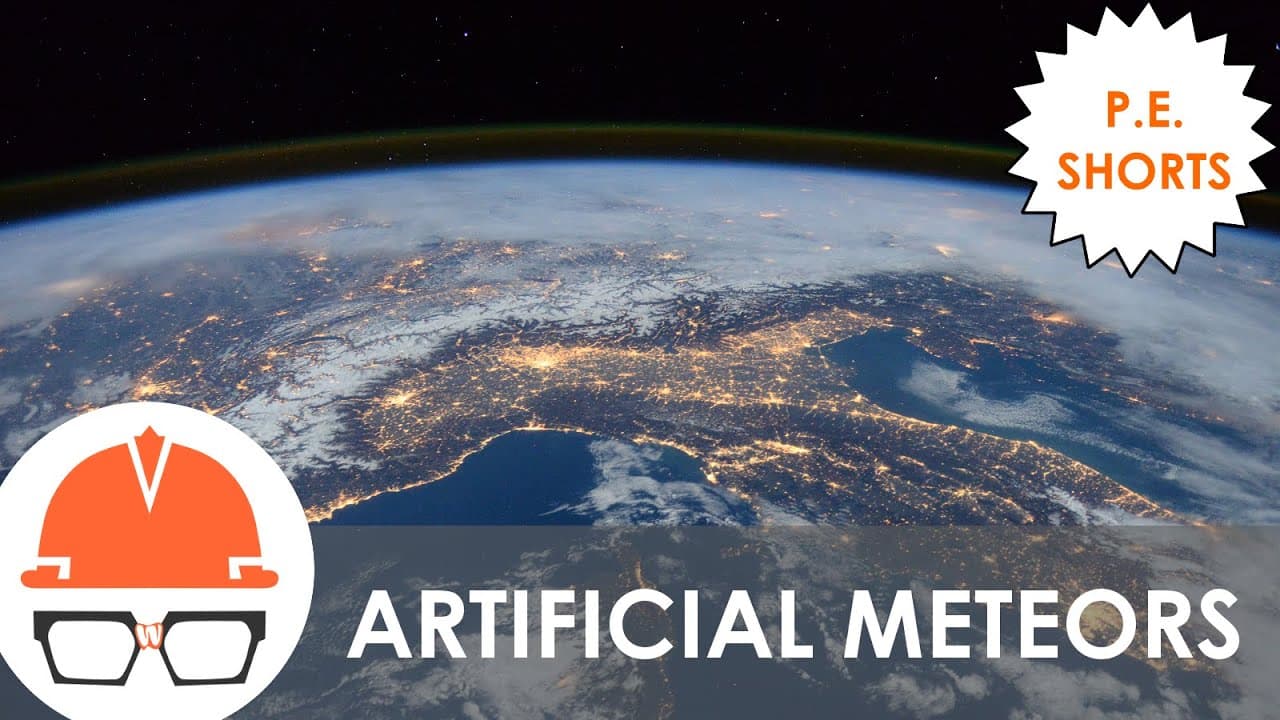
Star-ALE plans artificial meteors for Tokyo Olympics using aerospace engineering.
Transcript
you may have seen in the headlines this week that a Japanese company Star Ale plans to create an artificial meteor shower for the opening ceremony of the 2020 Summer Olympics in Tokyo I think this is a really neat idea so I thought I'd make a quick video about the engineering behind it Star Ale hasn't released many details about the project but the... Read More
Key Insights
- Star-ALE, a Japanese company, aims to create an artificial meteor shower for the 2020 Tokyo Olympics, showcasing an innovative use of aerospace technology in entertainment.
- The concept of artificial meteors is not new; however, they have traditionally been used for scientific and technical purposes rather than entertainment.
- Satellite disposal is a significant part of mission planning, where decommissioned satellites are usually left to re-enter Earth's atmosphere naturally.
- Predicting satellite re-entry is challenging due to variables like solar activity affecting Earth's upper atmosphere, making precise calculations difficult.
- Controlled re-entry is sometimes necessary for large or important satellites to ensure debris does not harm populated areas or property.
- The process of controlled re-entry involves complex engineering principles, including trajectory design, deceleration, and heat management.
- Aerospace engineers will apply the same principles used in satellite re-entry to ensure the artificial meteors enter the atmosphere at the correct time and location.
- The artificial meteor shower represents a blend of engineering precision and creative entertainment, highlighting the innovative spirit of Olympic ceremonies.
Install to Summarize YouTube Videos and Get Transcripts
Explore YouTube Video Summarizer or Get YouTube Transcript Extractor
Questions & Answers
Q: What is the main goal of Star-ALE's project for the Tokyo Olympics?
The main goal of Star-ALE's project is to create an artificial meteor shower as part of the opening ceremony for the 2020 Tokyo Olympics. This project aims to provide a unique and innovative form of entertainment by utilizing aerospace engineering principles to ensure the meteors re-enter the Earth's atmosphere at a precise time and location.
Q: How does the concept of artificial meteors relate to traditional aerospace engineering?
The concept of artificial meteors relates to traditional aerospace engineering through the application of principles used in satellite re-entry. Engineers must consider trajectory design, deceleration, and heat management to ensure that the meteors enter the atmosphere safely and accurately, similar to how satellites are decommissioned and brought back to Earth.
Q: What challenges do engineers face in predicting satellite re-entry?
Engineers face challenges in predicting satellite re-entry due to factors like solar activity, which can cause variations in the density of Earth's upper atmosphere. These variables make it difficult to calculate the exact time and location of re-entry, as even a small error can result in significant deviations of thousands of kilometers on the ground.
Q: Why is controlled re-entry necessary for some satellites?
Controlled re-entry is necessary for some satellites to ensure that any debris reaching Earth's surface does not harm populated areas or property. This is especially important for large or significant satellites, where mission planners perform a controlled descent to guide the satellite to a safe landing area, such as an ocean or sparsely populated region.
Q: What are the key engineering principles involved in re-entry trajectory design?
Key engineering principles involved in re-entry trajectory design include managing deceleration, heat, and accuracy. Engineers must balance these factors to ensure a safe re-entry, controlling the speed and angle at which an object enters the atmosphere to prevent overheating and ensure it lands in the desired location.
Q: How does Star-ALE's project reflect innovation in Olympic ceremonies?
Star-ALE's project reflects innovation in Olympic ceremonies by introducing a technologically advanced form of entertainment that combines scientific precision with creative spectacle. By using aerospace engineering to create an artificial meteor shower, the project highlights the ongoing effort to enhance the visual and experiential impact of the Olympics.
Q: What role do amateur satellite observation groups play in re-entry events?
Amateur satellite observation groups, such as SEATL, play a role in tracking and tallying natural re-entries of Earth satellites. These groups contribute to the understanding of satellite behavior and re-entry patterns by visually observing and documenting events, providing valuable data for aerospace engineers and mission planners.
Q: What potential risks are associated with artificial meteor showers?
Potential risks associated with artificial meteor showers include the possibility of meteors turning into meteorites if not properly managed, posing a threat to people or property on the ground. Engineers must carefully plan the release and trajectory of the meteors to ensure they burn up safely in the atmosphere, minimizing any risk of debris reaching the Earth's surface.
Summary & Key Takeaways
-
Star-ALE plans to create an artificial meteor shower for the 2020 Tokyo Olympics, utilizing complex aerospace engineering principles to ensure precise timing and location of re-entry. This innovative use of technology for entertainment showcases the blend of scientific precision and creative spectacle.
-
Creating artificial meteors is not a new concept, but traditionally, it has been used for scientific purposes. The project will require careful planning and execution, similar to the controlled re-entry of satellites, to avoid any potential hazards during the Olympic opening ceremony.
-
Re-entry of satellites involves predicting variables like solar activity and managing trajectory, deceleration, and heat. Engineers will apply these principles to the artificial meteors, ensuring a safe and spectacular display, reflecting the ongoing innovation in Olympic ceremonies.
Read in Other Languages (beta)
Share This Summary 📚
Summarize YouTube Videos and Get Video Transcripts with 1-Click
Try YouTube Summary with ChatGPT & Claude or YouTube Transcript Generator
Explore More Summaries from Practical Engineering 📚


Summarize YouTube Videos and Get Video Transcripts with 1-Click
Try YouTube Summary with ChatGPT & Claude or YouTube Transcript Generator