What Is the Inductive Effect on Acidity in Organic Compounds?
TL;DR
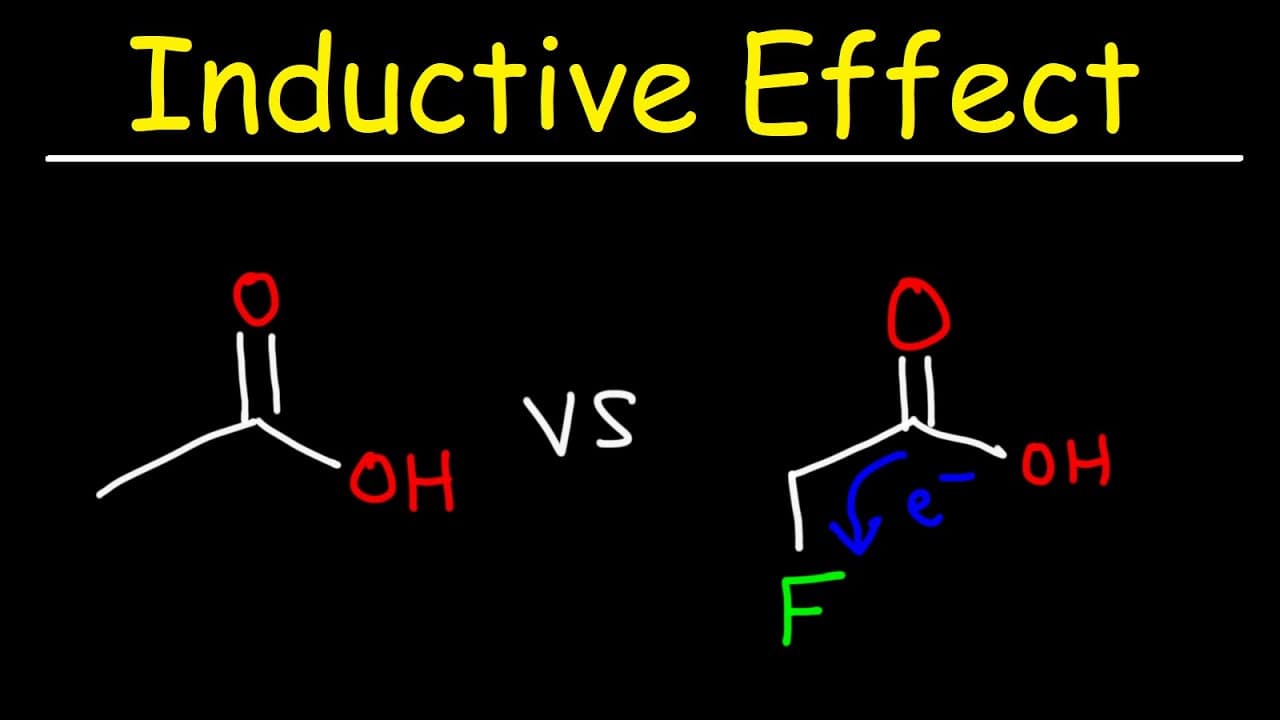
The inductive effect increases the acidity of a molecule through the presence of electron-withdrawing groups, like fluorine, which stabilize the conjugate base by pulling electron density away. The acidity is also influenced by the proximity and number of these groups; closer and more numerous groups lead to a stronger acid with a lower pKa value.
Transcript
in this video we're going to talk about the inductive effect so looking at these two molecules which one is more acidic which one has a lower PKA value is it acetic acid on the left or fluoroacetic acid on the right the pka for acetic acid is around 4.75 when you add the flooring to it this hydroxyl group becomes more acidic the pka of that hydroge... Read More
Key Insights
- 💨 Fluorine is a strong electron-withdrawing group that increases acidity by pulling electron density away from the system.
- 👥 Proximity of the electron-withdrawing group to the acidic functional group determines the strength of the inductive effect and the resulting acidity.
- 👥 The number of electron-withdrawing groups on an acid molecule further enhances its acidity.
- ⚾ The inductive effect stabilizes the conjugate base, making it less negative and increasing acidity.
- 👥 Different electron-withdrawing groups have varying effects on acidity, with more electronegative groups having a stronger impact.
- 👥 The PKA value of an acid decreases with the addition of electron-withdrawing groups.
- ❓ The inductive effect can be observed in various examples of acid molecules, such as chloroacetic acid and fluoroacetic acid.
Install to Summarize YouTube Videos and Get Transcripts
Explore YouTube Video Summarizer or Get YouTube Transcript Extractor
Questions & Answers
Q: How does the inductive effect impact the acidity of an acid molecule?
The inductive effect, caused by electron-withdrawing groups, makes the acid molecule more acidic by pulling electron density away from the system and stabilizing the conjugate base.
Q: What factors affect the acidity of an acid molecule?
The type of electron-withdrawing group, its proximity to the acidic functional group, and the number of electron-withdrawing groups all play a role in determining acidity.
Q: Does the inductive effect always increase acidity?
Yes, the inductive effect of electron-withdrawing groups makes an acid more acidic by stabilizing the conjugate base and reducing the negativity of the negative charge.
Q: How does the proximity of an electron-withdrawing group affect acidity?
The closer an electron-withdrawing group is to the acidic functional group, the stronger the acid becomes due to a stronger inductive effect.
Summary & Key Takeaways
-
The inductive effect caused by electron-withdrawing groups, such as fluorine, can increase the acidity of a molecule by pulling electron density away from the system.
-
The proximity of the electron-withdrawing group to the acidic functional group also affects acidity, with closer groups leading to stronger acids.
-
The number of electron-withdrawing groups further enhances acidity, with more groups making the acid even stronger.
Read in Other Languages (beta)
Share This Summary 📚
Summarize YouTube Videos and Get Video Transcripts with 1-Click
Try YouTube Summary with ChatGPT & Claude or YouTube Transcript Generator
Explore More Summaries from The Organic Chemistry Tutor 📚






Summarize YouTube Videos and Get Video Transcripts with 1-Click
Try YouTube Summary with ChatGPT & Claude or YouTube Transcript Generator