Design using PAL | STLD | Lec-106
TL;DR
This video explains programmable array logic (PAL) design and its function in digital circuit design.
Transcript
hi everyone in this video I'm going to explain about programmable array logic design pal stands for programmable array logic PL stands for programmable array logic okay in this programable logic devices there are three types of Designing Technologies programmable array logic programmable logic array and programable readon memory the difference amon... Read More
Key Insights
- 👻 Programmable Array Logic (PAL) is a digital circuit design technology that allows for programmable connections between inputs and gates.
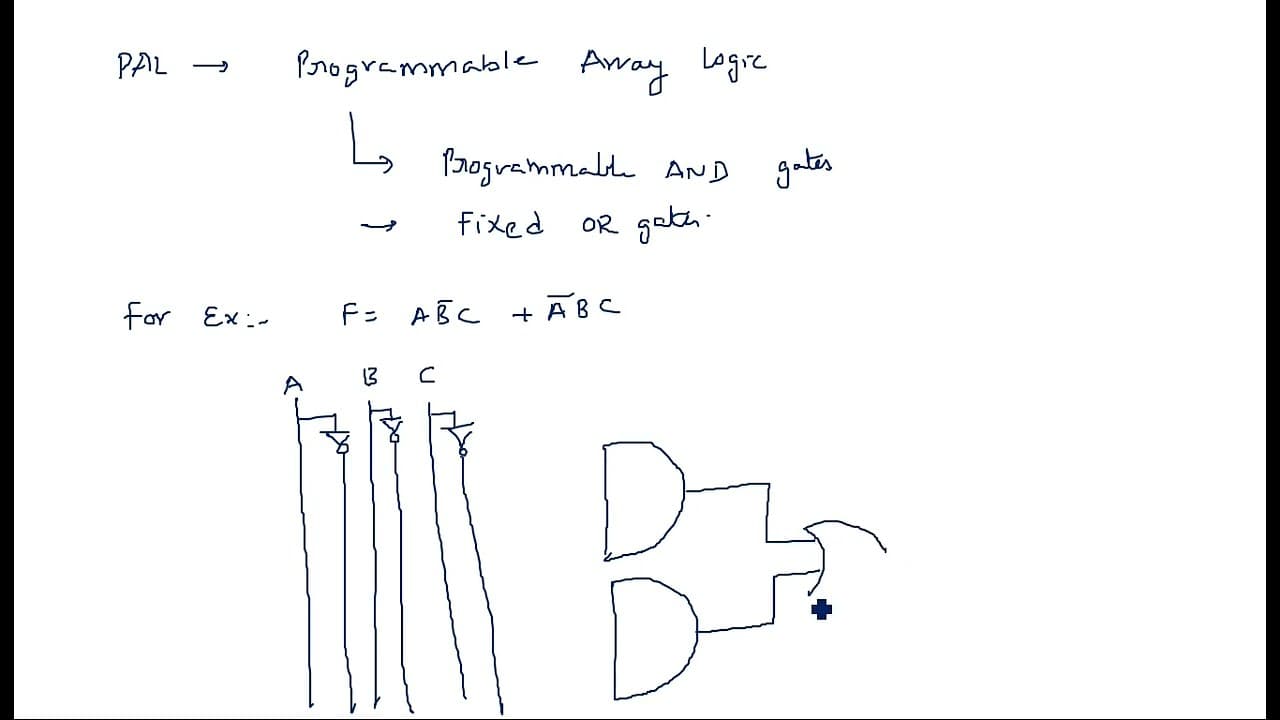
- 🎨 PAL devices feature programmable AND gates and fixed OR gates, providing a balance of flexibility and simplicity in logic design.
- 🔢 Input complexity increases with the number of variables, requiring careful design consideration to maintain circuit manageability.
- 🎨 Fuses play a critical role in establishing connections in PAL circuits, allowing for easy reconfiguration of logic designs.
- 🧡 The architecture of PAL devices makes them suitable for creating a wide range of logic functions without necessitating a complete redesign.
- 🎨 The distinction between PAL and other programmable logic devices like PLA emphasizes the importance of architectural choices in digital design.
- 🎨 As digital design evolves, understanding basic concepts like PAL can facilitate the development of more complex digital systems.
Install to Summarize YouTube Videos and Get Transcripts
Explore YouTube Video Summarizer or Get YouTube Transcript Extractor
Questions & Answers
Q: What is the primary function of a Programmable Array Logic (PAL) device?
The primary function of a PAL device is to implement combinational logic by programming its internal AND gates while its OR gates remain fixed. This allows for flexible design possibilities in digital circuits to create specific logic functions based on the required input conditions.
Q: How do PAL devices differ from Programmable Logic Arrays (PLA)?
PAL devices differ from PLAs primarily in their architecture. While PALs have fixed OR gates and programmable AND gates, PLAs allow for both AND and OR gates to be programmable, offering greater flexibility but resulting in added complexity and cost.
Q: What are the components of a PAL circuit based on the video explanation?
A PAL circuit comprises programmable AND gates and fixed OR gates. The programmable AND gates can connect various inputs via fuses, allowing for reconfiguration of the logic design, while the fixed OR gates combine the outputs of these AND gates without alteration.
Q: Can you explain the role of fuses in PAL design, as mentioned in the video?
In PAL design, fuses are utilized to establish connections between inputs and programmable AND gates. When a fuse is intact, it creates a connection; if removed, the connection is broken. This allows for the flexibility of designing different logical functions by simply changing fuse configurations.
Q: How many inputs are considered for a PAL with three logic variables?
For a PAL with three logic variables, there are typically six inputs considered: three true forms and three complement forms (A, A', B, B', C, C'). Each input connects through the fuses to the programmable AND gates, allowing for various logical combinations to be created.
Q: What limitations are mentioned regarding the number of inputs in PAL designs?
As the number of inputs increases in a PAL design, the complexity of the logic circuit also increases. This can lead to difficulties in drawing and managing connections. To mitigate this complexity, simpler designs and modifications of the PAL structure might be suggested in practice.
Q: How does the internal structure of a PAL facilitate the creation of logic functions?
A PAL's internal structure, which consists of programmable AND gates connected to fixed OR gates, allows designers to create various logic functions efficiently. Programmable connections enable flexibility, while direct OR connections simplify the final output generation, streamlining the circuit's design process.
Q: What is the significance of understanding both true and complement forms of inputs?
Understanding true and complement forms of inputs is crucial as they are utilized in configuring the programmable AND gates within a PAL. This knowledge ensures accurate logical representation and allows for the effective design of combinational circuits utilizing both active and inactive states of inputs.
Summary & Key Takeaways
-
The video introduces Programmable Array Logic (PAL) design, explaining its features, such as programmable AND gates and fixed OR gates, which define its operation in digital circuits.
-
It distinguishes PAL from other programmable logic devices, like Programmable Logic Arrays (PLA) and Programmable Read-Only Memory (PROM), highlighting how PAL offers flexibility in designing logical connections.
-
An example circuit is illustrated, showing how to connect various inputs through programmable AND gates while maintaining fixed connections in OR gates for efficient logic circuit construction.
Read in Other Languages (beta)
Share This Summary 📚
Summarize YouTube Videos and Get Video Transcripts with 1-Click
Try YouTube Summary with ChatGPT & Claude or YouTube Transcript Generator
Summarize YouTube Videos and Get Video Transcripts with 1-Click
Try YouTube Summary with ChatGPT & Claude or YouTube Transcript Generator