Why Money Can't Buy Happiness: A Founder's Journey

TL;DR
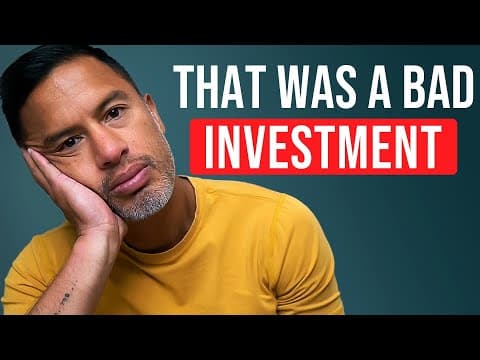
Selling a startup for millions doesn't guarantee happiness, as shown by Loom co-founder Vinay Hiramath. Despite financial success, he struggles with a lack of purpose and fulfillment, highlighting the emptiness of external achievements. His story underscores the importance of internal satisfaction and the pitfalls of seeking validation through wealth and status.
Transcript
this guy sold a startup for $975 million but in his own words I'm not that optimistic about my life imagine being 32 you spent 10 years building a startup at break neck speed and now you can literally buy whatever you want and go wherever you want including climbing the Himalayas and not only that you're celebrated across Silicon Valley as an icon ... Read More
Key Insights
- Financial success doesn't guarantee happiness or life satisfaction.
- Post-financial freedom means living without needing to work for financial reasons.
- Post-achievement occurs when additional accomplishments don't increase baseline happiness.
- Many successful entrepreneurs struggle with identity and purpose after achieving financial goals.
- Travel and external changes can't fix internal issues like low self-worth or mental discontent.
- The desire for validation and fear of being ordinary are common among high achievers.
- Significance and validation are often tied to feelings of love and self-worth.
- Desire for achievement can lead to suffering if not aligned with internal fulfillment.
Install to Summarize YouTube Videos and Get Transcripts
Explore YouTube Video Summarizer or Get YouTube Transcript Extractor
Questions & Answers
Q: What is post-financial freedom?
Post-financial freedom refers to a state where an individual no longer needs to work for financial reasons, allowing them to take significant time off while maintaining their quality of life. It signifies a point where financial security is achieved, but it doesn't necessarily equate to happiness or fulfillment.
Q: How does post-achievement affect happiness?
Post-achievement occurs when further accomplishments no longer increase baseline happiness. It often leads to a realization that external success and professional milestones don't fulfill deeper emotional or psychological needs, resulting in a sense of emptiness despite outward success.
Q: Why can't travel solve internal issues?
Travel offers temporary novelty and excitement but can't address internal issues like low self-worth or mental discontent. While it provides a change of scenery, it doesn't resolve inner problems, which require introspection and personal growth to achieve lasting fulfillment.
Q: What is the significance of internal satisfaction?
Internal satisfaction is crucial for true happiness and fulfillment, as it comes from within rather than external achievements. It involves self-acceptance, gratitude, and finding joy in everyday activities, rather than relying on wealth or status for validation and self-worth.
Q: How does the desire for validation impact well-being?
The desire for validation can lead to a perpetual cycle of seeking external approval and achievements, often resulting in dissatisfaction. True well-being comes from self-acceptance and internal validation, where one's self-worth isn't dependent on external accolades or achievements.
Q: Why do high achievers fear being ordinary?
High achievers often fear being ordinary due to societal and self-imposed expectations of success and excellence. This fear is rooted in a need for validation and significance, where being perceived as special or exceptional becomes intertwined with self-worth and identity.
Q: What role does identity play in post-achievement phases?
In post-achievement phases, identity plays a critical role as individuals grapple with who they are beyond their professional success. This phase often involves questioning one's purpose and redefining self-worth, moving away from external achievements to focus on internal fulfillment.
Q: How can one find fulfillment beyond external achievements?
Fulfillment beyond external achievements involves cultivating internal satisfaction through self-acceptance, gratitude, and finding joy in everyday experiences. It requires a shift from seeking validation through wealth and status to embracing personal growth, relationships, and self-discovery.
Summary & Key Takeaways
-
Vinay Hiramath, co-founder of Loom, sold his startup for millions but found himself unfulfilled despite financial success. He realized that external achievements and wealth couldn't fill the void of purpose and identity. His journey highlights the importance of internal satisfaction over external validation.
-
Post-financial and post-achievement phases reveal that financial freedom and professional success don't necessarily bring happiness. Many entrepreneurs face an identity crisis, struggling with the lack of purpose and fulfillment, leading them to seek meaning beyond material wealth.
-
Hiramath's story emphasizes that chasing external achievements often leads to emptiness. True fulfillment comes from within, requiring a shift from seeking validation through wealth and status to finding internal satisfaction and self-worth, highlighting the complex relationship between success and happiness.
Read in Other Languages (beta)
Share This Summary 📚
Summarize YouTube Videos and Get Video Transcripts with 1-Click
Try YouTube Summary with ChatGPT & Claude or YouTube Transcript Generator
Explore More Summaries from Khe Hy - RadReads 📚





Summarize YouTube Videos and Get Video Transcripts with 1-Click
Try YouTube Summary with ChatGPT & Claude or YouTube Transcript Generator