What Are AI Implementation Trends in 2023?
TL;DR
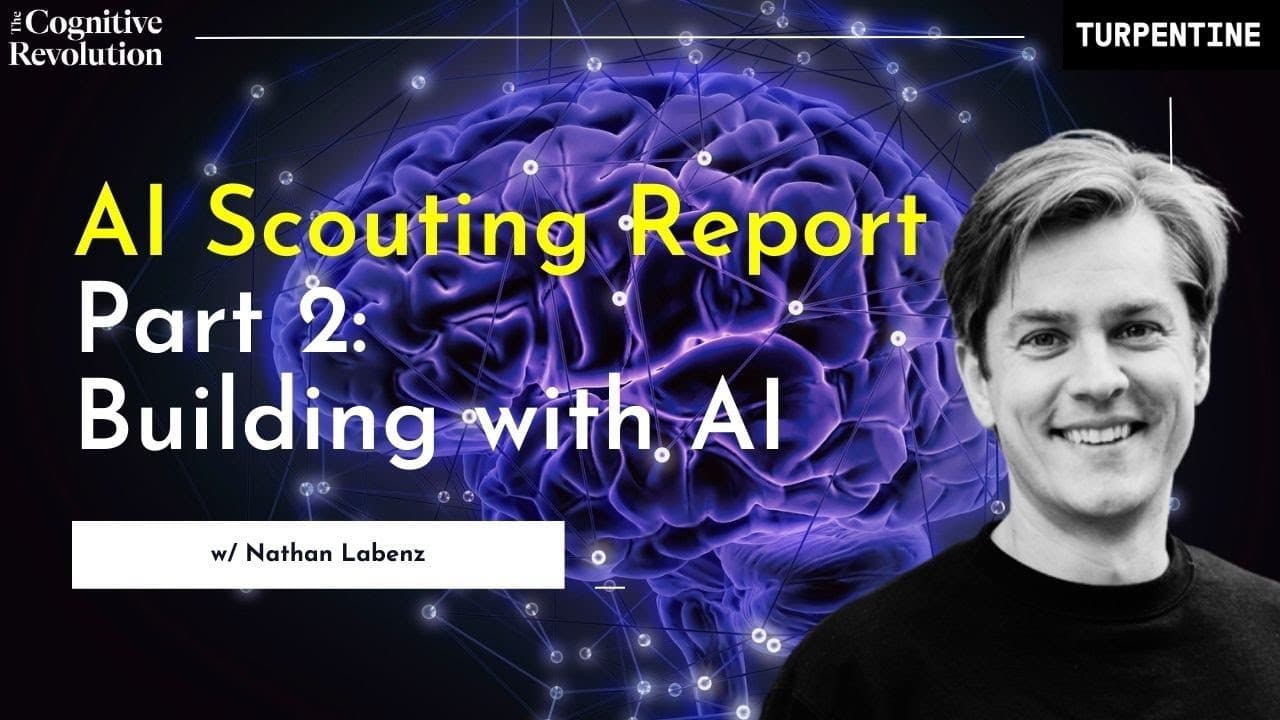
The video explores recent AI implementation trends, highlighting the rise of custom hardware, fine-tuning techniques, and the integration of AI with tools and databases to overcome limitations like hallucinations. It also discusses the role of AI in creating agents capable of executing complex tasks and the potential for AI to revolutionize various industries with its evolving capabilities.
Transcript
welcome back Weekend Warriors to the AI Scouting Report part two what's up Eric hey Nathan it's stoked uh stoked to get it to part two just to kind of set ourselves up for you know where we left off part one was all about setting up how we got to kind of this AI moment you know and I've really come to believe more and more recently that given the e... Read More
Key Insights
- Transformers are the foundational architecture for current AI advancements, enabling diverse applications.
- Custom hardware, like Nvidia's H100, is optimized for AI workloads, enhancing performance and efficiency.
- Fine-tuning with techniques like reinforcement learning from human feedback significantly improves AI model instruction adherence.
- AI models can now use external tools and databases, reducing hallucinations and increasing factual accuracy.
- The rise of AI agents capable of executing complex tasks autonomously is a major trend in AI development.
- Multimodal AI models are emerging, capable of understanding and generating both text and images.
- Efficiency measures, including quantization and mixture of experts, are crucial for reducing AI operational costs.
- The integration of AI with human services, like virtual assistants, aims to create seamless human-AI collaborations.
Install to Summarize YouTube Videos and Get Transcripts
Explore YouTube Video Summarizer or Get YouTube Transcript Extractor
Questions & Answers
Q: How do custom hardware developments impact AI performance?
Custom hardware, like Nvidia's H100, is specifically engineered to support AI workflows, particularly the Transformer architecture. These advancements enhance the processing power and efficiency of AI models, allowing them to handle more complex tasks and larger datasets. As AI models grow in size and complexity, such hardware becomes essential for maintaining performance and reducing operational costs.
Q: What role does fine-tuning play in AI model development?
Fine-tuning, especially through reinforcement learning from human feedback, plays a critical role in enhancing AI models' ability to follow instructions and perform tasks accurately. By training models on curated datasets and incorporating human feedback, developers can refine AI behavior, making models more reliable and user-friendly. This process is pivotal in developing AI applications that meet specific user needs.
Q: How do AI models use external tools and databases?
AI models can integrate with external tools and databases to access trusted information, reducing the chances of generating hallucinations or incorrect outputs. By querying databases for relevant content and incorporating this information into their responses, AI models can provide more accurate and factual answers, enhancing their reliability in practical applications.
Q: What are AI agents, and how do they function?
AI agents are systems capable of executing complex tasks autonomously by breaking down tasks into smaller actions and using tools or APIs to complete them. These agents leverage AI models' ability to plan, reason, and act, allowing them to perform tasks like web browsing, data analysis, or even controlling physical devices. This capability represents a significant step toward more autonomous AI systems.
Q: What is the significance of multimodal AI models?
Multimodal AI models can understand and generate multiple types of data, such as text and images. By bridging different data representations, these models can perform tasks that require understanding across modalities, like image captioning or visual question answering. This capability expands AI's potential applications and allows for more integrated and versatile AI systems.
Q: How are efficiency measures improving AI operations?
Efficiency measures like quantization and mixture of experts reduce the computational cost and memory requirements of running AI models. Quantization involves truncating numerical precision without significantly impacting performance, while mixture of experts selectively activates parts of a network, optimizing resource use. These techniques are crucial for making AI operations more cost-effective and scalable.
Q: How is AI being integrated with human services?
AI is increasingly integrated with human services, such as virtual assistants, to create a seamless human-AI collaboration. By enhancing AI capabilities with human oversight and feedback, these services aim to provide more personalized and efficient support. This integration leverages AI's strengths in data processing and automation while maintaining the adaptability and empathy of human interaction.
Q: What challenges do AI models face with hallucinations?
Hallucinations occur when AI models generate incorrect or nonsensical information, often due to limitations in their training data or model architecture. To address this, developers are integrating AI models with databases and tools that provide verified information, allowing models to cross-check and validate their outputs. This approach reduces the frequency of hallucinations and improves the overall reliability of AI systems.
Summary & Key Takeaways
-
Custom hardware developments, such as Nvidia's H100, are specifically designed to support AI workflows, allowing for more efficient processing of AI tasks. This trend is crucial as AI models grow in complexity and size.
-
Fine-tuning techniques, particularly reinforcement learning from human feedback, have enhanced AI models' ability to follow instructions and perform tasks accurately. This has led to more reliable and user-friendly AI applications.
-
AI's integration with external tools and databases is reducing hallucinations, a common issue where AI generates incorrect information. By accessing trusted data sources, AI models can provide more accurate and reliable outputs.
Read in Other Languages (beta)
Share This Summary 📚
Summarize YouTube Videos and Get Video Transcripts with 1-Click
Try YouTube Summary with ChatGPT & Claude or YouTube Transcript Generator
Explore More Summaries from Cognitive Revolution "How AI Changes Everything" 📚





Summarize YouTube Videos and Get Video Transcripts with 1-Click
Try YouTube Summary with ChatGPT & Claude or YouTube Transcript Generator