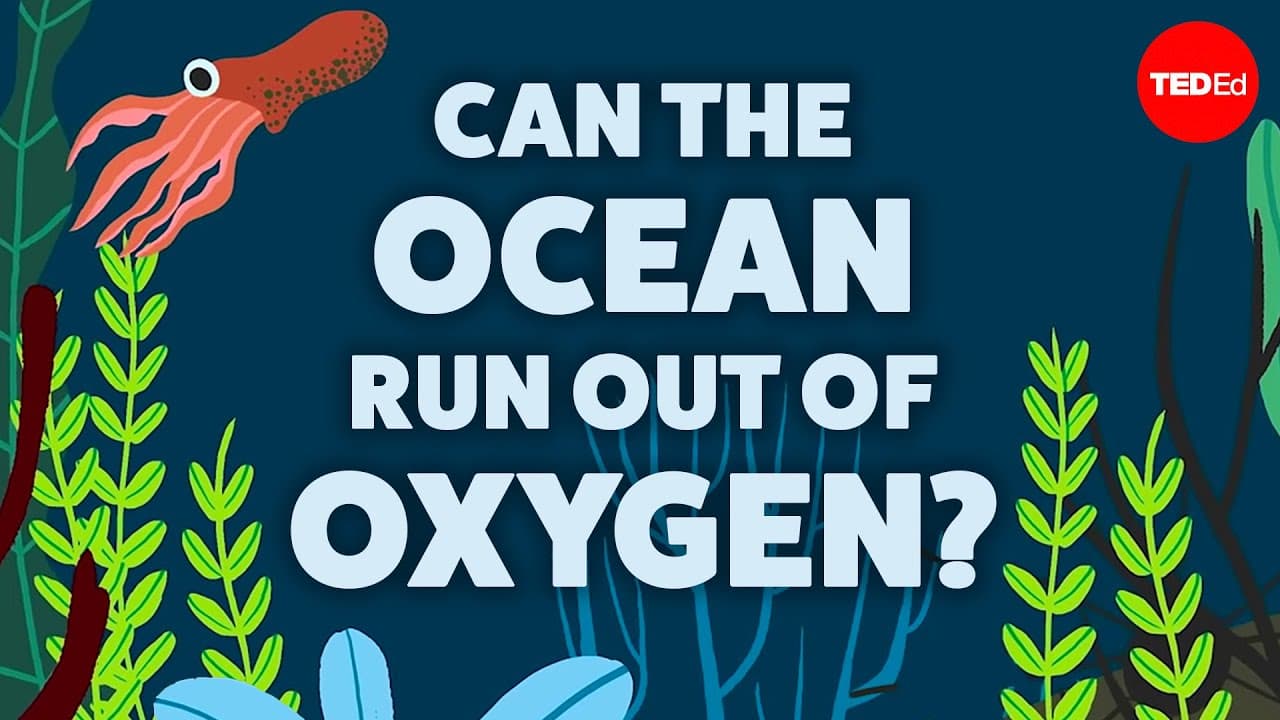
Can the ocean run out of oxygen? - Kate Slabosky
TL;DR
Every summer, nutrient-rich runoff creates a lethal dead zone in the Gulf of Mexico, impacting marine life and costing industries millions.
Transcript
For most of the year, the Gulf of Mexico is teeming with marine life, from tiny crustaceans to massive baleen whales. But every summer, disaster strikes. Around May, animals begin to flee the area. And soon, creatures that can’t swim or can’t swim fast enough begin to suffocate and die off in massive numbers. From late spring to early autumn, th... Read More
Key Insights
- 🤑 Nutrient-rich runoff from human activities like agriculture and industry creates marine dead zones, such as the one in the Gulf of Mexico.
- 🥺 Eutrophication, caused by excessive nutrient flow, leads to algae blooms that deplete oxygen levels, creating inhospitable conditions for aquatic life.
- 💀 The Gulf of Mexico dead zone is a significant economic burden, costing seafood and tourism industries millions annually.
- 💀 Human actions, particularly agricultural practices, contribute to the growth of dead zones worldwide.
- 💀 Remedial actions such as stricter regulations and changes in farming practices are essential to mitigate the impact of dead zones on marine ecosystems.
- 💀 The size and severity of dead zones, like the one in the Gulf of Mexico, are expected to increase without significant interventions.
- 🧑⚕️ Long-term solutions involve fundamental changes in agricultural practices to reduce nutrient runoff and restore natural soil health.
Install to Summarize YouTube Videos and Get Transcripts
Explore YouTube Video Summarizer or Get YouTube Transcript Extractor
Questions & Answers
Q: What causes the annual dead zone in the Gulf of Mexico?
The dead zone is primarily caused by excessive nutrient runoff, such as nitrogen and phosphorus, from human activities like agriculture and industrial processes. This leads to eutrophication, reducing oxygen levels and creating a marine dead zone.
Q: How do algae blooms contribute to the formation of marine dead zones?
Algae blooms block sunlight to lower plants, causing them to die and decompose, depleting oxygen levels in the water. This process, known as eutrophication, results in the creation of an uninhabitable dead zone for aquatic life.
Q: What are the economic impacts of the Gulf dead zone?
The Gulf dead zone costs U.S. seafood and tourism industries up to $82 million annually. As the dead zone expands, these costs are expected to increase, highlighting the significant economic consequences of environmental degradation.
Q: What are the proposed solutions to address dead zones like the one in the Gulf of Mexico?
Short-term solutions include tighter regulations on industrial runoff and banning untreated sewage dumping. Long-term solutions involve changing agricultural practices, such as planting diverse crops and reducing reliance on nitrogen-rich fertilizers.
Summary & Key Takeaways
-
The Gulf of Mexico experiences an annual marine dead zone due to excessive algae growth caused by nutrient-rich runoff from human activities.
-
Nutrients like phosphorus and nitrogen lead to eutrophication, reducing oxygen levels, creating an inhospitable environment for aquatic life.
-
Human actions, such as agriculture practices and industrial runoff, contribute to the growth of dead zones worldwide.
Read in Other Languages (beta)
Share This Summary 📚
Summarize YouTube Videos and Get Video Transcripts with 1-Click
Try YouTube Summary with ChatGPT & Claude or YouTube Transcript Generator
Explore More Summaries from TED-Ed 📚





Summarize YouTube Videos and Get Video Transcripts with 1-Click
Try YouTube Summary with ChatGPT & Claude or YouTube Transcript Generator