Forgotten Peasant Revolts Against Lenin - The Russian Civil War(s) 1920
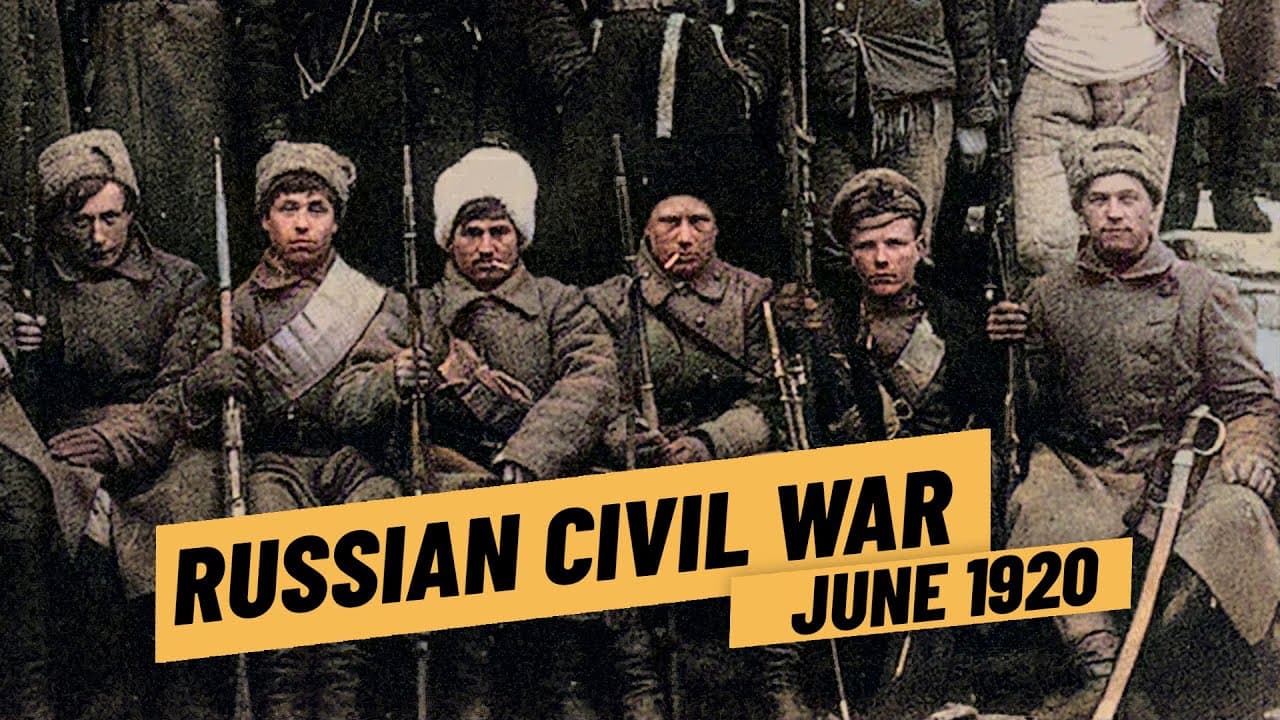
TL;DR
Peasants revolted against Bolsheviks in 1920 due to oppressive policies.
Transcript
hi I'm Jesse Alexander and welcome to the Great War where we're still filming here in our pandemic lockdown studio in my living room now by the summer of 1920 the main conflict in the Russian Civil Wars between the Revolutionary red Bolsheviks and the counterrevolutionary whites was coming to an end even as the Bolsheviks and whites were fighting t... Read More
Key Insights
- The Russian Civil War saw multiple factions, including the Reds, Whites, and Greens, with peasants rising against Bolsheviks in 1920.
- Peasant revolts were driven by Bolshevik policies like War Communism, which involved grain requisitioning and forced conscription.
- The Whites, led by generals like Denikin and Wrangel, failed to regain power, with internal conflicts and loss of foreign support.
- Peasant dissatisfaction was fueled by economic hardships, food shortages, and brutal conditions in war-torn Russia.
- The Bolsheviks used propaganda to vilify wealthier peasants, or kulaks, in an attempt to divide and control the rural population.
- Major peasant uprisings included the Tambov Rebellion and the Pitchfork Uprising, both brutally suppressed by the Red Army.
- Despite the peasant revolts, the Bolsheviks maintained power, leading to eventual policy changes like the New Economic Policy.
- The peasant revolts highlighted the gap between Bolshevik ideals and the realities of rural life, challenging the regime's legitimacy.
Install to Summarize YouTube Videos and Get Transcripts
Explore YouTube Video Summarizer or Get YouTube Transcript Extractor
Questions & Answers
Q: What were the main causes of peasant revolts against the Bolsheviks in 1920?
The main causes of the peasant revolts against the Bolsheviks in 1920 were the harsh policies of War Communism, which included forced grain requisitioning and conscription. These policies led to widespread resentment among peasants who had initially supported the Bolsheviks for their promises of land reform. Economic hardships, food shortages, and the brutal conditions of the civil war further fueled the discontent, prompting peasants to rise against the Bolshevik regime.
Q: How did the Whites attempt to regain power during the Russian Civil War?
The Whites, led by figures like Denikin and Wrangel, attempted to regain power by trying to reverse the Bolshevik Revolution and restore the old order. They sought alliances with various groups, including the Cossacks, Poles, and even anarchist peasants, but internal conflicts and a lack of cohesive strategy weakened their efforts. The loss of foreign support, particularly from the British, further diminished their capacity to challenge the Bolsheviks, leading to their eventual defeat and evacuation from Crimea.
Q: What role did foreign powers play in the Russian Civil War?
Foreign powers, including the British and French, initially supported the Whites by providing military supplies and backing their efforts against the Bolsheviks. However, as the civil war progressed, this support waned, primarily due to the Whites' internal conflicts and the desire of foreign governments to normalize relations with Bolshevik Russia. The withdrawal of foreign support was a significant factor in the Whites' inability to sustain their campaign against the Bolsheviks, contributing to their eventual defeat.
Q: What were the major peasant uprisings during the Russian Civil War?
Major peasant uprisings during the Russian Civil War included the Tambov Rebellion and the Pitchfork Uprising. The Tambov Rebellion, led by Alexander Antonov, was one of the largest and most organized revolts, advocating for land redistribution and civil liberties. The Pitchfork Uprising, named for the farm tools used by participants, occurred in the Ural region. Both uprisings were driven by opposition to Bolshevik policies and were eventually suppressed by the Red Army, but they highlighted significant rural discontent.
Q: How did the Bolsheviks respond to the peasant revolts?
The Bolsheviks responded to the peasant revolts with a combination of military force and propaganda. They deployed the Red Army to suppress uprisings, using tactics like military occupation and even poison gas. Propaganda efforts aimed to divide the peasantry by vilifying kulaks, or wealthier peasants, and empowering poorer peasants. Despite these efforts, the revolts exposed the regime's vulnerabilities and contributed to the eventual adoption of the New Economic Policy, which sought to address some peasant grievances.
Q: What was the impact of War Communism on Russian peasants?
War Communism had a severe impact on Russian peasants, leading to widespread resentment and revolt. The policy involved forced grain requisitioning and conscription, causing economic hardship and food shortages in rural areas. Peasants faced brutal conditions, with many fleeing cities due to famine and disease. The harshness of War Communism alienated the peasantry, who had initially supported the Bolsheviks for their land reform promises, and fueled the widespread peasant revolts against the regime.
Q: Why were the peasant revolts significant in the context of the Russian Civil War?
The peasant revolts were significant because they represented a major challenge to Bolshevik authority from within the rural heartland of Russia. These revolts, driven by opposition to War Communism and economic hardship, highlighted the gap between Bolshevik promises and the realities faced by peasants. Although ultimately suppressed, the revolts forced the Bolsheviks to reconsider their policies and contributed to the development of the New Economic Policy, marking a shift in how the regime approached governance and economic management.
Q: What were the outcomes of the Russian Civil War for the Bolsheviks and their opponents?
The outcomes of the Russian Civil War for the Bolsheviks included the consolidation of power and the defeat of their main opponents, the Whites. Despite facing significant challenges from peasant revolts and internal dissent, the Bolsheviks maintained control over Russia. The Whites, weakened by internal conflicts and loss of foreign support, were unable to regain power and were ultimately evacuated from Crimea. The civil war's end marked the beginning of Bolshevik efforts to stabilize the country, leading to policy changes like the New Economic Policy.
Summary & Key Takeaways
-
In 1920, as the Russian Civil War progressed, peasants in the countryside began to revolt against Bolshevik policies, particularly War Communism, which involved harsh requisitioning of grain and forced conscription. These revolts, known as the Green movement, lacked national coordination but were significant in challenging Bolshevik control.
-
The Whites, who opposed the Bolsheviks, were weakened by internal conflicts, disease, and loss of foreign support. Despite some attempts at alliances, they failed to regain power, and their cause effectively ended with the evacuation from Crimea in late 1920.
-
The peasant revolts, including the large-scale Tambov Rebellion, were driven by economic hardship and resentment towards Bolshevik policies. Although these uprisings were eventually crushed by the Red Army, they exposed the discontent in rural areas and forced the Bolsheviks to reconsider their approach to governance.
Read in Other Languages (beta)
Share This Summary 📚
Summarize YouTube Videos and Get Video Transcripts with 1-Click
Try YouTube Summary with ChatGPT & Claude or YouTube Transcript Generator
Explore More Summaries from The Great War 📚
Summarize YouTube Videos and Get Video Transcripts with 1-Click
Try YouTube Summary with ChatGPT & Claude or YouTube Transcript Generator