Contemplative Resources for Dialogue: Spirituality, Nonviolent Communication & Relational Awareness
TL;DR
Learn how to cultivate presence, curiosity, and empathy to enhance communication and understanding in difficult conversations.
Transcript
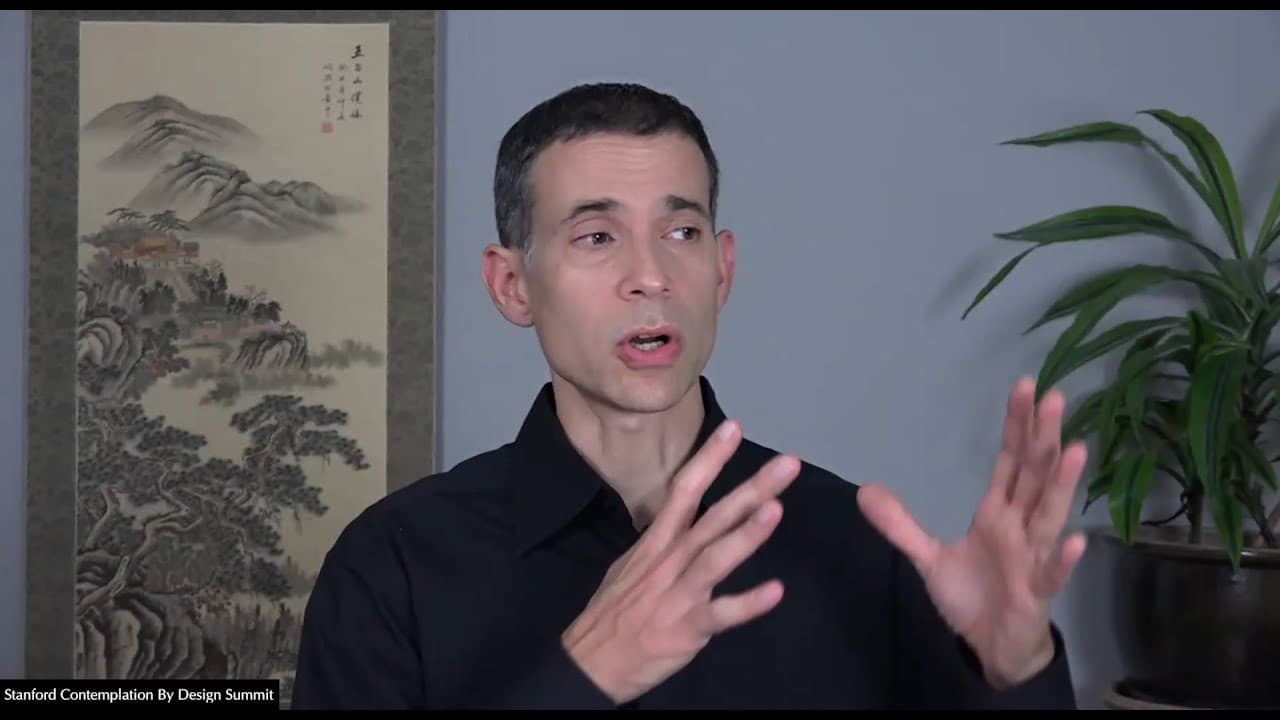
stanford university welcome to this evening's program of the contemplation by design summit i'm dr tia rich and i have the honor of directing stanford's annual contemplation by design summit tonight it is my pleasure to introduce our teacher orin j soker who will be bringing our session contemplative resources for dialogue spirituality non-violent ... Read More
Key Insights
- ✌️ Contemplative practice provides the internal basis for applying peace, compassion, and wisdom to our relationships and conversations.
- ❓ Focusing on presence, curiosity, and empathy can enhance understanding and connection in difficult conversations.
- 🫡 Understanding and acknowledging the shared humanity of others can help navigate disagreements while maintaining respect for their right to exist.
Install to Summarize YouTube Videos and Get Transcripts
Explore YouTube Video Summarizer or Get YouTube Transcript Extractor
Questions & Answers
Q: How can contemplative practice be integrated into our speech and communication?
Contemplative practice provides an internal foundation for wise action in our relationships and conversations. It allows us to transform our inner experience and apply peace, compassion, and wisdom to our interactions with others.
Q: How can we cultivate presence in conversations when social norms encourage constant communication and quick responses?
It can be challenging, but taking shorter pauses or verbally stating your need for a moment can create space for you to gather your thoughts and maintain the conversation. Gestures and vocalizations during a pause can also communicate that you still have the floor.
Q: How can we find respect for others' ideas and intentions when we fundamentally disagree with them?
While you may not respect their ideas, intentions, or actions, it is essential to see their shared humanity. Recognize their fears, desires, and vulnerabilities, and respect that fundamental aspect of their humanity without condoning harmful beliefs or behaviors.
Q: How does non-violent communication address situations where disagreement is based on the dislike of someone's humanity or right to exist?
Non-violent communication emphasizes the protective use of force, where forceful action is taken to protect life and prevent harm, but it is done with a foundation of love, without the intention of punishment or harm.
Summary & Key Takeaways
-
Oren J. Sofer discusses the importance of understanding the present and acknowledging the past to navigate the uncertain and challenging times we are currently living in.
-
He emphasizes the need for contemplative practice to inform our lives, relationships, conversations, and actions.
-
Sofer introduces three core practices: leading with presence, coming from curiosity and care, and focusing on what matters to build understanding in conversations.
Read in Other Languages (beta)
Share This Summary 📚
Summarize YouTube Videos and Get Video Transcripts with 1-Click
Try YouTube Summary with ChatGPT & Claude or YouTube Transcript Generator
Explore More Summaries from Stanford 📚






Summarize YouTube Videos and Get Video Transcripts with 1-Click
Try YouTube Summary with ChatGPT & Claude or YouTube Transcript Generator