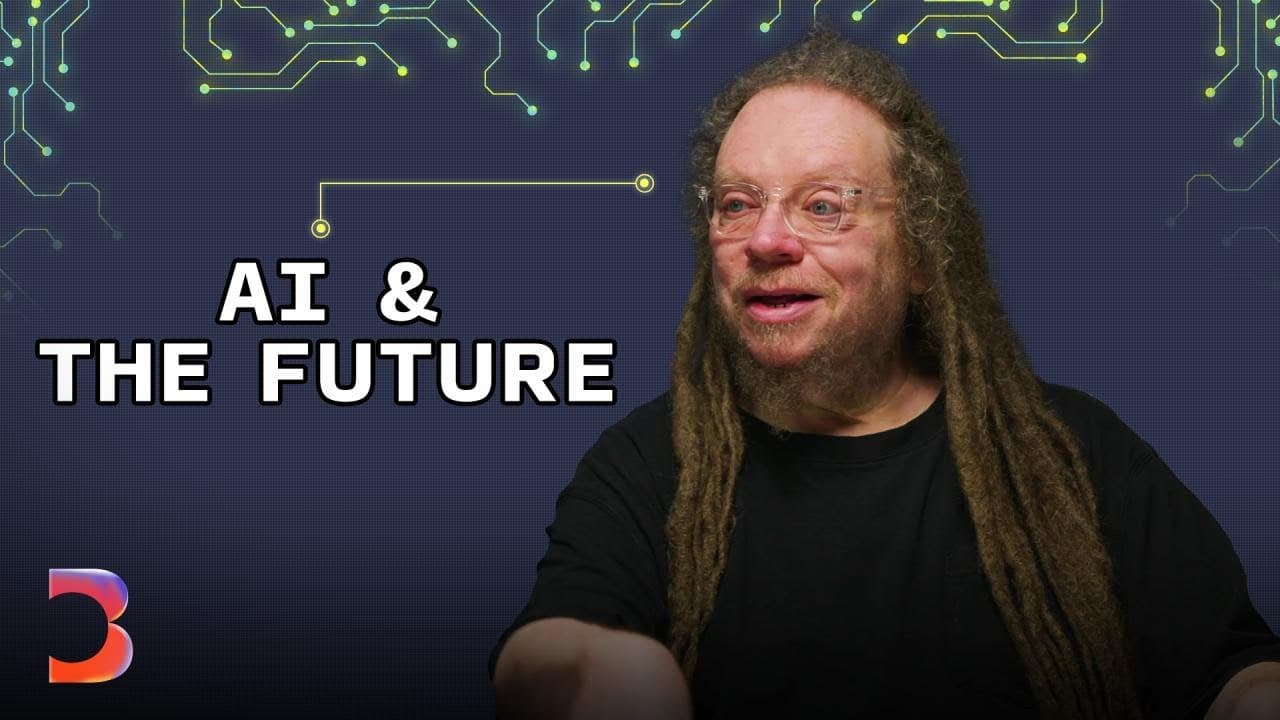
Jaron Lanier Looks into AI's Future | AI IRL
TL;DR
Jaron Lanier discusses AI's potential and challenges in tech industry.
Transcript
you feel relaxed yeah you got to be like jiren laner is among the OG Silicon Valley utopians who had Grand visions of what the internet could be long before we had PCS cell phones or social media he was the pioneer of virtual reality in the' 80s sold multiple companies to Google Adobe and Oracle and now works of Microsoft over the years he's become... Read More
Key Insights
- Jaron Lanier, a pioneer in virtual reality, critiques the tech industry while still participating in it, highlighting the complexity of the industry's evolution.
- Lanier emphasizes that the internet's mysterious nature is detrimental to AI development, advocating for transparency in AI processes.
- He argues that paying for AI services ensures freedom from manipulation, contrasting with ad-based models that exploit user data.
- Lanier critiques open-source models for leading to monopolies rather than decentralization, advocating for data provenance to ensure transparency.
- He suggests that knowing the sources of AI outputs can prevent misuse and ensure accountability, rather than relying on AI to govern AI.
- Lanier proposes 'data dignity,' compensating individuals for data used in AI training, to avoid societal dependency on universal basic income.
- He expresses concern over AI's impact on democracy, drawing parallels with social media's influence on politics and advocating for regulation.
- Lanier believes that tech companies should embrace transparency and free speech internally to improve business performance and societal impact.
Install to Summarize YouTube Videos and Get Transcripts
Explore YouTube Video Summarizer or Get YouTube Transcript Extractor
Questions & Answers
Q: What is Jaron Lanier's view on the internet's mysterious nature?
Jaron Lanier criticizes the internet's mysterious nature, arguing that it is detrimental to AI development. He believes that the lack of transparency in how AI processes work is a significant issue that needs to be addressed. Lanier advocates for a shift towards transparency, where the sources and processes behind AI outputs are clear and accountable, rather than relying on the current model that keeps these elements hidden.
Q: Why does Lanier believe paying for AI services is important?
Lanier believes that paying for AI services is crucial to ensure freedom from manipulation. He contrasts this with ad-based models that exploit user data for profit. By paying for services, users become the customers, rather than being the product sold to advertisers. This shift in the business model would align with a market economy where individuals are full participants, rather than being subjected to manipulation by companies seeking to profit from their data.
Q: What are Lanier's thoughts on open-source models in AI?
Lanier critiques open-source models in AI, arguing that they often lead to monopolies rather than decentralization. He explains that while the open-source movement stems from a desire for openness and democracy, the mathematics of network effects tend to centralize power and control. Lanier suggests that instead of open-sourcing code, focusing on data provenance would ensure transparency and accountability, preventing the monopolistic tendencies he observes.
Q: How does Lanier propose to prevent misuse of AI outputs?
Lanier proposes using data provenance to prevent misuse of AI outputs. By tracking the sources of data that contribute to AI results, users can understand and control the influences on AI behavior. This transparency allows for accountability and prevents scenarios where AI outputs are manipulated or misused. Lanier argues that knowing the origins of AI data is crucial for ensuring ethical and responsible AI use, rather than relying on AI to govern itself.
Q: What is 'data dignity' according to Lanier?
Data dignity, as proposed by Lanier, is the concept of compensating individuals for the data they provide that is used in AI training. He suggests this approach to avoid creating a society dependent on universal basic income. By recognizing the value of individual contributions to AI development, data dignity would incentivize people to provide high-quality data and ensure they benefit from the economic value generated by AI systems, fostering a more equitable and sustainable model.
Q: What concerns does Lanier have about AI's impact on democracy?
Lanier expresses concerns about AI's potential impact on democracy, drawing parallels with the influence of social media on politics. He fears that AI, particularly chatbots, could be used to manipulate public opinion and disrupt democratic processes. Lanier highlights the importance of regulation to mitigate these risks, suggesting that without oversight, AI could exacerbate issues of misinformation and political manipulation, undermining democratic institutions and trust.
Q: How does Lanier view the relationship between tech companies and regulation?
Lanier views regulation as necessary for the tech industry, contrasting with the traditional libertarian stance that often opposes regulation. He believes that regulation provides a stable framework within which free enterprise can thrive, preventing the chaos of unregulated markets. Lanier argues that tech companies should welcome regulation to ensure that AI developments do not harm society, and he suggests that a cooperative approach with regulators is essential for sustainable growth and innovation.
Q: What is Lanier's stance on transparency within tech companies?
Lanier advocates for transparency and free speech within tech companies, believing that it would improve business performance and societal impact. He argues that companies like Google and Meta, which are often closed off, could benefit from a more open culture. Lanier suggests that allowing employees to speak freely and engage in public discourse would foster innovation and trust, enhancing the companies' reputations and their ability to navigate complex societal challenges.
Summary & Key Takeaways
-
Jaron Lanier, a pioneer in virtual reality and a critic of the tech industry, discusses the future of AI and its implications. He emphasizes the need for transparency and criticizes the current internet model, advocating for a shift towards data provenance to ensure accountability in AI outputs.
-
Lanier argues that paying for AI services is essential to avoid manipulation by ad-based models. He critiques the open-source model for leading to monopolies and suggests that data dignity, compensating individuals for data use, could prevent societal dependency on universal basic income.
-
Expressing concern over AI's impact on democracy, Lanier draws parallels with social media's influence on politics. He advocates for regulation and believes that tech companies should embrace transparency and free speech internally to improve both business performance and societal impact.
Read in Other Languages (beta)
Share This Summary 📚
Summarize YouTube Videos and Get Video Transcripts with 1-Click
Try YouTube Summary with ChatGPT & Claude or YouTube Transcript Generator
Explore More Summaries from Bloomberg Originals 📚





Summarize YouTube Videos and Get Video Transcripts with 1-Click
Try YouTube Summary with ChatGPT & Claude or YouTube Transcript Generator