Can Viruses Travel Between Planets?
TL;DR
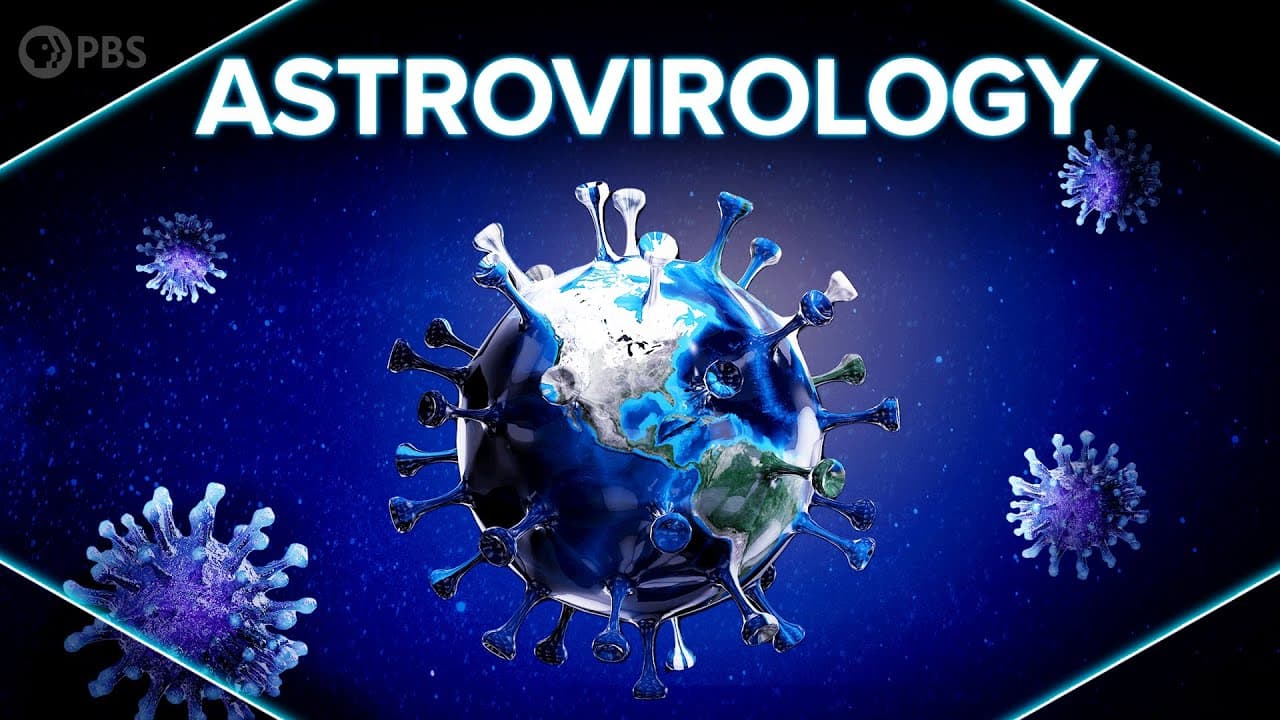
Astrovirology explores the role of viruses on planetary and interplanetary scales.
Transcript
We are generally not big fans of viruses right now, but we sure are thinking about them a lot. That’s right, even astrophysicists are pondering these bizarre little critters. In fact astrovirology, although very new, is actually an emerging subfield of astrobiology. And that’s because it turns out viruses don’t just influence organisms - they’re in... Read More
Key Insights
- Viruses are crucial on planetary scales and may have influenced life's evolution and origin on Earth.
- Astrovirology is a new subfield of astrobiology focusing on viruses' roles beyond Earth.
- Viruses, more numerous than cellular organisms, significantly impact Earth's biosphere.
- Some scientists believe viruses may have existed before cells, originating from a pre-cellular RNA world.
- Viruses can potentially travel between planets through mechanisms like radiopanspermia and lithopanspermia.
- The survival of viruses in space depends on their ability to withstand harsh conditions like radiation and vacuum.
- Detection of viruses on other planets may require direct exploration, as they leave no atmospheric biosignatures.
- Alien viruses are unlikely to infect Earth life unless they share the same genetic structure, like DNA/RNA.
Install to Summarize YouTube Videos and Get Transcripts
Explore YouTube Video Summarizer or Get YouTube Transcript Extractor
Questions & Answers
Q: What is astrovirology?
Astrovirology is a new subfield of astrobiology that studies the roles and impacts of viruses on planetary and interplanetary scales. It explores how viruses influence evolution, their potential existence before cellular life, and their ability to travel between planets.
Q: How do viruses impact Earth's biosphere?
Viruses are more numerous than cellular organisms on Earth and significantly affect the entire biosphere. They play a crucial role in evolution by transferring genes between organisms, and some scientists believe they may have been critical in the formation of cells and life's origin.
Q: Can viruses travel between planets?
Viruses can potentially travel between planets through mechanisms like radiopanspermia, where they are carried by water droplets into space, and lithopanspermia, where they are embedded in rocks ejected by asteroid impacts. Their survival depends on withstanding space conditions like radiation and vacuum.
Q: What are the challenges in detecting viruses on other planets?
Detecting viruses on other planets is challenging because they don't leave direct atmospheric biosignatures. Unlike cellular life, viruses don't metabolize and excrete gases, making it necessary to explore planets directly to find viral signatures, especially on Mars and ocean moons like Europa and Enceladus.
Q: Could alien viruses infect Earth life?
Alien viruses are unlikely to infect Earth life unless they share the same genetic structure, such as DNA or RNA. Viruses need to bind with receptors on cell surfaces and integrate their genome into the cell's DNA, which requires compatibility with the host's genetic makeup.
Q: What role might viruses have played in the origin of life?
Viruses may have played a role in the origin of life by accelerating evolution and transferring genes between early organisms. Some scientists believe viruses could predate cells, originating from a pre-cellular RNA world, and may have helped in the development of DNA-based cellular life.
Q: What is radiopanspermia and lithopanspermia?
Radiopanspermia is a mechanism where viruses are carried by tiny water droplets into space, potentially traveling between planets. Lithopanspermia involves viruses embedded in rocks ejected by asteroid or comet impacts, allowing them to travel through space and possibly reach other celestial bodies.
Q: How do scientists trace the origins of viruses like SARS-CoV-2?
Scientists trace the origins of viruses like SARS-CoV-2 by analyzing their genetic makeup and comparing it with known viruses. For example, SARS-CoV-2 shares most of its genes with coronaviruses in horseshoe bats, and its evolutionary path is consistent with it evolving from that population, ruling out alien origins.
Summary & Key Takeaways
-
Astrovirology is an emerging field studying viruses' roles on planetary and interplanetary scales. Viruses may have influenced evolution and potentially predate cellular life. Their ability to travel between planets is explored through radiopanspermia and lithopanspermia.
-
Viruses are abundant and impact Earth's biosphere significantly. They may have played a role in life's origin, possibly originating from a pre-cellular RNA world. Their potential interplanetary travel raises questions about their survival in space.
-
Detection of viruses on other worlds is challenging as they don't leave atmospheric biosignatures. Direct exploration of planets like Mars and moons like Europa and Enceladus may reveal viral presence. Alien viruses are unlikely to infect Earth life without shared genetic structures.
Read in Other Languages (beta)
Share This Summary 📚
Summarize YouTube Videos and Get Video Transcripts with 1-Click
Try YouTube Summary with ChatGPT & Claude or YouTube Transcript Generator
Explore More Summaries from PBS Space Time 📚





Summarize YouTube Videos and Get Video Transcripts with 1-Click
Try YouTube Summary with ChatGPT & Claude or YouTube Transcript Generator