Vision: Crash Course Anatomy & Physiology #18
TL;DR
Explores human vision and optical illusions through eye anatomy.
Transcript
Take a good long look at this -- we’re gonna mess with your brain. This is the first stage of an optical illusion. Many illusions use patterns of light or perspective to exploit the disconnect that exists between sensation and perception -- between what your eyes see and what your brain understands. But not all illusions work that way. Some produce... Read More
Key Insights
- Optical illusions exploit the disconnect between sensation and perception, using patterns of light and perspective to trick the brain.
- Afterimages occur due to the physiological glitches in human vision, where photoreceptors continue firing action potentials after the stimulus is removed.
- Vision is a dominant sense, involving nearly 70% of the body's sensory receptors, and engaging almost half of the cerebral cortex.
- Light is electromagnetic radiation, with its frequency determining hue and amplitude affecting brightness, influencing how we perceive color.
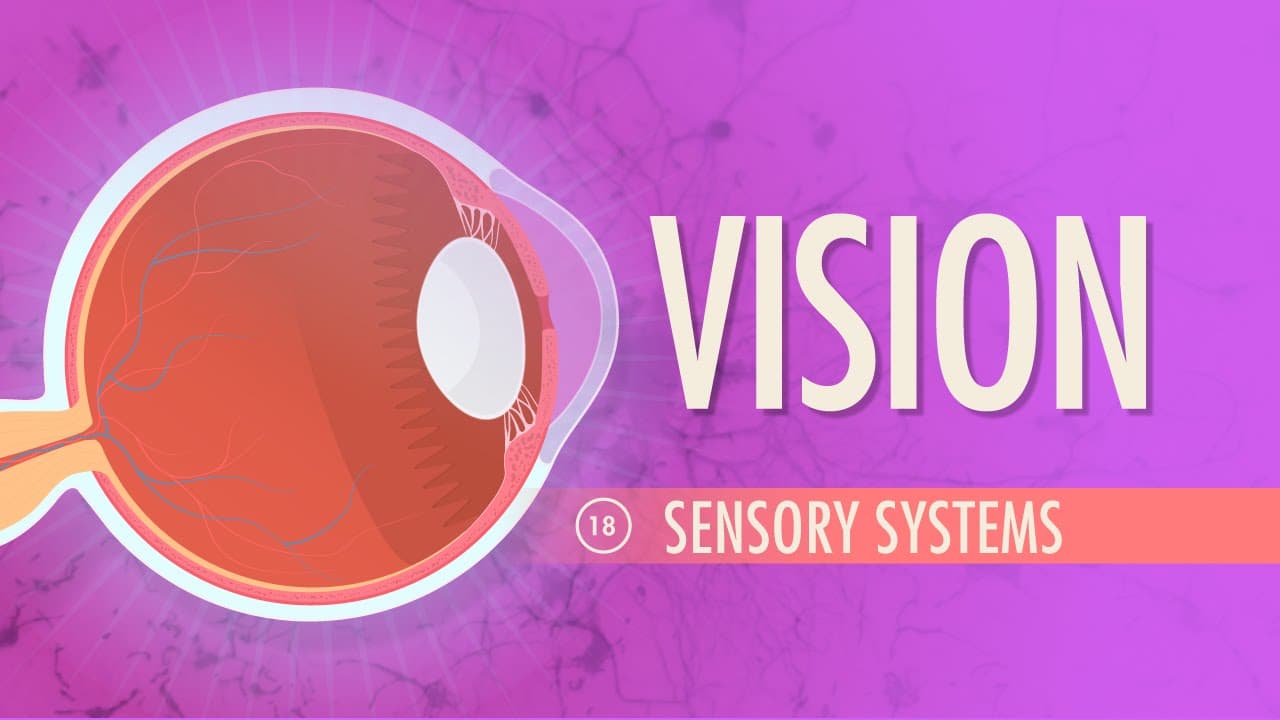
- The eye's anatomy includes three layers: fibrous, vascular, and inner, with the retina playing a crucial role in converting light into nerve impulses.
- Photoreceptors, rods, and cones, are integral to vision, with rods handling low-light conditions and cones detecting color and fine detail.
- Optical illusions, like the flag illusion, demonstrate how cones can tire, leading to afterimages when viewing bright colors for extended periods.
- The complexity of human vision is highlighted by the intricate processes of light conversion and neural transmission, leading to perception.
Install to Summarize YouTube Videos and Get Transcripts
Explore YouTube Video Summarizer or Get YouTube Transcript Extractor
Questions & Answers
Q: What is the primary purpose of optical illusions in the context of human vision?
Optical illusions serve to highlight the disconnect between sensation and perception, exploiting how the brain interprets visual information. They demonstrate how patterns of light and perspective can trick the brain, revealing the complexities and fallibilities in the way humans process visual stimuli.
Q: How does light influence the perception of color in human vision?
Light influences color perception through its frequency and amplitude. The frequency of a light wave determines its hue, with higher frequencies appearing bluish and lower frequencies reddish. Amplitude affects brightness, with higher amplitude waves appearing brighter. This interplay of frequency and amplitude shapes how we perceive colors.
Q: What are the three layers of the eye, and what is their significance?
The eye consists of three layers: the fibrous layer, the vascular layer, and the inner layer. The fibrous layer includes the sclera and cornea, providing structure and allowing light entry. The vascular layer supplies blood and contains the iris, regulating light intake. The inner layer, primarily the retina, converts light into nerve signals for the brain.
Q: What role do rods and cones play in vision?
Rods and cones are photoreceptors in the retina. Rods are more numerous and light-sensitive, functioning well in low-light conditions but only providing grayscale vision. Cones, concentrated in the retina's center, detect fine detail and color, requiring bright conditions to activate. They are crucial for detailed and color vision.
Q: How do afterimages occur in human vision?
Afterimages occur when photoreceptors, particularly cones, become fatigued after prolonged exposure to bright colors. When the stimulus is removed, the tired cones continue firing action potentials, causing the brain to perceive an image in complementary colors. This phenomenon highlights the limitations and adaptability of our visual system.
Q: Why is vision considered a dominant sense in humans?
Vision is considered a dominant sense because it involves nearly 70% of the body's sensory receptors, and almost half of the cerebral cortex is engaged in processing visual information. This extensive involvement underscores the importance of vision in interpreting and interacting with the world, making it a critical sense for human survival and experience.
Q: What is the significance of the retina in the visual system?
The retina is crucial in the visual system as it contains photoreceptors that convert light into electrical signals for the brain. It includes rods and cones, which process light and color, and is connected to bipolar and ganglion neurons that form the optic nerve, transmitting visual information to the brain for interpretation.
Q: How do optical illusions reveal the complexity of the visual system?
Optical illusions reveal the complexity of the visual system by demonstrating how easily perception can be manipulated. They highlight the intricate processes involved in converting light into nerve signals and how the brain interprets these signals, showcasing both the strengths and vulnerabilities of human vision in processing visual information.
Summary & Key Takeaways
-
The video explores the complexity of human vision using optical illusions to illustrate the disconnect between sensation and perception. It delves into the anatomy of the eye, explaining how light is converted into nerve signals by photoreceptors, and discusses the role of rods and cones in processing these signals.
-
Vision is highlighted as a dominant human sense, involving a significant portion of the body's sensory receptors and cerebral cortex. The anatomy of the eye, including the fibrous, vascular, and inner layers, is explained, with emphasis on the retina's role in converting light into electrical signals for the brain.
-
Optical illusions are used to demonstrate the physiological glitches in human vision, such as afterimages caused by tired cones. The video explains how the eye's photoreceptors, rods, and cones work differently to process light and color, contributing to our overall perception of the world.
Read in Other Languages (beta)
Share This Summary 📚
Summarize YouTube Videos and Get Video Transcripts with 1-Click
Try YouTube Summary with ChatGPT & Claude or YouTube Transcript Generator
Explore More Summaries from CrashCourse 📚





Summarize YouTube Videos and Get Video Transcripts with 1-Click
Try YouTube Summary with ChatGPT & Claude or YouTube Transcript Generator