Unleash Your Dog's Potential with the Power of Luring and Play | Battle of the Best Trainers 🐾
TL;DR
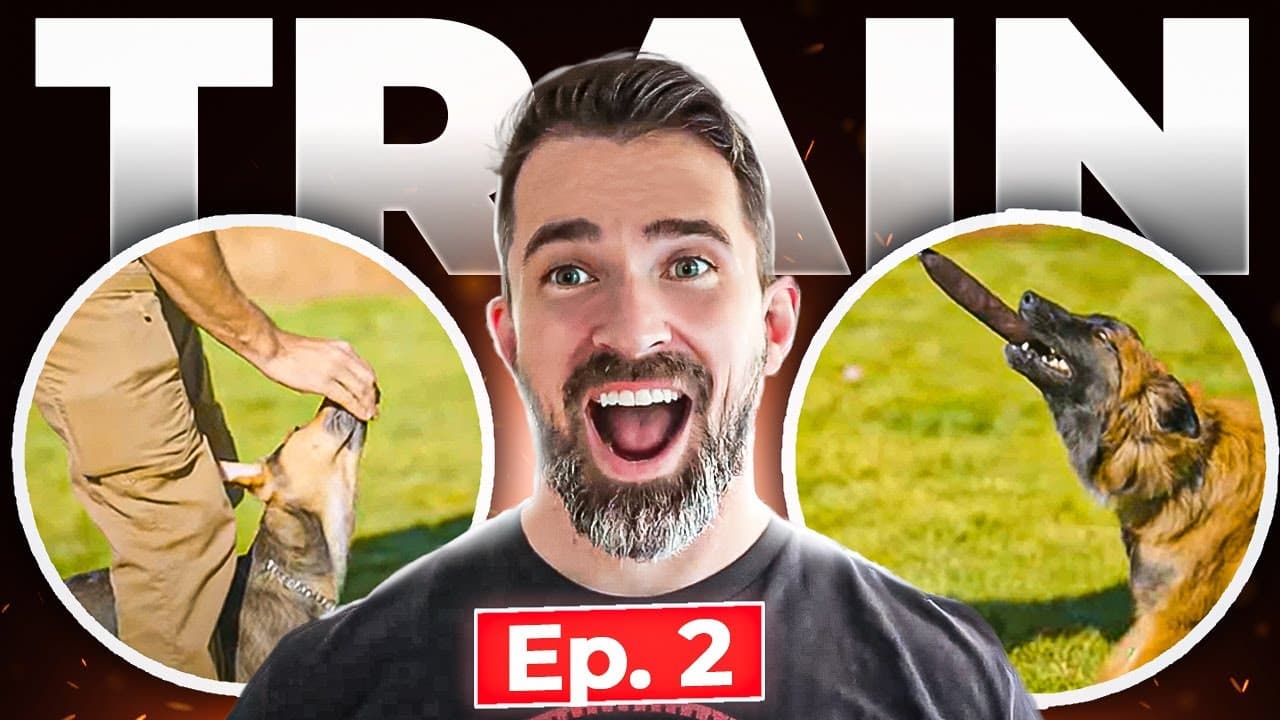
Dog trainers compete using luring and play techniques to enhance training.
Transcript
today is the first day the students are going to be competing against each other now since it's still early in the process the competition is going to be pretty simple but the winner today is going to receive a Yeti bowl from our friends over at BarkBox I'm excited to see how each student performs today as well as their adorable puppies Welcome to ... Read More
Key Insights
- The competition involves dog trainers using luring and play techniques to perform the most behaviors in 30 seconds, emphasizing the importance of quick and effective training.
- BarkBox supports the competition by providing toys and treats, highlighting the significance of play in building a strong bond with dogs.
- The challenge focuses on time management and the ability to generalize commands across different positions, showcasing the adaptability required in dog training.
- Proper play techniques involve using toys to enhance a dog's motivation and drive, which is crucial for advanced obedience training.
- Trainers emphasize the importance of not physically winning against dogs in play, as this builds the dog's confidence and drive.
- Using toys in training requires the dog to understand commands and have impulse control, ensuring effective and focused training sessions.
- The imprinting stage is crucial for developing a dog's toy drive, with toys being used exclusively during training to enhance their value.
- Differentiating between chew toys and interactive toys is important, as each serves a different purpose in satisfying a dog's needs and enhancing training.
Install to Summarize YouTube Videos and Get Transcripts
Explore YouTube Video Summarizer or Get YouTube Transcript Extractor
Questions & Answers
Q: What is the main focus of the dog training competition?
The main focus of the dog training competition is to use luring and play techniques to perform the most behaviors within a 30-second time frame. This challenge emphasizes quick and effective training, adaptability in command generalization, and the importance of building a strong bond with dogs through play.
Q: How does BarkBox support the competition?
BarkBox supports the competition by providing toys and treats for the participants. These resources are used to enhance the dogs' play and prey drive, which are crucial for building motivation and fostering a strong bond between the trainers and their dogs. The winner also receives a BarkBox Yeti Bowl as a prize.
Q: What are some key play techniques used in training?
Key play techniques involve using toys to motivate and drive dogs, ensuring they are engaged and excited during training. Trainers avoid physically winning against dogs in play, aiming instead to build the dog's confidence and drive. Proper play requires understanding commands and having impulse control, with toys being used exclusively during training to enhance their value.
Q: Why is the imprinting stage important in dog training?
The imprinting stage is crucial for developing a dog's toy drive. During this stage, toys are used exclusively during training to enhance their value, ensuring that the dog associates toys with positive training experiences. This helps build a strong foundation for future training, where toys can be effectively used to motivate and engage the dog.
Q: How do trainers differentiate between chew toys and interactive toys?
Trainers differentiate between chew toys and interactive toys based on their purpose. Chew toys are used to satisfy a dog's natural chewing instincts and to keep them entertained when not training. Interactive toys, on the other hand, are used during training sessions to engage the dog, enhance motivation, and build a strong bond through play.
Q: What role does impulse control play in training with toys?
Impulse control is essential when training with toys, as it ensures that the dog remains focused and responsive to commands. A dog with good impulse control can transition smoothly between play and obedience, allowing trainers to effectively use toys as motivational tools without the dog becoming overly distracted or excitable during training sessions.
Q: When is it appropriate to start using toys in obedience training?
Toys can be introduced into obedience training once a dog understands the commands and can perform them reliably. At this stage, toys serve as a motivational tool to increase the dog's excitement and drive, leading to faster and more enthusiastic performance of the commanded exercises. Using toys too early can be counterproductive if the dog is still learning basic commands.
Q: What is the significance of trainers not physically winning against dogs in play?
Trainers avoid physically winning against dogs in play to build the dog's confidence and drive. By allowing the dog to 'win' during play sessions, trainers reinforce positive behaviors and create an enjoyable experience for the dog. This approach encourages the dog to engage more readily in future training sessions, enhancing their motivation and willingness to learn.
Summary & Key Takeaways
-
In this dog training competition, trainers use luring and play techniques to perform the most behaviors in 30 seconds, with BarkBox providing toys and treats. The challenge emphasizes quick, effective training and the importance of building a strong bond with dogs through play.
-
Proper play techniques involve using toys to enhance a dog's motivation and drive, which is crucial for advanced obedience training. Trainers focus on not physically winning against dogs in play, as this builds the dog's confidence and drive.
-
Using toys in training requires the dog to understand commands and have impulse control, ensuring effective and focused training sessions. The imprinting stage is crucial for developing a dog's toy drive, with toys being used exclusively during training to enhance their value.
Read in Other Languages (beta)
Share This Summary 📚
Summarize YouTube Videos and Get Video Transcripts with 1-Click
Try YouTube Summary with ChatGPT & Claude or YouTube Transcript Generator
Explore More Summaries from Nate Schoemer 📚



Summarize YouTube Videos and Get Video Transcripts with 1-Click
Try YouTube Summary with ChatGPT & Claude or YouTube Transcript Generator